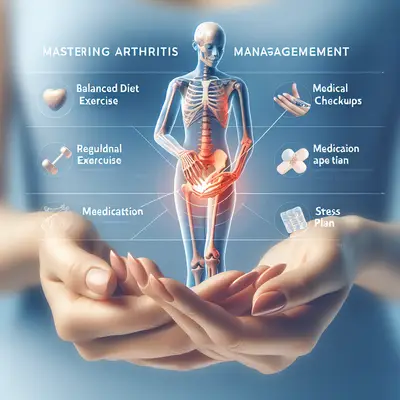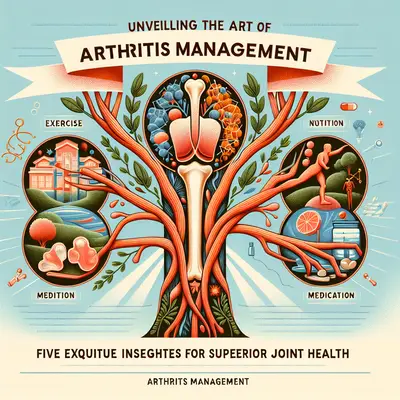
Arthritis management is often framed as damage control—reactive, clinical, and narrowly focused on pain. A more elevated approach views it as strategy: a considered way of organizing your days, your environment, and even your ambitions around long-term joint integrity. This isn’t about accepting limitation; it’s about orchestrating your life so that comfort, strength, and ease of movement become your default, not your exception.
Below are five exclusive, nuanced insights for those who take their joint health as seriously as any other high-level investment in their future.
Rethinking “Rest”: The Precision Calibration of Recovery
Most arthritis advice treats rest as a simple binary: you are either active or you are resting. In practice, high-quality arthritis management is far more precise. The question is not “Have you rested?” but “Is your recovery as deliberately structured as your activity?”
Refined recovery begins with distinguishing between passive and active rest. Passive rest—collapsing into a chair after a long day—often leaves joints stiff and circulation sluggish. Active rest, by contrast, uses controlled micro-movements, gentle stretches, and position changes to keep synovial fluid circulating and muscle tone lightly engaged. This might mean setting a timer to stand or change posture every 25–40 minutes, or incorporating a 3–5 minute “mobility interlude” between tasks.
Timing also matters. Many people with arthritis feel worst either on waking or late in the day; these windows deserve intentional buffering. A warm shower followed by a short, structured mobility sequence in the morning, and a de-load ritual (breathing, gentle range-of-motion work, light walking) in the evening can reduce inflammatory “spikes” and make pain patterns more predictable. Rest, in this sense, becomes an engineered element of your routine rather than an afterthought when fatigue forces your hand.
The Micro-Architecture of Movement: How You Do Things Matters More Than What You Do
Most people ask, “Is this activity good or bad for my joints?” It’s a blunt question. A more advanced lens is: “How refined is my technique in the things I do most?” Because arthritis is profoundly sensitive to repetition, the fine details of your daily movements—how you reach, bend, grip, and rise—can either erode or protect your joints over years.
Instead of categorizing activities as “allowed” or “off-limits,” examine leverage, load, and direction. Are you repeatedly using small, vulnerable joints (like finger joints) to do tasks that could be delegated to larger ones (shoulders, hips)? Do you hinge at your hips when lifting, or curl your spine and force your knees to absorb unnecessary stress? Are you twisting through your spine and knees to reach objects instead of repositioning your feet?
Cultivating a “movement audit” for one ordinary day—how you get out of a car, lift a bag, open doors, type, cook, or reach for shelves—can reveal dozens of small inefficiencies. Subtle upgrades, like using both hands to lift instead of one, pushing heavy objects rather than pulling them, or turning your entire body instead of twisting through the knees, can have a compounding, protective effect. The payoff is not just less pain today, but fewer mechanical irritations that contribute to flare patterns over time.
Quiet Data: Turning Flare-Ups into a Personal Arthritis Blueprint
Most people treat flares as random, unfortunate events. A more sophisticated approach treats each flare as data—an opportunity to refine your personal blueprint for arthritis management. This is less about obsessively tracking everything and more about asking precise, repeatable questions when your symptoms change.
Instead of writing down only “pain level 7/10,” consider three domains: mechanical load, systemic load, and emotional load. Mechanical load includes unusual activities (a long drive, unfamiliar exercise, extended standing). Systemic load encompasses sleep quality, infection, alcohol, travel, hormonal changes, and diet shifts. Emotional load includes conflict, deadlines, and generalized stress. Over time, patterns tend to emerge: perhaps your knees react particularly to consecutive days of downhill walking, or your hands flare after poor sleep and a night of refined carbohydrates and wine.
This quiet, longitudinal data allows you to predict and pre-empt. You might schedule high-impact tasks on days following excellent sleep, or place important social or professional obligations on weeks when your joints are historically calmer. In this way, you are not simply hoping for good days—you are designing around the conditions that reliably produce them.
Training for Joint Literacy: Building Strength Without Paying for It Later
“Exercise is good for arthritis” is now well-established. The nuance lies in how to exercise so that your joints feel supported afterward—not punished. The goal is joint literacy: knowing exactly how your body responds to load, speed, and volume, and using that knowledge to build resilience rather than friction.
Progressive strength work, done with intent, is one of the most protective tools for arthritic joints. Strong muscles absorb impact and stabilize the joint, reducing the “wobble” and micro-strain that can provoke pain. But strength training needs to be calibrated. Three principles stand out:
- Tempo before load – Slow, controlled repetitions (especially in the lowering phase) teach your joints to handle forces smoothly, without abrupt catching or jolting.
- Range with respect – Aim for comfortable range-of-motion that feels secure and repeatable. Forced stretching into end-range positions that feel unstable may irritate joints rather than support them.
- Next-day test – How your joints feel 12–24 hours later is more telling than how they feel in the moment. Mild, diffuse stiffness is acceptable; sharp, focal pain or swelling is a signal to adjust volume, intensity, or exercise selection.
Over months, this kind of deliberate training replaces the fragility many people fear with a grounded sense of capability. You are not merely preserving function; you are cultivating a body that can still do demanding things—just with more strategy and less bravado.
Curated Environments: Elevating the Spaces That Shape Your Joints
Environment is the understated partner in arthritis management. The surfaces you walk on, the chairs you sit in, the handles you grip, and even the lighting that influences your posture all contribute to how your joints behave across the day. A refined approach treats the spaces you inhabit—home, office, car—as extensions of your joint-care plan.
This does not necessarily mean medical-looking equipment. It means aligned design choices. A supportive, height-appropriate chair that allows your hips and knees to be at or slightly above 90 degrees can make standing up dramatically easier. A well-placed, stable rail in the shower or a discreet handle near steps can prevent awkward, joint-straining maneuvers. In the kitchen, heavier frequently used items can live at waist level, eliminating repeated reaching and bending.
Flooring and footwear are another often-overlooked intersection of design and arthritis. Slightly cushioned, non-slippery surfaces and shoes with stable, supportive soles can soften the impact that your hips, knees, and spine must absorb. Even lighting plays a role: well-lit pathways reduce guarded, tentative movement and the subtle, joint-stiffening tension that comes with navigating in uncertainty.
The essence is intentionality. Instead of adjusting your body to fit difficult environments, you allow the environments you control to rise to meet your body’s needs—with elegance and discretion.
Conclusion
Arthritis management, at its highest level, is not just about surviving pain but about crafting a life in which your joints are thoughtfully considered at every layer: how you rest, how you move, how you train, what you track, and the spaces you inhabit. The reward for this level of intentionality is not only fewer bad days, but a deeper sense of authorship over your own comfort.
When approached as strategy rather than surrender, arthritis becomes less an obstacle and more a design challenge—one that, handled with care and precision, can still accommodate ambition, pleasure, and a richly engaged life.
Sources
- [Arthritis Foundation – Managing Arthritis](https://www.arthritis.org/health-wellness) – Comprehensive guidance on lifestyle, exercise, and pain strategies for different types of arthritis
- [Centers for Disease Control and Prevention – Arthritis Management](https://www.cdc.gov/arthritis/basics/management.htm) – Evidence-based recommendations on physical activity, self-management, and clinical care
- [Mayo Clinic – Arthritis: Symptoms and Causes](https://www.mayoclinic.org/diseases-conditions/arthritis/symptoms-causes/syc-20350772) – Overview of arthritis types, risk factors, and key management principles
- [Johns Hopkins Medicine – Arthritis and Exercise](https://www.hopkinsmedicine.org/health/conditions-and-diseases/arthritis/arthritis-and-exercise) – Detailed discussion of safe exercise programming for people with arthritis
- [Harvard Health Publishing – How Exercise Helps Arthritis](https://www.health.harvard.edu/pain/how-exercise-helps-arthritis) – Explains the science behind strength, movement, and joint protection in arthritis management
Key Takeaway
The most important thing to remember from this article is that this information can change how you think about Arthritis Management.