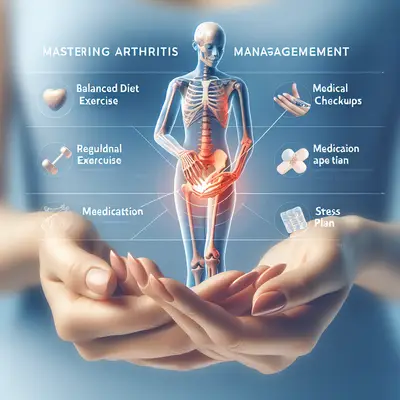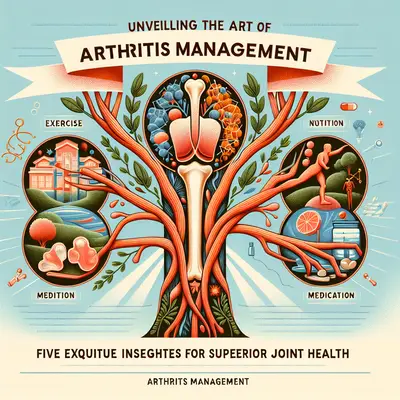
Arthritis may be common, but its management does not have to feel ordinary. With the right strategy, living with arthritis can become less about restriction and more about refinement—intentional choices that protect your joints, preserve your energy, and maintain your sense of ease. This is not about chasing perfection; it is about curating a lifestyle in which your joints are quietly, consistently supported.
Below are five exclusive, often overlooked insights that people serious about joint health tend to master. Each one is subtle on the surface, yet powerful in shaping how your body feels over years—not just days.
Insight 1: Treat Inflammation as a 24‑Hour Design Problem, Not a Flare‑Up Event
Most people respond to arthritis pain when it arrives; those who manage it exquisitely design for it before it appears.
Inflammation is not merely a momentary spike in discomfort—it is a rhythm shaped by your entire day: when you move, what you eat, how you sleep, and even how you respond to stress. Rather than thinking in terms of “good days” and “bad days,” think in terms of a 24‑hour cycle. Morning stiffness, afternoon energy dips, and evening swelling are often predictable patterns rather than surprises.
Begin by tracking your day as a designer would: note your wake time, meals, movement, screen time, stress peaks, and sleep. Over one to two weeks, patterns often emerge—such as worsening symptoms after late dinners, long static meetings, or certain foods. With that data, you can:
- Shift your most joint‑demanding tasks (grocery runs, housework, workouts) into your personal “low‑inflammation window.”
- Schedule micro‑movement breaks at the times you usually stiffen.
- Reserve your most supportive footwear and braces for the hours your joints tend to swell.
- Adjust evening habits—lighter meals, gentle stretching, reduced screens—to support overnight recovery.
This approach reframes arthritis from a series of crises into a solvable design puzzle: how can you architect a day that treats inflammation as something to continuously modulate, not occasionally chase?
Insight 2: Joint Relief Begins in the Nervous System, Not Just the Joint
We often speak as if arthritis pain lives solely in cartilage and bone. In reality, much of what you experience as “pain” is processed and amplified—or softened—by your nervous system.
Chronic joint pain can heighten the nervous system’s sensitivity, lowering the threshold at which your body interprets sensations as painful. This doesn’t mean your pain is “in your head”; it means the brain and spinal cord are actively shaping your experience of pain moment to moment.
Those who manage arthritis at a high level tend to honor this nervous system dimension as seriously as medication or exercise. That might look like:
- Building a daily decompression ritual (10–20 minutes) that calms your system: breathwork, progressive muscle relaxation, or a brief restorative yoga sequence.
- Protecting true deep sleep by being meticulous with caffeine timing, temperature, and light exposure—because inadequate sleep is strongly tied to heightened pain sensitivity.
- Introducing movement that is explicitly gentle and rhythmic—slow walking, water exercise, or tai chi—which sends the nervous system a continuous message of safety rather than threat.
The refined mindset here is that your nervous system is a partner in pain control. When you treat it kindly and consistently, your joints often feel kinder in return.
Insight 3: Precision Strength—Training the Muscles That Make Joints Feel “Lighter”
Generic advice to “strengthen your muscles” around painful joints is not enough. The question is: which muscles, how, and to what end?
Precision strength is about cultivating the specific muscle groups that quietly stabilize and “decompress” your joints, making them feel lighter, more supported, and less vulnerable during daily tasks. This is less about weightlifting bravado and more about thoughtful engineering.
For example:
- Knee arthritis often benefits from targeted strengthening of the quadriceps, hip abductors, and gluteal muscles. Strong hips and thighs can reduce load on the knee with every step.
- Hip arthritis is eased by building stability around the pelvis—glutes, deep hip rotators, and core muscles—to reduce shearing forces during walking and climbing stairs.
- Hand arthritis can be supported by gently strengthening the small muscles of the hand and forearm, improving grip control without over-squeezing or straining sensitive joints.
The hallmarks of precision strength training for arthritis are:
- Movements that are slow, controlled, and pain‑aware rather than aggressive.
- A focus on alignment: how your knee tracks over your foot, how your hips sit over your ankles, how your spine stacks as you stand.
- Consistency over intensity: two to four carefully designed sessions per week, even at modest difficulty, often yield better protection than sporadic bursts of ambitious workouts.
For a truly elevated approach, consider a short series of sessions with a physical therapist experienced in arthritis—the outcome is not just “stronger muscles,” but a body that moves with a quieter load on its joints.
Insight 4: Lifestyle Medications—Deliberate Choices That Work Like Subtle Drugs
While prescriptions and over‑the‑counter medications may be essential, some of the most sophisticated arthritis plans treat daily habits as “lifestyle medications”—predictable, dose‑like tools that gently modulate inflammation and pain.
Think of these as non‑pharmacologic therapies you can “dose” with intention:
- Heat and cold: Warm showers or heating pads can relax stiff joints and muscles, while cold packs can tame swelling after activity. Used at the right time and duration, they become as strategic as tablets in a pill organizer.
- Movement “doses”: Instead of a single intense exercise session, distributing small units of activity throughout the day—three 10‑minute walks, a 5‑minute stretch break every hour—keeps joints nourished with blood flow and synovial fluid.
- Anti‑inflammatory nutrition accents: You may not need a radical diet overhaul, but carefully integrating elements such as fatty fish, extra‑virgin olive oil, nuts, seeds, and deeply colored vegetables can create a quieter inflammatory environment over months and years.
- Weight as joint load management: Even a modest, sustained weight reduction can significantly reduce pressure on weight‑bearing joints, particularly the knees. Here, the emphasis is on long‑term load reduction rather than aesthetic goals.
The premium mindset shift is this: lifestyle choices are not merely “good habits”—they are part of your therapeutic regimen, with real impact on how your arthritis behaves over time. They deserve the same level of planning, protection, and respect as any prescription.
Insight 5: Future‑Proofing—Making Decisions the “You in Ten Years” Will Thank You For
Arthritis often tempts us into short‑term thinking: “How do I get through today?” The individuals who age most gracefully with arthritis also ask, “What will this choice mean for my joints in ten years?”
Future‑proofing is not about fear; it is about thoughtful trade‑offs:
- You may choose lower‑impact activities (cycling, aquatic exercise, elliptical work, walking on softer surfaces) not because you cannot do high‑impact sports today, but because you prioritize the joint you want in a decade.
- You learn to guard against “heroic weekends”—intense bursts of home projects, gardening, or travel with minimal pacing—knowing they can accelerate wear and trigger flares.
- You schedule regular professional check‑ins instead of waiting for “crisis points”: timely imaging when appropriate, medication reviews, and physical therapy tune‑ups to adjust your program.
- You invest early in your environment—ergonomic work setups, supportive chairs, well‑chosen footwear, kitchen tools that reduce grip strain—because every reduced micro‑strain is a small deposit into your long‑term joint health.
Perhaps most importantly, future‑proofing includes your identity. Rather than defining yourself by what arthritis has limited, you cultivate roles, hobbies, and relationships that can adapt: creative pursuits, low‑impact travel, mentoring, or projects that rely more on your experience than your cartilage.
This perspective transforms arthritis from a purely medical diagnosis into a long‑term design challenge: What kind of life do you want your joints to carry you through, and what decisions today will make that possible?
Conclusion
Managing arthritis with sophistication is less about chasing quick fixes and more about elevating your standards—how you plan your day, how you move, how you rest, and how you think about your future self. When you approach your joints with that level of care, arthritis becomes one important factor in your life, but not its defining author.
A refined arthritis strategy is built on five pillars: designing your day around inflammation patterns, calming the nervous system, strengthening with precision, using lifestyle as medicine, and making decisions with your future joints in mind. None of these require perfection; they require consistency, curiosity, and a willingness to treat your body as something worth meticulous stewardship.
Over time, that stewardship adds up—to mobility that feels more reliable, pain that feels more manageable, and a life that feels far larger than your diagnosis.
Sources
- [Arthritis Foundation – Managing Pain](https://www.arthritis.org/health-wellness/healthy-living/managing-pain) – Comprehensive guidance on non-drug and drug-based arthritis pain strategies
- [Mayo Clinic – Arthritis](https://www.mayoclinic.org/diseases-conditions/arthritis/symptoms-causes/syc-20350772) – Overview of arthritis types, causes, risk factors, and standard treatment approaches
- [CDC – Arthritis Management](https://www.cdc.gov/arthritis/basics/management.htm) – Evidence-based self-management recommendations and lifestyle strategies for arthritis
- [Harvard Health Publishing – Exercise and Arthritis](https://www.health.harvard.edu/pain/exercising-with-arthritis) – Detailed discussion of how targeted exercise protects joints and reduces arthritis symptoms
- [Johns Hopkins Medicine – Rheumatoid Arthritis and Pain](https://www.hopkinsarthritis.org/arthritis-info/rheumatoid-arthritis/ra-pain/) – Explores the complex relationship between inflammation, the nervous system, and pain perception in arthritis
Key Takeaway
The most important thing to remember from this article is that this information can change how you think about Arthritis Management.