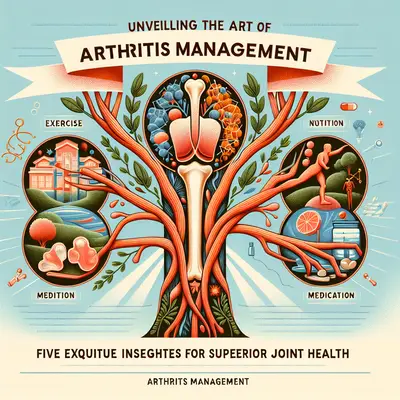
Arthritis does not have to define your life; it can, instead, refine it. When managed with intention, evidence, and a certain elegance of habit, arthritis care becomes less about restriction and more about design—how you choose to move, eat, rest, and invest in your future mobility. This is not about quick fixes or viral hacks; it is about cultivating a standard for your joints that feels both intelligent and deeply personal.
Below are five exclusive, quietly powerful insights that sophisticated joint‑health seekers rarely see packaged together—each one grounded in research, yet translated into the language of real life.
1. Precision Loading: Training Your Joints, Not Just Your Muscles
Most arthritis advice stops at “stay active.” That is an understatement. Your joints respond not only to movement, but to how that movement is structured. Think of daily loading—the forces transferred through your joints—as something to be curated, not endured.
Precision loading means giving your joints just enough stress to stimulate strength and resilience, while avoiding the chaotic spikes that provoke pain and inflammation. Instead of long, exhaustive workouts twice a week, consider short, highly intentional micro-sessions spread across the day: a five‑minute strength circuit before your morning shower, a set of controlled step‑ups at lunchtime, gentle calf raises while the kettle boils.
High‑quality, low‑volume strength work—such as slow, controlled squats to a chair, isometric wall sits, or resistance band hip exercises—can upgrade the stability around arthritic joints. When the surrounding muscles are finely tuned, the joint bears load more evenly, often reducing pain. This is less about burning calories and more about building a quietly powerful framework of support.
The key: movement that feels deliberate, symmetrical, and repeatable the next day. If yesterday’s effort leaves you limping today, the dose was wrong. Arthritis management becomes refined when you view exercise not as a test of willpower, but as a precise prescription you are continuously calibrating.
2. The Inflammation “Signature”: Personalizing Your Food, Not Following a Fad
Anti-inflammatory eating has become a slogan; for arthritis, it needs to be a strategy. The nuance is that inflammatory responses are highly individual. Two people with the same diagnosis can react very differently to the same food.
Instead of chasing every trending “arthritis diet,” begin by observing your personal inflammation signature over two to four weeks. Keep a minimalist, elegant log: what you ate, how your joints felt the next morning (stiffness, swelling, ease of first few steps), and your energy level by midday. You are looking for patterns, not perfection.
Evidence strongly supports a Mediterranean-style pattern—rich in extra-virgin olive oil, fatty fish (such as salmon or sardines), nuts, seeds, vegetables, and whole grains—for lowering systemic inflammation in many people with arthritis. Yet your refinement lies in the details: perhaps nightshades (like tomatoes or peppers) do not bother you at all, but excess sugar or ultra‑processed snacks make your fingers throb the next day. Or maybe alcohol, even in modest amounts, quietly worsens your morning stiffness.
Rather than adopting a rigid rulebook, you are crafting a tailored menu that respects both the research and your lived experience. Arthritis management becomes elevated when your plate reflects not just general wisdom, but your own data—collected with discretion and curiosity.
3. Recovery as a Performance Metric, Not an Afterthought
For many high-achieving individuals, “rest” sounds suspiciously like “doing nothing.” Yet for arthritic joints, recovery is not a luxury; it is a performance metric. How quickly you rebound from physical or emotional stress is one of the most honest indicators of how well your arthritis is being managed.
Sleep is the foundation. Research consistently links short or poor-quality sleep to increased pain sensitivity and higher markers of inflammation. But refinement means focusing less on the hours and more on the architecture of your night. Aim for a consistent sleep and wake time, a cool and quiet bedroom, and a pre-sleep ritual that signals your nervous system to soften: stretching, reading, or a brief body-scan meditation.
Daytime recovery is equally strategic. Short “joint intermissions” can be surprisingly powerful: two minutes of gentle range-of-motion work for your hands every hour if you type frequently; standing and shifting your weight through your hips if you sit for extended periods; a brief walk after long meetings. These are not interruptions; they are scheduled maintenance.
When you begin to evaluate your days not only by what you accomplished, but by how well you recovered between demands, you transform arthritis care into something more aligned with elite performance than with pathology.
4. Biomechanical Editing: Subtle Upgrades to How You Move Through Space
Arthritis often reveals itself in the smallest moments—turning in bed, descending stairs, slipping on shoes. These micro-movements are where biomechanical finesse matters most. Instead of accepting “bad knees” or “stiff hips,” consider yourself an editor of your own movement patterns.
Invest a bit of attention in the transitions you repeat hundreds of times: how you stand up from a chair, step out of a car, or carry a heavy bag. Are you always favoring one leg? Twisting sharply through your spine? Collapsing into your knees? A skilled physical therapist or movement specialist can help you identify and refine these patterns, but you can also begin with simple awareness.
Small, premium upgrades might include: choosing footwear with a stable heel and supportive midsole rather than flimsy flats; using a handrail proactively on stairs, not as an emergency grip; turning your whole body instead of torquing your knee when you pivot; bending at your hips with a neutral spine rather than rounding forward to pick something up.
None of this diminishes independence. On the contrary, it extends it. Arthritis management matures when you treat your movement habits as something worthy of design—less improvisation, more choreography that respects your joints’ long-term comfort.
5. Strategic Medical Partnership: From Passive Patient to Informed Collaborator
The refinement of arthritis care is not only physical; it is relational. Many people drift through appointments, collecting prescriptions and generic advice. A more elevated approach is to curate a small, coordinated “mobility team” and engage with them as an informed collaborator.
This may include a rheumatologist or orthopedist, a primary care physician, a physical therapist, and—when appropriate—a nutrition professional or psychologist. Your role is to ensure they are not working in isolation. Bring a concise, written summary to each appointment: your current medications and supplements, your main questions, a brief note on what has changed since your last visit.
With medications—whether NSAIDs, disease-modifying antirheumatic drugs (DMARDs), biologics, or injections—the premium standard is balance: maximum control of symptoms and disease activity with minimal unnecessary exposure to side effects. That balance requires honest reporting (how you actually feel, not how you think you “should” feel), and the courage to say when a regimen is not aligned with your goals or lifestyle.
Request clarity. Ask what each treatment is meant to achieve, in what timeframe, and how success will be measured. When you move from passive compliance to informed partnership, your arthritis care becomes tailored, ethical, and far more effective.
Conclusion
Arthritis invites you to decide what standard of living you are willing to create for your future self. Precision loading of your joints, a personally calibrated anti-inflammatory plate, recovery treated as a vital metric, biomechanical editing of the way you move, and truly strategic collaboration with your clinicians—these are not dramatic gestures. They are quiet, deliberate choices that accumulate into something significant.
Over time, these refined practices can shift arthritis from a narrative of decline to one of stewardship: you are not fighting your body; you are curating how it ages. That is the essence of elevated arthritis management—less noise, more intention, and a long view of joint health that feels both scientific and deeply civilized.
Sources
- Arthritis Foundation – Managing Arthritis – Comprehensive guidance on lifestyle, exercise, nutrition, and treatment options for different types of arthritis.
- Centers for Disease Control and Prevention (CDC) – Arthritis Basics – Evidence-based overview of arthritis, including risk factors, activity recommendations, and self-management strategies.
- Mayo Clinic – Arthritis: Diagnosis and Treatment – Detailed explanation of diagnostic approaches, medications, and therapeutic options for common arthritic conditions.
- Harvard T.H. Chan School of Public Health – The Nutrition Source: Anti-inflammatory Diet – Research-informed discussion of dietary patterns that influence inflammation and chronic disease.
- Johns Hopkins Medicine – Rheumatoid Arthritis and Exercise – Practical, clinician-reviewed insights on exercise principles and joint protection for people living with arthritis.
Key Takeaway
The most important thing to remember from this article is that this information can change how you think about Arthritis Management.