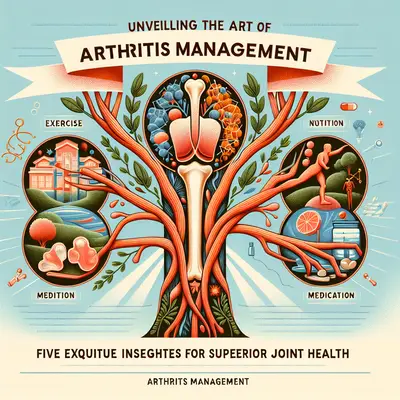
Arthritis does not simply affect joints; it reshapes how you move through your day, make decisions about your time, and even envision your future. For those who prize a refined, intentional approach to health, arthritis management is less about “getting by” and more about curating a life in which comfort, capability, and longevity quietly coexist. This isn’t a quick-fix playbook; it is a modern strategy for preserving your physical capital with discernment and precision.
Below are five exclusive, often overlooked insights for those who take their joint health seriously—and expect their care approach to match that standard.
1. Think in Decades, Not Days: Designing a Long-Horizon Arthritis Strategy
Most arthritis advice focuses on immediate flare-ups or short-term pain relief. A more sophisticated approach recognizes that joint health is a long-horizon investment, best measured in years and decades, not days and weeks.
Begin by mapping a “joint health timeline” with your healthcare team: What are your 1-year, 5-year, and 10-year priorities? This might include maintaining the ability to walk a certain distance, continue your preferred sport or craft, or travel without mobility anxiety. Instead of asking only, “How do I feel today?” add, “What am I preserving for five years from now?”
This long-term view can influence treatment choices in subtle but decisive ways. For example, you may be more open to disease-modifying therapies earlier in the disease course to delay joint damage, or more deliberate about strengthening key muscle groups that protect vulnerable joints. It also encourages regular, proactive reassessments: annual imaging when clinically appropriate, periodic medication reviews, and planned recalibration of your exercise and recovery routines.
When you think in decades, every daily choice becomes part of an elegant, overarching design—one that prioritizes sustainable function over temporary fixes.
2. Precision Movement: Curating a Personal “Joint Load Portfolio”
Instead of viewing movement as simply “more” or “less,” consider your weekly activity as a “joint load portfolio” that can be intelligently managed—just like a financial portfolio. Each type of movement carries a load profile: compressive (e.g., running, jumping), rotational (e.g., racquet sports), or sustained (e.g., standing for long periods). The refined goal is not to eliminate load, but to balance and distribute it wisely.
A sophisticated movement portfolio often includes:
- Low-impact aerobic work such as swimming, cycling, or elliptical training to support cardiovascular health with minimal joint stress.
- Targeted strength training to build muscle support around key joints—hips, knees, spine, shoulders—reducing mechanical stress with every step and lift.
- Controlled mobility and flexibility practices (such as tai chi, yoga, or clinical Pilates) to maintain joint range of motion while avoiding excessive strain.
- Micro-movements throughout the day—short, gentle movement breaks to disrupt long periods of sitting or standing that quietly degrade joint comfort over time.
A physical therapist or exercise physiologist familiar with arthritis can help you quantify your “load budget” and refine your weekly movement plan. The result is a body that is both protected and capable—less fragile, more responsive, and better able to handle life’s unpredictable demands.
3. Quiet Inflammation Control: Elevating Lifestyle From Background to Strategy
Inflammation in arthritis is not only a matter of medications; it is also deeply influenced by your daily environment—what you eat, how you sleep, how you manage stress, and how your weight is distributed across your frame. Many people acknowledge these factors in theory; few integrate them with the same rigor as their prescriptions.
Consider three refined levers of inflammation management:
- Nutritional design with intention: Instead of chasing the latest “anti-inflammatory diet,” focus on an elegant, sustainable pattern: abundant colorful vegetables, high-quality fats (extra-virgin olive oil, nuts, seeds, fatty fish), minimally processed foods, and consistent rather than occasional discipline. This offers a stable foundation for systemic calm.
- Weight as a structural variable, not a cosmetic one: Even modest weight reduction can significantly decrease the mechanical load on weight-bearing joints like the knees and hips. For someone with arthritis, this can mean not just less pain today, but slower joint deterioration over time.
- Sleep as a therapeutic tool: Deep, high-quality sleep is an underappreciated regulator of immune activity and pain perception. Prioritizing sleep hygiene—consistent bedtimes, reduced late-evening screen exposure, a cool, dark bedroom—can translate into quieter morning stiffness and fewer flares.
The sophistication lies not in novelty, but in consistency. These lifestyle decisions, when elevated from “background good habits” to intentional therapy, become silent yet powerful allies in your arthritis management.
4. Medication as Craft: Building a Thoughtful, Personalized Regimen
For many, arthritis medication feels like an on/off switch: either you are “on something” or you are not. A more refined approach views pharmacologic therapy as a carefully tuned instrument—adjusted over time, tailored to your specific diagnosis, and continually aligned with your goals and values.
This involves several layers of consideration:
- Understanding your arthritis type: Osteoarthritis, rheumatoid arthritis, psoriatic arthritis, and other forms behave differently, respond to distinct medications, and carry unique long-term implications. Precise diagnosis matters.
- Considering disease-modifying treatments early when appropriate: For inflammatory types like rheumatoid arthritis, early use of disease-modifying antirheumatic drugs (DMARDs) or biologics can preserve joint integrity and prevent disability down the line.
- Using pain medications strategically, not reflexively: Nonsteroidal anti-inflammatory drugs (NSAIDs), topical formulations, or occasional steroid injections should be chosen and timed with purpose—balancing relief, safety, and long-term risk.
- Scheduling periodic “medication audits”: At least annually, sit down with your rheumatologist or primary care physician to reassess every drug and supplement: Is each still necessary? Is the dose optimal? Are there newer options that fit your profile better?
By treating medication management as an evolving craft rather than a static prescription, you retain agency and ensure that your regimen remains worthy of your long-term health ambitions.
5. Building a High-Caliber Care Circle: From Solo Patient to Informed Collaborator
One of the most exclusive advantages in arthritis management is not a specific treatment, but the quality of the team around you—and your role within it. The era of the passive patient is over; the sophisticated arthritis strategy is inherently collaborative.
A high-caliber care circle often includes:
- A rheumatologist or arthritis-aware physician to orchestrate diagnosis, imaging, and medical therapy.
- A physical therapist or movement specialist who understands both your condition and your lifestyle aspirations—whether that is hiking, gardening, or executive travel.
- Occasional consultation with an occupational therapist to refine how you work, lift, type, commute, and use your home environment in ways that protect your joints.
- A nutrition professional when needed to help translate anti-inflammatory principles into meals that are both effective and enjoyable.
Your role is to be precise, prepared, and proactive: keep a simple symptom journal, photograph occasional swelling, note which activities precipitate flares, and bring focused questions to each visit. Over time, you become not simply a recipient of care, but the discerning curator of your own arthritis strategy—ensuring every professional you engage is aligned with your standards and objectives.
Conclusion
Arthritis management, at its best, is not a series of reactions to pain but a composed, forward-looking design for how you intend to move through the world. By thinking in decades, managing your joint load with precision, elevating lifestyle factors into true therapeutic tools, treating medication as a craft, and assembling a high-caliber care circle, you transition from coping to curating.
In that transition lies something valuable: not just fewer painful days, but a quieter confidence that your joints—and the life built upon them—are being managed with the same intention and refinement you bring to every other important domain of your life.
Sources
- Centers for Disease Control and Prevention – Arthritis Basics - Overview of arthritis types, symptoms, and fundamental management principles
- Arthritis Foundation – Living with Arthritis - Practical guidance on exercise, nutrition, pain management, and daily living with arthritis
- Mayo Clinic – Rheumatoid Arthritis: Diagnosis and Treatment - Detailed review of evaluation, medications, and long-term strategies for inflammatory arthritis
- NIH / MedlinePlus – Osteoarthritis - Evidence-based information on osteoarthritis causes, risk factors, and treatment options
- Harvard Health Publishing – Foods that Fight Inflammation - Research-informed discussion of diet patterns that may help reduce systemic inflammation
Key Takeaway
The most important thing to remember from this article is that this information can change how you think about Arthritis Management.