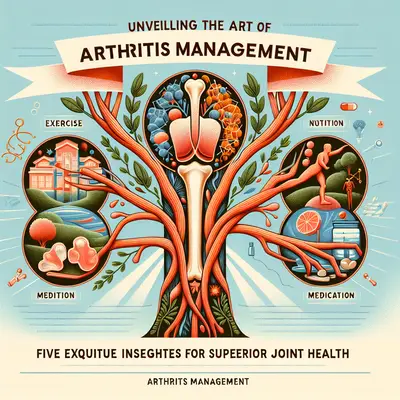
Arthritis management need not be defined by restriction, clinical checklists, and a revolving door of pain remedies. When approached with discernment, it can become a highly tailored practice in preserving ease, precision, and longevity in movement. Rather than chasing quick fixes, a refined strategy for arthritis acknowledges that your joints are a long-term investment—worthy of meticulous attention, intelligent experimentation, and subtle daily upgrades.
Below is a sophisticated, evidence‑guided framework for arthritis management, built around five exclusive insights that go beyond the usual advice. Each is designed for those who value detail, nuance, and sustainable joint health as an integral part of a well‑curated life.
1. Treat Inflammation as an Ecosystem, Not a Single Symptom
Arthritis pain is often discussed as if it exists in isolation—something to be dulled with a pill or numbed with a cream. In reality, joint discomfort is frequently the most visible expression of a deeper inflammatory ecosystem that spans the immune system, metabolism, gut health, and even sleep quality.
Low‑grade, chronic inflammation can be influenced by subtle, everyday choices: late‑night screen exposure that disrupts sleep, a pattern of ultra‑processed foods that quietly raises inflammatory markers, or unmanaged stress that keeps cortisol and inflammatory cytokines hovering just above ideal levels. For people living with rheumatoid arthritis and other inflammatory forms, research consistently links poor sleep and heightened stress with increased disease activity and flares.
A sophisticated arthritis plan therefore includes:
- Rhythm‑anchored sleep: A stable bedtime and wake time, a cool, dark bedroom, and a strict “screens off” cutoff—small practices that improve sleep architecture and, indirectly, inflammatory control.
- Anti‑inflammatory eating as a baseline, not a trend: Prioritizing colorful vegetables, high‑quality protein, omega‑3‑rich fish, extra‑virgin olive oil, and minimizing refined sugars and packaged foods is less about dieting and more about shaping the biochemical environment your joints inhabit.
- Deliberate stress management: Brief daily practices—such as 5 minutes of slow breathing, a short body scan, or a walk without devices—shift your nervous system out of constant alarm, easing inflammatory load over time.
In this view, pain relief is not the goal; it is the side effect of an ecosystem that has been quietly recalibrated in your favor.
2. Design a Joint‑First Movement Routine With Surgical Precision
Generic exercise advice—“just stay active”—is inadequate for discerning joints. The difference between movement that protects cartilage and movement that erodes it can be found in details: alignment, tempo, range of motion, and recovery.
A joint‑first movement routine is curated rather than improvised. It emphasizes:
- Axial alignment before intensity: Training your body to stack joints (ears over shoulders, shoulders over hips, hips over knees) reduces shear forces and uneven wear on arthritic joints. Many people gain more from a month of posture and alignment training than from a year of casual workouts.
- Tempo as a therapeutic tool: Slower, controlled eccentric phases (the “lowering” part of a movement) build strength around the joint while minimizing impact. For example, descending into a squat over 4–5 seconds with support can strengthen without provoking as much pain as fast, bouncy repetitions.
- Range management, not range maximization: The goal is comfortable, reliable range, not the deepest stretch. Pushing into end‑range positions when inflamed joints are not ready can worsen symptoms. Micro‑ranges done consistently—such as a small, pain‑free bend and straighten of the knee under mild resistance—often deliver better outcomes than aggressive, irregular efforts.
- Micro‑sessions throughout the day: Rather than a single strenuous workout, multiple short “movement appointments” (3–8 minutes each) distribute mechanical load across the day, giving arthritic joints frequent nourishment from synovial fluid circulation without a single overwhelming bout.
When movement is planned with this level of precision, exercise transitions from something to “push through” into a highly specialized form of joint maintenance.
3. Curate Your Daily Environment as a Silent Joint Protector
Most arthritis conversations focus on what happens in the gym or clinic. Yet for many, joint discomfort is most influenced by what happens in between: how you sit, how you carry loads, what your shoes ask your joints to absorb, and how your environment either invites or sabotages good mechanics.
Consider your environment as a continuous, quiet intervention:
- Seating as a therapeutic tool: Deep, soft couches often encourage spinal flexion and hip internal rotation that stress already vulnerable joints. Slightly firmer chairs with proper lumbar support and a seat height that allows your feet to rest flat can dramatically change the load distribution through hips, knees, and spine over thousands of daily minutes.
- Footwear as joint architecture: For osteoarthritis in the knees and hips, research supports the use of well‑fitted shoes with cushioning and stability. Minimalist styles may be elegant, but if they encourage collapse of the arch or misalignment of the knee, they exact a hidden cost. Elegance and support can—and should—coexist.
- Load management as daily design: Strategically placing frequently used items at mid‑torso height reduces repeated bending and twisting. Lightweight, wheeled luggage and thoughtfully chosen bags can spare small hand joints and shoulders from repetitive strain.
- Micro‑rest as a standard, not a luxury: For inflamed joints, alternating 25–40 minutes of work with 3–5 minutes of gentle mobility or position change can keep stiffness from accumulating. A brief standing stretch between emails is not indulgent; it is structural joint insurance.
By treating your home, office, and commute as part of your arthritis protocol, you transform ordinary surroundings into a continuous support system.
4. Elevate Your Partnership With Clinicians: From Passive Patient to Strategic Collaborator
Sophisticated arthritis management requires more than adherence to prescriptions; it involves intelligent participation in every clinical decision. Medications—from NSAIDs to biologics—can be powerful allies when used within a thoughtful, long‑term framework.
A refined clinical partnership includes:
- Clear, measurable goals: Instead of “less pain,” think in specifics: “Walk 30 minutes on level ground without stopping,” or “Open jars and type for 2 hours without a flare.” These concrete benchmarks allow you and your clinician to evaluate what is actually working.
- Data‑rich symptom tracking: Use a streamlined journal or app to log pain levels, stiffness duration in the morning, flare triggers, sleep quality, and activity. Patterns often reveal which interventions (medication timing, movement choices, nutrition shifts) are genuinely beneficial.
- Strategic skepticism: Ask how each proposed treatment addresses underlying mechanisms—immune modulation, inflammation, pain signaling, or joint structure—and what the long‑term plan is. This prevents you from collecting medications without a coherent strategy.
- Early and proactive care for inflammatory arthritis: For conditions like rheumatoid arthritis, psoriatic arthritis, and ankylosing spondylitis, early diagnosis and aggressive management can preserve joint integrity and function far more effectively than delayed care. Waiting years to seek specialized help often closes windows of opportunity that cannot be reopened.
The goal is not to accumulate more treatments, but to refine a smaller set of interventions that are precisely matched to your biology, lifestyle, and aspirations.
5. Build a Resilient Identity That Extends Beyond Your Diagnosis
Arthritis can easily become a defining feature of one’s identity—“my bad knee,” “my arthritis hands,” “my chronic pain”—until every choice is filtered through limitation. A more elevated approach protects your sense of self from being quietly narrowed by a medical label.
Resilience here is not forced positivity. It is a deliberate structuring of your life so that joint symptoms are only one part of a much richer narrative.
This can look like:
- Redefining what “active” means: Trading high‑impact sports for low‑impact yet deeply satisfying movement—such as swimming, cycling, Pilates, tai chi, or mindful strength training—preserves both fitness and identity as an active person, without sacrificing your joints.
- Preserving craftsmanship and fine motor pride: If hand arthritis limits certain tasks, adaptive devices (jar openers, larger‑grip tools, ergonomic keyboards) and task pacing can preserve the ability to cook, write, garden, or create art. Tools are not admissions of defeat; they are clever extensions of your capability.
- Deliberate joy and aesthetic pleasure: Surrounding yourself with music, design, scents, or nature that you genuinely appreciate counterbalances the daily discipline of symptom management. This is not frivolous; mood and perception of pain are intertwined through shared brain pathways.
- Cultivating supportive, informed relationships: Choose at least a small circle of people who understand that “you look fine” and “you are fine” can diverge—and who respect your boundaries when you say no, reschedule, or modify plans to protect your joints.
When your identity is rooted in values—curiosity, growth, excellence, artistry—rather than in the presence or absence of pain, arthritis becomes something to manage skillfully instead of something that quietly manages you.
Conclusion
Elegant arthritis management is less about heroic interventions and more about meticulous consistency. When you treat inflammation as an ecosystem, movement as precision engineering, your environment as a silent therapist, your clinicians as strategic partners, and your identity as larger than your diagnosis, you create a framework that honors both your joints and your standards.
Over time, this approach shifts the narrative from living around arthritis to living with intention despite it—where each decision, from footwear to bedtime, becomes part of an elevated, joint‑wise way of life.
Sources
- [Centers for Disease Control and Prevention – Arthritis Basics](https://www.cdc.gov/arthritis/basics/index.html) - Overview of arthritis types, risk factors, and management strategies
- [National Institute of Arthritis and Musculoskeletal and Skin Diseases (NIAMS) – Handout on Health: Rheumatoid Arthritis](https://www.niams.nih.gov/health-topics/rheumatoid-arthritis) - Evidence‑based information on inflammatory arthritis, treatment options, and early management
- [Arthritis Foundation – The Right Shoes for Arthritis](https://www.arthritis.org/health-wellness/healthy-living/physical-activity/other-activities/the-right-shoes) - Guidance on footwear and its impact on arthritic joints
- [Harvard Health Publishing – Foods that fight inflammation](https://www.health.harvard.edu/staying-healthy/foods-that-fight-inflammation) - Explanation of dietary patterns and their role in systemic inflammation
- [Mayo Clinic – Rheumatoid Arthritis and Exercise](https://www.mayoclinic.org/diseases-conditions/rheumatoid-arthritis/in-depth/rheumatoid-arthritis-and-exercise/art-20044701) - Recommendations for safe, effective movement strategies in arthritis management
Key Takeaway
The most important thing to remember from this article is that this information can change how you think about Arthritis Management.