Healthy living, when viewed through a joint-focused lens, becomes less about strict rules and more about deliberate refinement. It is the art of curating your environment, your habits, and even your mindset so that every choice quietly supports the way you move. Rather than chasing extremes—perfect diets, punishing workouts, or rigid routines—this approach favors subtle, sustainable upgrades that accumulate into profound ease. For those who value longevity, elegance in motion, and a high standard of daily comfort, joint health isn’t a side note; it is the design brief.
Below are five exclusive, often overlooked insights that elevate healthy living specifically for people who care deeply about how their joints feel, move, and age.
Insight 1: Treat Your Joints as Precision Instruments, Not Wearable Tools
Most of us unconsciously treat our joints as if they are rugged hardware: built to grind, withstand, and simply “get through” the day. A more refined perspective recognizes them as precision instruments—complex structures of cartilage, ligaments, synovial fluid, and bone that respond exquisitely to the quality of forces placed upon them.
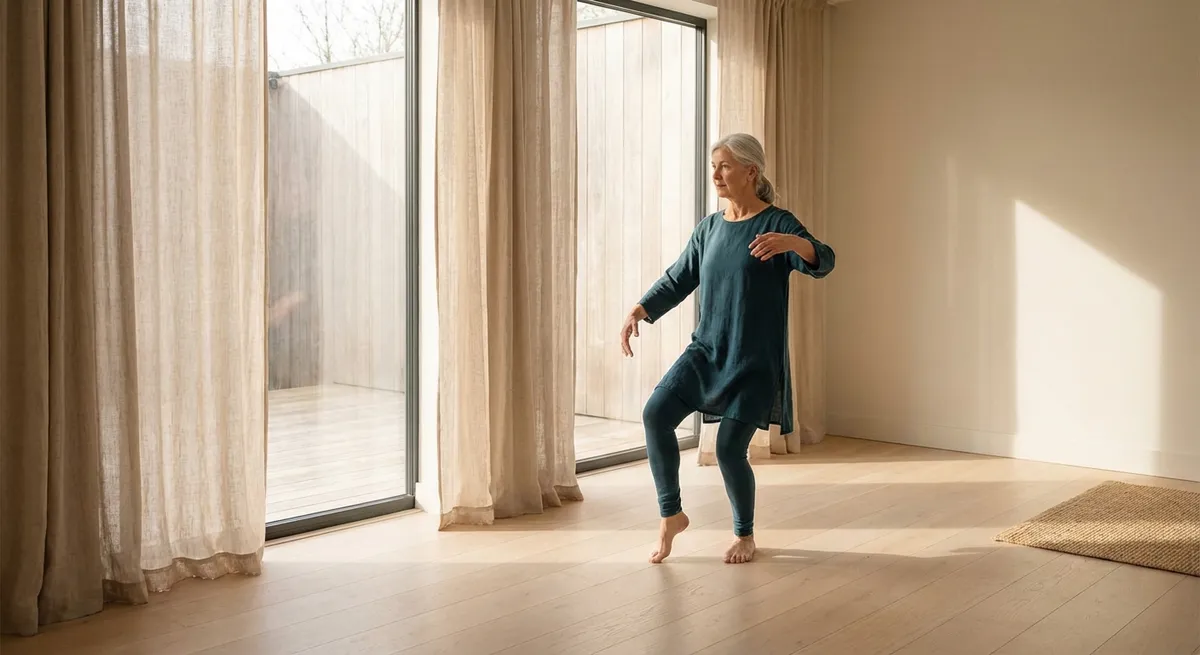
This shift in mindset changes how you stand, sit, lift, and even rest. Instead of locking your knees while waiting in line, you soften them. Instead of dropping into a chair, you descend with controlled intention, letting hip and knee joints share the workload. Instead of carrying a single heavy tote on one shoulder, you balance load across both sides or use a small wheeled bag when possible.
Over time, this “precision instrument” approach creates a standard: no careless impact, no thoughtless twisting, no habitual slouching. You begin to prioritize smooth transitions—how you get out of a car, rise from the floor, or step off a curb. Every micro-movement becomes an opportunity to protect cartilage and tendons from unnecessary strain. Healthy living, in this paradigm, is not about doing more but doing what you already do with better alignment and lower friction.
Insight 2: Design Your Surroundings to Whisper “Move Well”
Truly joint-conscious living starts before you lace up your shoes or roll out a mat. It begins with the spaces you inhabit—your home, your workspace, even your car—subtly nudging you toward better mechanics rather than relying on willpower alone.
Consider your workstation: a chair that supports a neutral pelvis and allows your feet to rest flat on the floor; a monitor positioned at eye level to avoid neck strain; a keyboard and mouse placed so your shoulders remain relaxed rather than reaching forward. These are not indulgences; they are structural investments in your cervical spine, shoulders, and wrists.
At home, small refinements can fundamentally change how your joints experience the day. A supportive mattress that preserves spinal alignment, a step stool that helps you avoid overreaching, handles or grab bars where you most frequently pivot or rise. Even the placement of frequently used items—heavy cookware at waist height rather than overhead or at floor level—translates into fewer awkward squats, twists, and reaches that irritate vulnerable joints.
Healthy living here is spatial: you curate an environment that makes the joint-friendly choice the automatic one. Your surroundings, in effect, become part of your joint-care team.
Insight 3: Curate Strength, Don’t Chase Exhaustion
Joint-focused strength training is not about burning out your muscles; it is about building a quiet, resilient scaffolding around every joint. Many traditional fitness narratives glorify intensity, sweat, and fatigue. A more discerning approach asks a different question: “Will this enhance the stability and control of the joints I must rely on for decades?”
This means prioritizing controlled, lower-impact strength work that trains not just major muscle groups, but the often-neglected stabilizers that protect knees, hips, shoulders, and spine. Think slow, impeccable squats that respect your current mobility; glute work that supports hip alignment; gentle yet focused exercises for the rotator cuff; and core training that stabilizes the lumbar spine rather than straining it.
Instead of maximal loads and explosive repetitions, the goal is precise load and impeccable form. You stop a set when technical quality fades, not when your ego demands one more repetition. You differentiate between satisfying muscular fatigue and sharp, unfamiliar joint discomfort—and you privilege the latter as a firm boundary. Joint-conscious strength is curated, not performative; it is measured, repeatable, and designed to feel sustainable in ten years, not just impressive today.
Insight 4: Elevate Recovery to the Same Status as Activity
Many people accept the value of movement but underappreciate the sophistication of recovery—especially for joints. Tissues involved in joint health (cartilage, tendons, ligaments) are slower to adapt than muscle. When recovery is treated as an afterthought, the joints silently absorb that deficit.
Elevating recovery means embracing it as an active practice: consistent, high-quality sleep; strategic rest days that are “active” in a gentle sense (walking, light mobility, or restorative yoga rather than complete immobility); and nourishment tailored to reduce inflammatory load and support tissue repair. It also means respecting early signals—morning stiffness that lingers, swelling after familiar activities, or a joint that feels “hotter” or more irritable than usual.
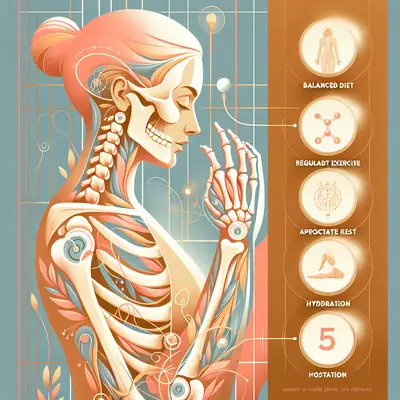
Hydration is another refined but often underrated lever. Synovial fluid—the substance that lubricates joints—is influenced by hydration status. While no amount of water replaces structural damage, consistent hydration supports the milieu in which cartilage and connective tissue function. Paired with an eating pattern rich in colorful produce, omega-3 fats, and minimal ultra-processed foods, your daily choices quietly foster a less inflammatory internal environment.
In a joint-centric lifestyle, recovery is not an apology for being “less active.” It is the sophisticated infrastructure that keeps you able to move with confidence and elegance over the long term.
Insight 5: Use Pain and Discomfort as Data, Not Drama
For individuals focused on joint health, sensations—aches, stiffness, short-lived twinges—are information. Instead of panicking or ignoring them, a refined approach is to interpret them with curiosity and structure. Healthy living becomes partly an ongoing, low-key investigation: What patterns increase my comfort? Which choices consistently aggravate a joint?
You might observe that prolonged sitting leads to hip or knee stiffness that resolves after a short walk, suggesting that your joints respond better to movement breaks than marathon desk sessions. Or you may notice that a certain type of shoe leaves your knees grumbling by evening, whereas a more supportive pair leaves them largely silent. Subtle trends—mornings better than evenings, stairs worse than flat surfaces, downhill harder than uphill—form a profile of what your joints currently tolerate.
This data-driven mindset also extends to professional support. Instead of seeking care only when in acute distress, you might develop an ongoing relationship with a physical therapist, sports medicine physician, or rheumatology specialist as appropriate, using periodic check-ins to adjust your strategy. Imaging and lab results, when indicated, become additional pieces of information rather than verdicts.
Healthy living, seen from this vantage point, is not about perfection or pain-free existence. It is about responsiveness: noticing, adjusting, and iterating so that over time, your joints are consistently better cared for than neglected. That steady, informed attentiveness is where long-term ease truly comes from.
Conclusion
A joint-centered vision of healthy living is not loud. It does not depend on extreme diets, punishing regimens, or dramatic “before and after” stories. Instead, it is a quiet refinement of how you move, where you move, how you strengthen, how you recover, and how you interpret the messages your body sends.
By treating your joints as precision instruments, shaping your environment to encourage graceful mechanics, curating strength rather than chasing exhaustion, honoring recovery as a core pillar, and using discomfort as data instead of drama, you create a lifestyle that is both protective and elevated. The result is not only less pain, but a more composed relationship with your own body—one in which movement remains not just possible, but deeply satisfying, for years to come.
Sources
- National Institute of Arthritis and Musculoskeletal and Skin Diseases (NIAMS) – Joint Health Overview – Explains how joints work, common joint problems, and general strategies for joint protection.
- Arthritis Foundation – Protecting Your Joints – Practical guidance on joint-friendly movement, posture, and daily activity modifications.
- Harvard T.H. Chan School of Public Health – Anti-Inflammatory Diet – Details how dietary patterns influence inflammation, relevant to joint comfort and long-term joint health.
- Mayo Clinic – Strength Training: Get Stronger, Leaner, and Healthier – Discusses safe, progressive strength training principles, including joint-conscious approaches.
- Centers for Disease Control and Prevention (CDC) – Physical Activity for Arthritis – Reviews how appropriate physical activity can improve joint function, reduce pain, and support long-term mobility.
Key Takeaway
The most important thing to remember from this article is that this information can change how you think about Healthy Living.