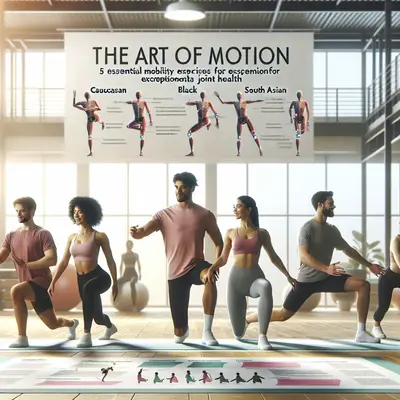
Mobility is not simply the ability to move; it is the art of moving well. For those who care deeply about long-term joint health, mobility work becomes less of a workout and more of a daily ritual—small, precise investments that protect your freedom to walk, reach, twist, and live without hesitation. When curated thoughtfully, mobility exercises can feel less like physical therapy and more like a quiet refinement of how your body inhabits space.
In this guide, we’ll explore an elevated approach to mobility practices designed for joint-conscious individuals. Rather than chasing intensity, we’ll focus on control, nuance, and five exclusive insights that people serious about preserving their joints will quietly appreciate.
Mobility as Joint “Nutrition,” Not Just Stretching
For joint health, mobility is best understood as nourishment rather than punishment. Where traditional stretching often emphasizes passive lengthening, mobility training emphasizes controlled, intentional movement through a joint’s available range. This is especially meaningful for those with arthritis or early joint changes: the goal is not maximal range, but high-quality, repeatable range.
Think of each mobility session as feeding your joints: synovial fluid is circulated, cartilage is gently compressed and decompressed, and the surrounding muscles learn to support motion rather than resist it. Slow, articulate movement also gives the nervous system a sense of safety—critical if you are managing stiffness, discomfort, or a history of injury. Done consistently, these small inputs compound, preserving fluid movement in ways that aggressive, sporadic workouts simply cannot match.
Insight 1: Precision Over Range—Train the Edges, Not the Extremes
People serious about joint longevity quickly learn that “more stretch” is not always better. What matters more is how you behave at the edges of your current range of motion. Pushing into pain or end-range instability can provoke irritation, particularly in sensitive knees, hips, and shoulders.
A more refined strategy is to explore the border zones of movement: where you feel resistance but not alarm. For example, instead of forcing a deep hip stretch, you might perform slow hip circles (often called controlled articular rotations) in a comfortable arc, focusing on smoothness and control. Over time, those borders gently expand as your joint—and your nervous system—decide the motion is safe.
This attention to detail transforms mobility work from generic stretching into sophisticated joint training. It also respects the realities of aging and arthritis: you honor your structure, rather than demanding performance it cannot comfortably give.
Insight 2: Sequence Matters—Mobilize From the Ground Up
Most people approach stretching randomly; those invested in joint health can benefit from a deliberate sequence. The body is an interconnected system, and stiffness in the ankles or hips will eventually show up as strain in the knees, lower back, or even the neck.
A thoughtfully structured mobility ritual might move from the ground up:
- Ankles and feet: gentle ankle circles, dorsiflexion drills, toe flex and spread
- Knees: controlled bends and straightens, seated or standing, without forcing deep flexion
- Hips: slow leg swings, hip circles, and gentle external/internal rotation in comfortable ranges
- Spine: cat–cow variations, segmental roll-downs, and controlled rotation
- Shoulders and wrists: arm circles, scapular glide work, wrist circles and flexion/extension
By moving systematically, you “stack” improvements: better ankle mobility supports a more natural gait; more available hip motion reduces strain on lumbar joints; mobile shoulders reduce compensations through the neck and upper back. The result is a whole-body elegance in motion rather than isolated patches of flexibility.
Insight 3: Load Is Not the Enemy—Thoughtful Resistance Protects Joints
For those who have experienced joint pain, the instinct is often to avoid resistance entirely. Yet evidence consistently supports intelligent loading as one of the most powerful tools for protecting cartilage, maintaining bone density, and stabilizing joints.
The key distinction is between chaotic load and curated load. Chaotic load looks like sporadic, high-impact exercise with little preparation. Curated load is carefully dosed: light resistance bands, controlled bodyweight exercises, or moderate weights that challenge the muscles around a joint without provoking joint pain.
For example:
- A light resistance band used for slow, controlled shoulder external rotations can reinforce rotator cuff strength, which in turn stabilizes the shoulder joint.
- Sit-to-stand drills from a chair, performed smoothly with good alignment, can gently challenge the hips and knees without the stress of heavy squats.
- Calf raises at a counter or wall support both ankle mobility and strength, crucial for balance and walking efficiency.
When resistance is introduced with care, it acts like scaffolding for your joints—supporting, rather than threatening, their long-term function.
Insight 4: Micro-Sessions Beat Marathon Stretching
Long, infrequent stretching sessions are less effective—and often more irritating for sensitive joints—than brief, frequent mobility “micro-sessions.” People deeply committed to joint health treat mobility like dental hygiene: regular, non-negotiable, and integrated into daily routines.
Consider sprinkling 3–7 minute sessions throughout the day:
- Morning: gentle neck, spine, and hip mobility to ease out of sleep stiffness
- Midday: ankle and wrist circles, shoulder rolls, and a brief spinal rotation break from desk work
- Evening: slower, more soothing hip and spine mobility to signal the body toward rest
These micro-sessions have several advantages. They don’t fatigue you, they’re easy to sustain, and they give your joints repeated reminders to stay supple. Over weeks and months, this quiet consistency is far more powerful than an occasional “big stretch” day.
Insight 5: Alignment Is Your First Mobility Tool
Before chasing more flexibility, refine how you align your body in the movements you already do. Alignment is the quiet luxury of joint care: subtle, often invisible, yet profoundly protective.
A few examples:
- Knees and toes: When performing any bending motion—rising from a chair, stepping up, gentle squats—align your knees in line with your second toe, rather than collapsing inward. This small adjustment can significantly reduce stress on the knee joint.
- Pelvis and spine: In standing and walking, imagine the pelvis as a bowl you’re balancing, not spilling forward (overarching the back) or backward (tucking excessively). This supports a more neutral spine and distributes load more evenly.
- Shoulders and head: Softly draw your shoulder blades slightly down and back, and imagine your head floating upward rather than jutting forward. This gentle postural cue protects the neck and upper back, especially if you spend time on screens.
When you combine refined alignment with gentle mobility, every step, reach, and twist becomes a mini training session in joint preservation.
Curating Your Own Daily Mobility Ritual
To bring these principles together, consider designing a simple, elegant daily ritual—a brief, repeatable sequence you can perform almost anywhere. For example:
Ankles & Feet (1–2 minutes):
Seated or standing ankle circles, 5–8 slow rotations each direction per side; gentle toe flex and extend.
Hips & Knees (2–3 minutes):
Standing or supported hip circles, small and controlled. Follow with sit-to-stand from a chair, focusing on knee alignment.
Spine (2–3 minutes):
Cat–cow on hands and knees or seated spinal flex/extend; then slow, comfortable thoracic rotations while seated or standing tall.
Shoulders & Wrists (2–3 minutes):
Arm circles, starting small and gradually widening; shoulder blade glides (shrug up, back, and down); gentle wrist circles and flexion/extension.
This is not about intensity; it is about refinement. Over time, your ritual can evolve based on how your joints respond, guidance from your clinician or physical therapist, and your own preferences. The most sophisticated mobility plan is not the most elaborate—it is the one you actually perform, consistently, with care.
Conclusion
Preserving joint health is less about heroic workouts and more about quiet, intelligent choices repeated over time. When you treat mobility exercises as a daily ritual—precise, respectful, and thoughtfully sequenced—you give your joints what they truly need: safe motion, gentle loading, and consistent attention.
By prioritizing control over extremes, structure over randomness, and alignment over intensity, you create a body that moves with understated confidence. The result is not just flexibility, but a kind of fluid strength—the capacity to move through your life with ease, stability, and a sense of physical composure that feels as good as it looks.
Sources
- Harvard Health Publishing – Why Stretching Matters as You Age – Overview of flexibility and mobility benefits, especially for older adults.
- Arthritis Foundation – Exercise and Arthritis – Evidence-based guidance on safe movement and exercise for people with joint conditions.
- Mayo Clinic – Strength Training: Get Stronger, Leaner, Healthier – Explains how resistance training supports joint stability and long-term function.
- Cleveland Clinic – Joint Pain: Causes, Relief, and When to See a Doctor – Background on joint pain, contributing factors, and general management strategies.
- National Institute on Aging – Exercise and Physical Activity – Government resource on safe mobility, balance, strength, and flexibility practices for healthy aging.
Key Takeaway
The most important thing to remember from this article is that this information can change how you think about Mobility Exercises.