There is a corner of the internet right now devoted entirely to celebrating the fluffiest cats on the planet—an online group whose photos are going markedly viral. Beneath the charm of cloud‑like fur and languid stretches lies an unexpectedly sophisticated lesson for anyone living with joint pain. Watch closely and you’ll notice: these cats move with a kind of effortless elegance we quietly crave in our own bodies.
While the world scrolls through images of cats draped over armrests and curling into perfect spirals, we have an opportunity to translate that visual softness into physical reality. For people focused on joint health, “fluffy” doesn’t have to mean passive or indulgent—it can become a model for supple, responsive, well‑cared‑for movement.
Below are five refined, mobility‑focused insights inspired by this current wave of feline fascination—each one designed to help you cultivate joints that feel less rigid, more fluid, and quietly luxurious to live in.
1. The Art of “Soft Readiness”: Moving Like a Cat, Not a Statue
Scroll through today’s trending fluffy‑cat photos and you’ll rarely see one poised like a stiff figurine. Instead, they embody “soft readiness”—shoulders relaxed, spine curved, limbs loosely arranged yet ready to move in any direction.
For joint health, this quality is a powerful model. Many of us hold ourselves in subtle rigidity: clenched glutes when standing, locked knees while waiting in line, tense shoulders at a desk. Over time, that constant micro‑tension starves our joints of the gentle movement that nourishes cartilage and synovial fluid. A premium mobility routine embraces softness first, then precision. Before any exercise, take 60 seconds to “melt” through your body: unlock your knees, let your ribs float, allow your jaw to ungrip, and invite your breath to deepen. Only then transition into controlled circles of the ankles, hips, and shoulders. This soft‑then‑strong sequencing makes your joints more receptive, reduces resistance, and turns every mobility drill into a kind of understated, restorative luxury.
2. The Curved Spine Advantage: Why Flexibility Isn’t Just About “Bending More”
Those now‑viral cat photos highlight something we often overlook in human movement: mastery of curves. Cats aren’t just flexible—they are exquisitely segmental. They can articulate every part of the spine, from base to skull, in a smooth wave. For joint‑conscious humans, this matters more than being able to simply “touch your toes.”
A refined spinal mobility practice focuses on control between the vertebrae, not just achieving a deep stretch. Try this: seated tall, imagine your spine as a string of pearls. Slowly round from the very base of your spine, one “pearl” at a time, letting your head be the last to bow. Then reverse into a gentle extension, again from the base upward. Move slowly enough that you could pause anywhere along the way. This type of controlled articulation distributes load evenly across the spine, so no single joint segment takes the full brunt of daily life. Over weeks, people with stiffness from desk work or mild arthritis often notice not just less pain, but an almost feline sense of “whip” and fluidity through the torso that transforms how walking, turning, and even reaching for a glass feels.
3. Micro‑Stretches, Major Dividends: Embracing The “Catnap” Approach to Mobility
In the trending cat group, many of the most shared images capture tiny, in‑between moments: a paw reaching, a back slightly arched, a tail gently unfurling. These are not formal “sessions” of movement—they’re micro‑rituals woven seamlessly into the day.
For joint health, this pattern is far more protective than relying on a single heroic workout. Cartilage thrives on frequent, low‑load motion. Instead of waiting for an hour‑long stretch class, adopt a “catnap” approach to mobility: every 45–60 minutes, perform 60 seconds of deliberate joint motion. Rotate your wrists and ankles in both directions. Glide your hips in gentle figure‑eights while standing. Draw slow halos with each shoulder. The elegance lies in subtle consistency: you’re quietly bathing your joints in nutrient‑rich fluid all day long. Over time, these micro‑stretches accumulate into a powerful buffer against stiffness, without ever feeling like one more task on your already crowded schedule.
4. Luxurious Ground Contact: Re‑Educating Feet and Hips Together
Notice how those fluffy cats interact with the ground in the viral photos: paws splay softly, weight is distributed, and every movement starts from a confident, sensory‑rich base. For humans, we’ve often dulled that relationship with overly rigid shoes, hard floors, and hours of sitting. The result: ankles, knees, and hips pay the price.
A sophisticated mobility practice treats the feet and hips as a single conversation rather than separate projects. Begin with barefoot (or thin‑soled) standing on a soft, non‑slippery surface. Slowly rock your weight from heel to ball, then from inside edge to outside edge of the foot, feeling how your hips must subtly adjust to keep you balanced. Next, add gentle hip hinges—pushing your hips back while maintaining that alive, responsive contact through all four corners of your feet. This style of practice improves joint alignment not by rigidly “correcting” posture, but by restoring the sensory richness that lets your body self‑organize. The effect is quietly dramatic: more stable knees on stairs, less pressure through the low back, and a feeling that your legs and pelvis are working as an elegant, unified system.
5. Rest as a Skill, Not a Surrender: Learning from the Way Cats Truly Lounge
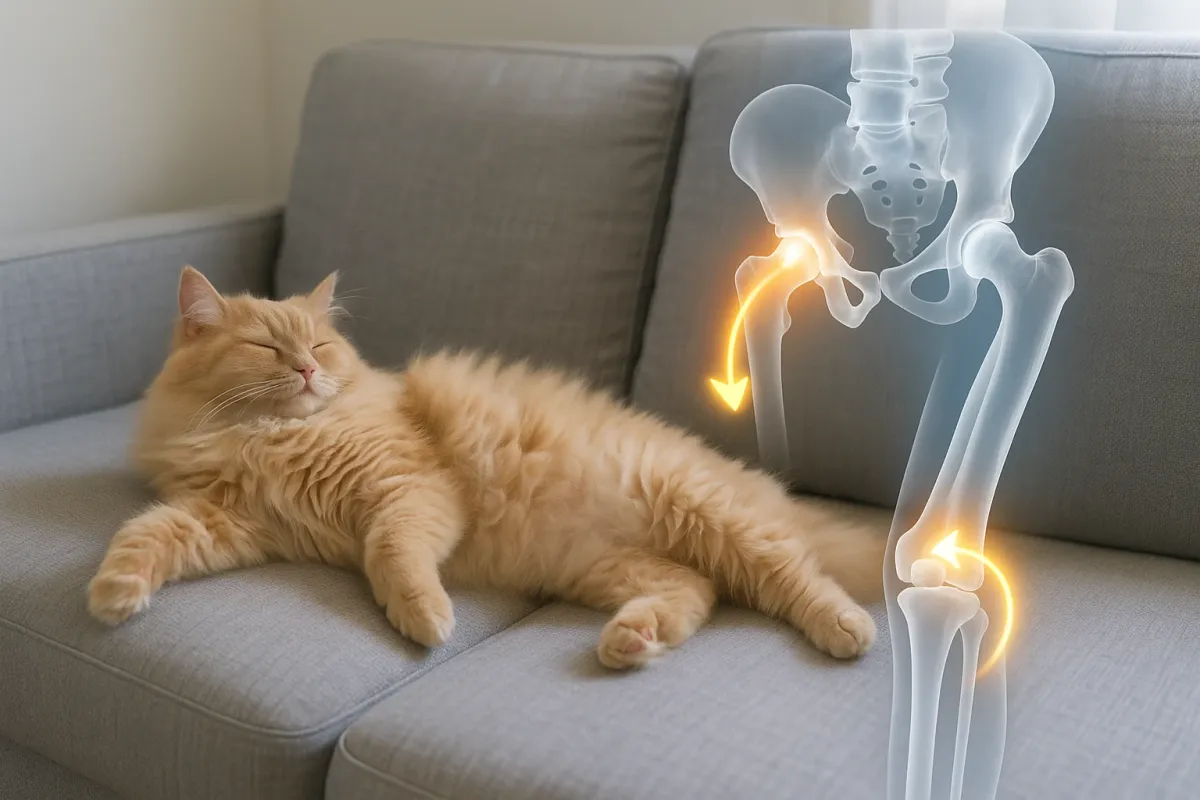
The internet’s favorite fluffy cats excel at one thing humans have almost forgotten how to do: deeply restorative rest. Their lounging positions are not just adorable; they are biomechanically interesting—spines supported, limbs relaxed, joints gently opened without strain.
For those living with joint sensitivity, rest positions are as important as exercise selection. Think of them as “passive mobility exercises.” Instead of collapsing into a sofa with twisted knees and a curved neck, curate your rest. Use cushions to support under the knees when lying on your back, which subtly unloads the lumbar spine and hips. When side‑lying, place a pillow between your thighs to align hips and knees, and another under your waist if there’s a gap to keep the spine neutral. Occasionally explore gentle, supported positions that open joints—like reclining with your feet elevated and knees softly bent. By treating rest as an intentional practice, you allow inflamed or overworked joints to experience decompression and alignment, turning downtime into an elegant recovery ritual rather than a missed opportunity.
Conclusion
As social media feeds fill with impossibly fluffy cats, it’s tempting to see only comfort and cuteness. Yet beneath the softness lies a compelling architecture of movement: supple spines, responsive joints, and an almost luxurious relationship with rest and readiness.
For those invested in joint health, these viral images offer more than a momentary mood lift—they offer a quiet blueprint. Embrace soft readiness before strength, cultivate curved‑spine control, scatter micro‑stretches throughout your day, refine the way your feet and hips collaborate, and treat rest as a carefully curated skill. In doing so, you begin to inhabit your body the way those cats inhabit their fur: not just pain‑reduced, but deeply, elegantly at ease in every movement.
Key Takeaway
The most important thing to remember from this article is that this information can change how you think about Mobility Exercises.