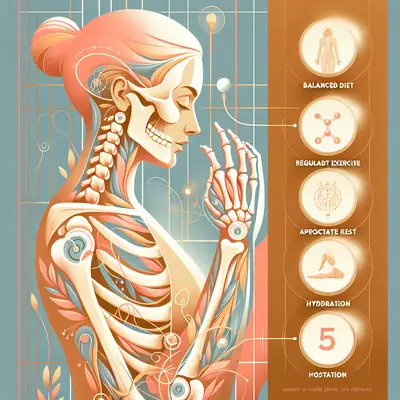
Healthy living, at its most elevated, is not a collection of hacks but a cultivated atmosphere—an environment in which your joints are consistently supported, never surprised. For those who care about quality of movement as much as quality of life, joint health becomes the quiet axis of daily decisions: how you sit, how you stand, what you eat, how you restore. This is not about athletic extremes or rigid regimens; it is about designing a life in which your joints feel subtly, continuously protected.
What follows is a curated exploration of healthy living through the lens of joint integrity—five exclusive, evidence‑aligned insights that move beyond basic advice and into a more considered, luxurious approach to how you inhabit your body.
Insight 1: Treat Posture as Architecture, Not Manners
Posture is often reduced to etiquette—“sit up straight”—when it is closer to structural engineering. Your spine, hips, and knees form the load‑bearing columns of your life; when these are stacked with care, your joints spend less time compensating and more time simply doing their job.
Healthy living, viewed through this architectural lens, begins with how often you reset your alignment rather than how perfectly you hold it. Instead of striving for rigid, military‑style posture, think in terms of dynamic neutral: ears gently over shoulders, ribs resting above the pelvis, weight evenly distributed across both feet. Micro‑adjustments throughout the day—when you open your laptop, step out of a car, or stand in a queue—are worth more than a single “good posture” moment in the gym.
This is particularly protective for weight‑bearing joints. Misalignment in the pelvis can show up as knee discomfort; a persistent forward head position increases pressure across cervical joints. Consider subtle prompts: a calm phone reminder every hour to “realign and lengthen,” or arranging your workspace so your screen meets your gaze rather than your neck reaching forward. When posture becomes a quiet design standard, your joints experience less friction, less fatigue, and more effortless ease.
Insight 2: Curate Movement Like a Wardrobe, Not a To‑Do List
Healthy living typically treats exercise as a box to tick: cardio, strength, stretch. For joints, a more refined approach is to build a movement wardrobe—a curated selection of motions that collectively cover what your joints actually need: load, range, stability, and variability.
Think of four categories:
- Foundational strength: controlled squats, hip hinges, and pulling movements that respect joint angles and emphasize form over ego.
- Precision mobility: slow, deliberate range‑of‑motion work (such as controlled articular rotations for shoulders, hips, and ankles) that keeps joint capsules nourished and supple.
- Elastic resilience: gentle, spring‑like movements—light hopping, brisk walking, or low‑impact dance—that maintain the connective tissues’ bounce without overtaxing them.
- Restorative flow: practices such as yoga or tai chi that integrate breath, balance, and joint‑friendly transitions.
Instead of asking, “Did I work out today?” you start asking, “Did my joints experience variety, support, and recovery today?” This reframing helps you avoid both overuse and underuse—two quiet saboteurs of joint health. Over time, your body feels less like it’s oscillating between exertion and collapse, and more like it’s living in a steady rhythm of thoughtful, joint‑wise activity.
Insight 3: Elevate Hydration and Nutrition into Joint Preservation
In a premium approach to healthy living, hydration and nutrition are not mere wellness buzzwords; they are materials for your internal infrastructure. Cartilage is largely water; synovial fluid—your joints’ natural lubricant—depends on adequate hydration to maintain its viscosity. Subtle dehydration doesn’t just affect your skin; it can make your joints feel “sticky,” less fluid in motion.
Begin with hydration that is measured, not frantic. Spacing water intake throughout the day (rather than gulping sporadically) helps maintain a stable internal environment. Enhancing water with a pinch of electrolytes—especially after sweating—can support better absorption without unnecessary sugar.
Nutritionally, think beyond “anti‑inflammatory” as a trend and toward joint‑supportive elegance:
- Prioritize omega‑3 rich foods such as fatty fish, walnuts, and flaxseeds, which may support reduced inflammatory signaling.
- Include a spectrum of deeply colored vegetables and berries; their polyphenols contribute to long‑term tissue protection.
- Ensure sufficient, high‑quality protein to maintain the muscles that buffer and stabilize your joints—this is especially critical as we age.
- Consider collagen‑supportive nutrients (vitamin C, copper, and amino acids like glycine and proline) through citrus, leafy greens, and thoughtfully chosen protein sources.
Healthy living for joint care is less about aggressive restriction and more about consistent inclusion: each meal becomes an opportunity to subtly nourish the scaffolding that keeps you moving with grace.
Insight 4: Reimagine Recovery as a Daily Ritual, Not an Emergency
Most people discover recovery only when something hurts; a refined joint‑wise lifestyle builds recovery in before the crisis. Rest is not the absence of effort; it is carefully planned tissue maintenance.
Two dimensions matter here: frequency and texture of recovery.
- Frequency: Micro‑recovery sprinkled into your day can be more powerful than an occasional “off day.” Standing up for two minutes after 30–45 minutes of sitting, doing gentle ankle circles while waiting for the kettle to boil, or lying down for five minutes with legs elevated can all reduce joint and tissue congestion.
- Texture: Vary the type of restoration. Some days, it may be a warm bath to encourage blood flow and ease stiffness; on others, a cool compress for an irritated joint or a deliberate early bedtime to support systemic repair.
Sleep is the most understated joint‑recovery tool. Deep, consistent sleep allows for hormones involved in tissue rebuilding to work uninterrupted. Treat your night routine as you would a carefully curated environment: low light, minimal blue‑light exposure, a calm pre‑sleep sequence (stretching, breathwork, or gentle reading) that signals to your body that repair time has begun.
By turning recovery into a ritual rather than a reaction, you create a protective margin around your joints; minor irritations have less chance to escalate into chronic complaints.
Insight 5: Design Your Surroundings as an Extension of Your Joints
Healthy living becomes truly elevated when your physical environment quietly collaborates with your joints. Instead of expecting your body to constantly adapt to poorly designed spaces, you curate spaces that adapt to you.
Start with your primary zones: where you work, relax, and sleep. An adjustable chair that supports your hips at roughly 90 degrees, with feet grounded and knees aligned over ankles, can transform hours of sitting from joint‑draining to joint‑neutral. Position frequently used items at a height that avoids repetitive deep bending or awkward twisting—this spares knees, hips, and spine from unnecessary strain.
Footwear is another underappreciated environmental decision. Invest in shoes that balance support and mobility: ample room for toe splay, stable heel counters, and cushioning suited to your typical surfaces. At home, consider softer floor zones (such as well‑placed rugs or mats) in areas where you stand for extended periods, like the kitchen.
Even lighting can indirectly affect joint health: well‑lit stairs and pathways reduce micro‑missteps and subtle compensations that accumulate over time. By viewing your surroundings as an extension of your musculoskeletal system, you shift from constant adaptation to considered support—a hallmark of a truly premium healthy living experience.
Conclusion
For those who value longevity in its most refined form, healthy living is not a performance—it is a design philosophy. When posture is treated as architecture, movement as a curated wardrobe, nutrition as joint preservation, recovery as ritual, and your environment as an ally, your joints are no longer an afterthought. They become honored participants in a life that is both active and composed.
This is the quiet luxury of joint‑wise living: not the absence of effort, but the presence of intention. With each aligned choice, you are not merely protecting your joints for the future—you are upgrading the quality of every step, reach, and stretch in the present.
Sources
- [National Institute of Arthritis and Musculoskeletal and Skin Diseases (NIAMS): Joint Health and Aging](https://www.niams.nih.gov/health-topics/aging-joints) - Overview of how joints change over time and strategies to maintain joint function
- [Harvard Health Publishing: Joint-Friendly Exercise](https://www.health.harvard.edu/staying-healthy/joint-friendly-exercise-and-activity-guidelines) - Evidence-based guidance on safe, supportive activity for joints
- [Arthritis Foundation: Nutrition and Arthritis](https://www.arthritis.org/health-wellness/healthy-living/nutrition) - Detailed discussion of dietary patterns and specific nutrients that support joint health and reduce inflammation
- [Mayo Clinic: Posture and Joint Health](https://www.mayoclinic.org/healthy-lifestyle/adult-health/in-depth/posture-align-yourself-for-good-health/art-20269950) - Explains the impact of posture and alignment on musculoskeletal well-being
- [Centers for Disease Control and Prevention (CDC): Physical Activity Basics](https://www.cdc.gov/physicalactivity/basics/index.htm) - Recommendations on activity levels and types, including considerations for joint safety and long-term health
Key Takeaway
The most important thing to remember from this article is that this information can change how you think about Healthy Living.