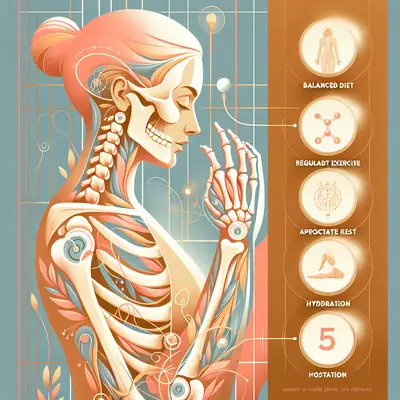
The most elegant bodies do not merely move; they move with intention, economy, and quiet strength. For those who care about long‑term joint health, “healthy living” is not a vague wellness ideal—it is a form of daily design. Every step, every bite, every hour of sleep becomes part of an architectural blueprint that either preserves or erodes your joints. This is a lifestyle calibrated not around restriction or fear of injury, but around refined choices that protect the structures carrying you through every decade of life.
The Art of Load: Treating Your Joints Like Precision Engineering
Healthy living for joint health begins with understanding load—not only what you lift in the gym, but what your joints carry all day without your noticing. Joints thrive on appropriate, intelligently varied load; too little and they stiffen, too much and they degrade. Elevated body weight, for example, multiplies the stress on weight‑bearing joints such as the knees and hips, turning every staircase into a silent overuse event. Yet controlled loading through walking, strength work, and low‑impact conditioning is what nourishes cartilage, stimulates synovial fluid circulation, and maintains the tissues surrounding your joints.
Mindful load management means thinking beyond workouts to your entire 24‑hour cycle. Standing for long periods in unsupportive shoes, sitting in a slouched posture, or carrying a heavy bag on one shoulder for years can have the same cumulative effect as a poorly designed exercise routine. The goal is not to eliminate stress—your joints require it—but to curate it: strategic, varied, and recoverable loads that build resilience rather than wear. This mindset turns every environment—your home, office, and commute—into an opportunity to reduce unnecessary strain and create a more joint‑friendly daily landscape.
Exclusive Insight 1: Precision Strength Over General Fitness
For truly joint‑conscious living, “getting stronger” is not specific enough. Precision strength means targeting the muscles that directly stabilize and guide each joint, building a protective frame around your skeletal architecture. The hip abductors that steady the pelvis, the rotator cuff that secures the shoulder, and the deep core musculature that supports the spine all act as sophisticated shock absorbers. When these systems are robust, each joint experiences cleaner, more controlled movement, even during mundane activities such as rising from a chair or lifting groceries.
This is where a more refined approach to exercise programming matters. Rather than chasing arbitrary fitness goals or random high‑intensity classes, joint‑savvy individuals focus on technically sound strength routines with impeccable form and controlled tempo. Fewer, better exercises—executed with attention to joint alignment and range of motion—outperform frantic volume every time. Over months and years, this micro‑precision becomes macro‑insurance, reducing injury risk, managing discomfort, and preserving the confidence to stay active as you age.
Exclusive Insight 2: The “Micro‑Movement” Philosophy for Sedentary Hours
Healthy living is often misdefined by the single hour at the gym, ignoring the other 23. For joints, the stillness of modern life is its own hazard. Sitting for extended periods, even if you meet conventional exercise guidelines, is associated with stiffness, reduced lubrication of the joints, and less optimal blood flow to supporting tissues. Joints are designed to move; static positions, even “neutral” ones, become problematic when held for too long.
A more elevated approach is to treat your day as a sequence of micro‑movements. Standing up every 30–45 minutes, rotating through a few gentle neck and shoulder motions, flexing and extending your knees and ankles, or shifting from sitting to a supported standing position all help “remind” your joints of their purpose. These are not workouts; they are structural refreshes. Over the course of a week or a month, small, frequent positional changes add up to a powerful antidote to stiffness and low‑grade discomfort—without breaking your schedule or your aesthetic of a composed, focused workday.
Exclusive Insight 3: Anti‑Inflammatory Eating as Daily Joint Insurance
Nutrition for joint health is often reduced to single supplements, but the more sophisticated view is nutritional patterning over time. Chronic, low‑grade inflammation accelerates joint degeneration, especially for those already predisposed to arthritis or recovering from joint injuries. An eating pattern that favors whole, minimally processed foods, emphasizes color and variety in plants, and includes quality sources of protein and healthy fats is not simply a “clean” way to eat—it is structural maintenance from the inside out.
Particular attention should be paid to anti‑inflammatory components: omega‑3 fatty acids from fatty fish, walnuts, and flax; polyphenol‑rich berries and leafy greens; and olive oil as a primary fat. Just as important is what you quietly remove or limit: excessive added sugars, ultra‑processed snacks, and habitual overconsumption of alcohol, all of which can amplify inflammatory signaling. Hydration is often overlooked, but synovial fluid—the lubricant in your joints—is water‑dependent. A well‑hydrated body is a more supple one, with tissues better equipped to cushion and glide rather than grind.
Exclusive Insight 4: Sleep as the Underrated Joint Recovery Mechanism
Within a premium approach to healthy living, sleep is not a passive state; it is one of your most potent recovery tools for joint preservation. During deep sleep, the body orchestrates tissue repair, hormonal balance, and immune regulation, all of which influence how joints feel and function. Poor or fragmented sleep has been associated with heightened pain sensitivity and increased inflammatory markers, creating a feedback loop where soreness impairs sleep and sleep deficits amplify discomfort.
A joint‑aware sleep routine involves more than just hours in bed. Your mattress and pillow alignment play a material role in spinal and joint positioning throughout the night. Side sleepers with knee discomfort may benefit from a soft pillow between the legs to keep the hips aligned; those with shoulder sensitivities might experiment with back sleeping and carefully chosen support under the arms. Creating a stable, dark, cool sleep environment and a consistent pre‑sleep ritual signals your nervous system to downshift, which in turn improves muscular relaxation—another quiet advantage for joints taxed during the day.
Exclusive Insight 5: Early Signals, Quiet Adjustments, Lifelong Benefit
Healthy living for joint longevity is marked by an elevated awareness of early signals. Occasional morning stiffness, localized discomfort after a specific activity, or a new sense of “catching” in a joint are not necessarily crises—but they are data. Those who maintain beautiful movement into later life rarely ignore these whispers. Instead, they make precise, early adjustments: refining technique, modifying training loads, scheduling a movement assessment, or consulting a clinician before a manageable issue evolves into structural damage.
This is not hypervigilance; it is respectful curiosity about your body’s capacity and limits. Keeping a simple log of activities and any joint sensations, even for a few weeks, can reveal patterns: perhaps your knees dislike sudden increases in hill walking, or your wrists protest long, unsupported hours on a laptop. With this information, you can redesign your routines—adding targeted strength work, upgrading your ergonomics, or pacing higher‑load activities. The benefit compounds over years: fewer injuries, more consistent activity, and a body that feels trustworthy rather than precarious.
Weaving It All Together: A Lifestyle That Honors Your Framework
Healthy living, when viewed through the lens of joint health, becomes a refined choreography rather than a collection of disconnected habits. You move with an understanding of load, you strengthen with precision, you sprinkle micro‑movement into long days, you eat to quiet inflammation, and you sleep to restore the integrity of your tissues. Most importantly, you listen early and adjust calmly, treating your joints as enduring assets rather than expendable hardware.
This approach does more than prevent pain; it expands what remains possible in your later decades. The capacity to walk long distances in beautiful cities, to practice a favorite sport, to carry grandchildren, or simply to rise from the floor without thinking—that is the true luxury. Graceful alignment is not genetic luck; it is built, choice by choice, across years. And your next decision—how you sit, stand, move, or restore—can be the first of many that protect the architecture of your joints for the life you want to live.
Sources
- [Centers for Disease Control and Prevention – Physical Activity and Arthritis](https://www.cdc.gov/arthritis/basics/physical-activity-overview.html) - Overview of why and how appropriately dosed movement supports joint health
- [Harvard Health Publishing – Why Exercise is Crucial to Managing Arthritis](https://www.health.harvard.edu/pain/why-exercise-is-crucial-to-managing-arthritis) - Discusses the protective role of strength and aerobic exercise for joints
- [National Institutes of Health – Diet and Inflammation](https://www.niams.nih.gov/health-topics/nutrition) - Explores how dietary patterns influence inflammation and musculoskeletal health
- [Johns Hopkins Medicine – The Importance of Sleep for Health](https://www.hopkinsmedicine.org/health/wellness-and-prevention/the-importance-of-sleep) - Details how sleep contributes to tissue repair, pain perception, and overall health
- [Arthritis Foundation – Protecting Your Joints](https://www.arthritis.org/health-wellness/healthy-living/physical-activity/working-out/protecting-your-joints) - Practical guidance on daily strategies to reduce joint strain and preserve function
Key Takeaway
The most important thing to remember from this article is that this information can change how you think about Healthy Living.