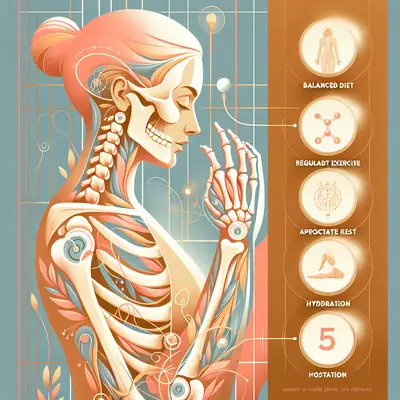
Our joints quietly determine the quality of every movement we make—how we rise from a chair, descend a staircase, or reach for a glass of water. When we treat healthy living as an investment in these hinges of daily life, wellness becomes less about restriction and more about refinement. This is not a call for extreme routines, but for a curated, intelligent approach that allows your joints to carry you with composure for decades.
Below are five exclusive, joint‑centric insights that elevate healthy living beyond the usual advice. Each is designed for those who see their body as an asset to be thoughtfully maintained, not merely “managed.”
Insight 1: Train the Small Muscles That Quietly Protect Your Joints
Most conversations about joint health fixate on major muscle groups—quads, glutes, core. Yet the understated guardians of joint stability are often the small, deep muscles that rarely get a deliberate spotlight.
These include the hip external rotators, deep spinal stabilizers, intrinsic foot muscles, and the tiny muscles around the shoulder blade. When these are neglected, larger muscles take over, movement becomes less precise, and joints absorb forces they were never meant to carry. Over time, this can translate into stiffness, pain, or accelerated wear.
A refined routine might include: controlled hip rotations with resistance bands, “short foot” exercises to strengthen the arch, gentle scapular slides and holds for shoulder stability, and low‑amplitude spinal control drills such as dead bugs and bird dogs performed with almost meditative slowness. The goal is not exertion, but precision.
Think of these as your “joint insurance” sessions—10–15 minutes, three or four times a week, devoted to quiet, highly intentional work. The result is subtle but profound: less clumsy strain on your joints, more effortless control in everyday movement.
Insight 2: Elevate Everyday Surfaces Into Joint‑Friendly Environments
Healthy living is often framed as what happens in the gym or kitchen, but your joints spend far more time negotiating the textures and angles of your home and workplace. With a few thoughtful shifts, these environments can become a daily ally rather than a constant, low‑grade stressor.
Hard, unyielding floors can amplify impact through knees, hips, and spine. Where possible, introduce layered support: a high‑quality rug with a dense underlay at kitchen counters, a cushioned mat in front of the sink, and supportive footwear even at home instead of perpetually bare feet or worn‑down slippers.
At work, micro‑adjustments to desk height, monitor level, and chair depth can significantly reduce joint strain in the neck, shoulders, wrists, and lower back. Consider a footrest if your feet don’t naturally rest flat; this small change can ease pressure on knees and hips. For those with arthritis or emerging stiffness, lever‑style door handles, lightweight cookware, and ergonomically designed kitchen tools can transform routine tasks from taxing to effortless.
Approach your environment as a designer would: walk through your day and identify where you feel subtle twinges, disproportionate effort, or awkward angles. Each small adjustment creates a more forgiving landscape for your joints to move within, day after day.
Insight 3: Use “Load Literacy” Instead of Fear to Guide Your Movement
Many people, especially those with joint sensitivity or arthritis, are told to “avoid impact” or “protect the joint”—advice that often turns into long‑term avoidance of meaningful activity. Over time, this can accelerate weakness, reduce cartilage nourishment, and paradoxically worsen discomfort.
A more sophisticated approach is “load literacy”: understanding how much load your joints can handle, in what form, and how that capacity can be gradually expanded. Joints are living tissue, not fragile glass; under the right conditions, they often respond positively to carefully dosed stress.
This might look like: beginning with short, frequent walking intervals on forgiving surfaces, gradually adding light resistance training focused on controlled tempo, and incorporating gentle, progressive impact where appropriate—such as light step‑ups or small heel raises—under professional guidance if needed. The key metrics are not just “pain or no pain,” but how symptoms behave during the activity, immediately after, and the following day.
By reframing movement from something to fear into something to curate, you reclaim agency. Rather than asking, “What should I avoid?” begin asking, “What is my current capacity, and how can I build it—deliberately, week by week?” This mindset supports not only healthier joints, but a more empowered relationship with your own body.
Insight 4: Synchronize Nutrition With Joint Rhythms, Not Just Calories
Conversations about nutrition often revolve around weight, macros, or “anti‑inflammatory” foods, but few people consider how and when they eat in relation to how their joints feel and perform. A more nuanced strategy respects the rhythms of your day and the demands on your joints.
For many, mornings are when joints feel stiffest. A warm, nourishing breakfast—such as steel‑cut oats with ground flaxseed and berries, or a savory bowl with lentils, leafy greens, and olive oil—can pair gentle warmth with steady energy, supporting early movement without dramatic blood sugar swings. Hydration first thing on waking, especially with slightly warm water or herbal tea, can help tissues feel less “dry” and sluggish.
Before higher‑demand activities—like a longer walk, a strength session, or an active outing—a small, balanced snack (for example, yogurt with nuts, or hummus with whole‑grain crackers) ensures your body isn’t borrowing from joint tissue in a state of under‑fueling. On days when your joints feel particularly irritated, emphasize stable blood sugar and consistent hydration; wide swings in glucose and dehydration can intensify pain perception and fatigue.
Finally, consider timing of certain nutrients: omega‑3‑rich foods (fatty fish, chia seeds, walnuts), extra‑virgin olive oil, and deeply colored vegetables can form the backbone of daily meals, while adequate protein spaced evenly across the day supports muscle strength that, in turn, eases joint load. Rather than chasing superfoods, think in terms of steady, joint‑supportive nourishment that matches your life’s tempo.
Insight 5: Treat Recovery Rituals as a Core Skill, Not a Luxury
Elite athletes guard their recovery with the same seriousness as their training. For those focused on joint health, that philosophy is just as relevant—perhaps more so. Recovery is not a reward for being “good”; it is a core skill that determines how your joints age.
Quality sleep is the foundation. During deeper stages of sleep, tissues repair and inflammatory processes are regulated. A consistent sleep schedule, a cool, dark bedroom, and a pre‑sleep wind‑down that avoids late‑night scrolling are not aesthetic preferences—they are structural choices that influence how your joints feel tomorrow.
Beyond sleep, consider creating a brief, evening “joint decompression” ritual. This could be five to ten minutes of gentle mobility—slow ankle circles, hip rocks, cat‑cow transitions, shoulder rolls—performed on a mat with low lighting. Add a warm shower or bath on days of heavier demand, or localized warmth on areas that feel persistently stiff. For those who tolerate it, alternating gentle warmth and cool packs can sometimes reduce end‑of‑day joint irritation.
Crucially, recovery also includes mental load. Chronic stress can heighten pain sensitivity and muscle tension, which indirectly burdens joints. Even two or three minutes of simple breathing practice—longer exhales than inhales, or box breathing—can meaningfully downshift the nervous system. When you treat recovery as a non‑negotiable component of your joint‑wise life, you are voting for long‑term elegance of movement instead of short‑term overextension.
Conclusion
Healthy living, when viewed through the lens of joint health, becomes less about rigid rules and more about cultivated discernment. You strengthen the small muscles that quietly protect your joints, shape your environments to be kinder to your body, learn the language of load rather than living in fear of it, synchronize your nourishment with your joints’ demands, and defend your recovery with intention.
This is not about chasing perfection or erasing every discomfort. It is about building a life in which your joints are not a constant negotiation, but a trusted partner—capable, resilient, and prepared for the movements that make your days feel rich. Over time, these refined choices accumulate, allowing you to move not just without pain, but with poise.
Sources
- [Centers for Disease Control and Prevention – Arthritis: Managing Symptoms](https://www.cdc.gov/arthritis/basics/management.htm) - Overview of evidence‑based strategies for managing arthritis through activity, weight management, and self‑management education
- [Arthritis Foundation – The Right Moves for Exercise](https://www.arthritis.org/health-wellness/healthy-living/physical-activity/getting-started/the-right-moves) - Detailed guidance on safe, joint‑friendly movement and exercise principles
- [Harvard Health Publishing – The benefits of strength training](https://www.health.harvard.edu/staying-healthy/the-benefits-of-strength-training) - Explains how muscle strengthening supports joint health and function
- [National Institutes of Health – Nutrition and Inflammation in Arthritis](https://www.ncbi.nlm.nih.gov/pmc/articles/PMC6520897/) - Research review on dietary patterns and their relationship to inflammation and joint disease
- [Sleep Foundation – How Sleep Affects Pain](https://www.sleepfoundation.org/physical-health/how-sleep-affects-pain) - Explores the connection between sleep quality, pain perception, and recovery
Key Takeaway
The most important thing to remember from this article is that this information can change how you think about Healthy Living.