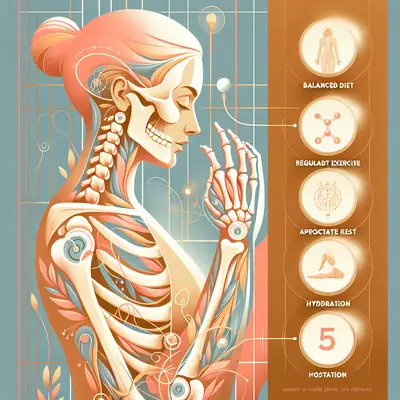
Healthy living, at its most refined, is less about extremes and more about thoughtful precision. For those who prioritize joint health, wellness becomes an art of choosing movements, rituals, and environments that quietly protect the body while elevating everyday life. This is not simply about avoiding pain; it is about curating a lifestyle in which your joints are preserved, supported, and allowed to move with confidence and ease—today and decades from now.
Below are five exclusive, nuanced insights designed for individuals who view joint care not as damage control, but as a sophisticated investment in long-term vitality.
The Micro-Posture Mindset: How Tiny Alignments Reshape Joint Health
Most discussions of posture are broad and binary—“good” vs. “bad.” For refined joint care, the real leverage lies in micro-posture: the subtle, moment-to-moment adjustments that determine how force travels through your joints.
Micro-posture is the way your wrist slightly angles as you scroll, the position of your neck as you glance at a second screen, or how your knees track over your toes when you pivot away from a chair. These details look inconsequential, but over thousands of repetitions, they define whether your joints experience elegant alignment or constant, low-grade strain.
A micro-posture mindset means becoming quietly observant: noticing where your weight rests on your feet when you stand in line, how your shoulders sit while you type, and whether your pelvis tilts as you wash dishes or cook. Instead of chasing a single “perfect” posture, you cultivate fluid, dynamic alignment—subtle shifts that keep joints stacked, muscles engaged, and ligaments protected. The payoff is profound: less cumulative wear, greater comfort at the end of demanding days, and a body that feels composed rather than compressed.
Load Curating: Treating Joint Stress Like a Luxury Resource
People often consider exercise intensity, but very few curate their “joint load” with intention. Joint load—the total mechanical stress placed on your joints from movement, weight, and repetition—is a finite resource that can be managed with the same care you reserve for your time or finances.
Load curating begins with recognizing that your joints experience stress not only during formal workouts, but also during travel, prolonged standing, lifting luggage, commuting, or walking on hard surfaces in unsupportive footwear. On days when life demands more from your body—long meetings on your feet, a red-eye flight, intense errands—your exercise plan should adapt, shifting from high-impact to low-impact, or from heavy lifting to focused mobility and lighter resistance.
This approach does not mean doing less; it means matching intensity to context. On a light-demand day, you might schedule strength training that challenges your hips and knees. After a taxing workday on your feet, you might favor controlled mobility work, water-based exercise, or gentle cycling. Over time, treating joint load as a luxury resource allows you to keep training with ambition while protecting structural integrity, rather than oscillating between overuse and forced rest.
Precision Strength: Training the “Signature” Muscles That Protect Joints
Not all muscles contribute equally to joint protection. For those serious about joint preservation, it is worth identifying and training what can be thought of as “signature muscles”—groups that, when strong and well-coordinated, dramatically reduce stress on the joints they serve.
For the knees, this often means the quadriceps (especially the vastus medialis), the gluteus medius and maximus, and the hamstrings—muscles that stabilize the patella, control hip position, and distribute load into the powerful muscles of the hip and thigh rather than the joint surfaces alone. For the spine, deep core stabilizers, including the transverse abdominis and multifidus, are central to maintaining neutral alignment under load. For shoulders, the rotator cuff and scapular stabilizers (like the lower trapezius and serratus anterior) create a stable base for refined, pain-free arm movements.
Rather than spending hours on generic, high-rep routines, a more elevated strategy is to schedule short, precise strength sessions with impeccable form, progressive resistance, and targeted focus on these protective muscles. Think single-leg Romanian deadlifts with controlled tempo, lateral band walks to engage the gluteus medius, or external rotation work for the rotator cuff done with slow, intentional movement. Over months and years, this precision strength work functions as a structural insurance policy, allowing your joints to move under load with controlled power instead of vulnerable strain.
Recovery as Ritual: Designing Evenings That Actively Restore Joints
For many, “recovery” is passive: collapsing onto the sofa and scrolling until bed. For those who view joint health as a priority, recovery becomes an evening ritual that actively restores tissues, calms inflammation, and prepares the body for the next day’s demands.
This might begin with a deliberate decompression window: 10–20 minutes of gentle mobility, such as slow hip circles, ankle pumps, neck rotations, and cat-cow variations to re-lubricate joints with synovial fluid and release residual tension from static positions. A brief, targeted session with a soft foam roller or massage ball can ease muscle tightness around key joints—hips, calves, upper back—improving alignment during sleep.
Heat or contrast therapy may also play a role: a warm shower followed by a cool rinse for the legs, or a brief warm compress for stiff hands or knees. Combined with a consistent wind-down routine—dimmed lights, reduced screen glare, supportive sleep positions for the neck, shoulders, and hips—your evenings become an elegant recovery practice rather than an afterthought. Over time, this ritualized approach to recovery supports more restful sleep, higher-quality movement the next morning, and a joint environment that is less inflamed and more responsive to training.
Nutrient Intelligence: Elevating Joint Health Beyond Basic Supplements
Conversations about joint nutrition often fixate on a single supplement—usually glucosamine—or vague concepts like “anti-inflammatory foods.” A more sophisticated perspective treats joint nutrition as a multi-layered, strategic system.
First, there is the structural layer: sufficient high-quality protein to maintain the collagen and muscle that support joint structures, plus nutrients like vitamin C, zinc, and copper that assist in collagen synthesis. Then comes the inflammatory regulation layer: omega-3 fatty acids (through fatty fish or algae-based supplements), a diverse range of colorful fruits and vegetables for polyphenols, and well-chosen spices such as turmeric and ginger that may support a healthier inflammatory profile when integrated consistently.
Beyond this, nutrient intelligence means aligning your intake with your activity: slightly increasing protein and hydration on heavier training or long-walk days, timing a balanced meal with adequate carbohydrates and protein within a few hours of demanding sessions, and moderating ultra-processed foods that can promote systemic inflammation over time. It also involves being selective and evidence-driven about supplements—consulting reputable resources and healthcare providers instead of following trends. In essence, you treat every meal and beverage as a quiet, daily vote for joint resilience rather than a casual afterthought.
Conclusion
Cultivated joint health does not depend on a single breakthrough habit, but on a series of refined choices practiced consistently: micro-postural awareness, curated load, precision strength, intentional recovery, and nutrient intelligence. Together, these elements transform joint care from reactive management into a quiet, ongoing investment in how you move, feel, and age.
When you approach your joints with this level of respect and precision, healthy living becomes more than maintenance—it becomes an elevated standard of daily comfort, strength, and grace that you carry into every movement, every season, and every year ahead.
Sources
- Harvard Health Publishing – Joint-Friendly Exercises – Overview of low-impact movement and strengthening strategies that protect joint structures.
- Johns Hopkins Medicine – Arthritis and Joint Pain – Explains how joint load, inflammation, and lifestyle influence pain and long-term joint health.
- NIH – Office of Dietary Supplements: Omega-3 Fatty Acids – Evidence-based guidance on the role of omega-3s in inflammation and overall health.
- Mayo Clinic – Strength Training: Get Stronger, Leaner, Healthier – Details on safe strength practices that support muscle balance and joint stability.
- Cleveland Clinic – Joint Health and Exercise – Practical advice on exercise selection, impact management, and protecting joints during daily activity.
Key Takeaway
The most important thing to remember from this article is that this information can change how you think about Healthy Living.