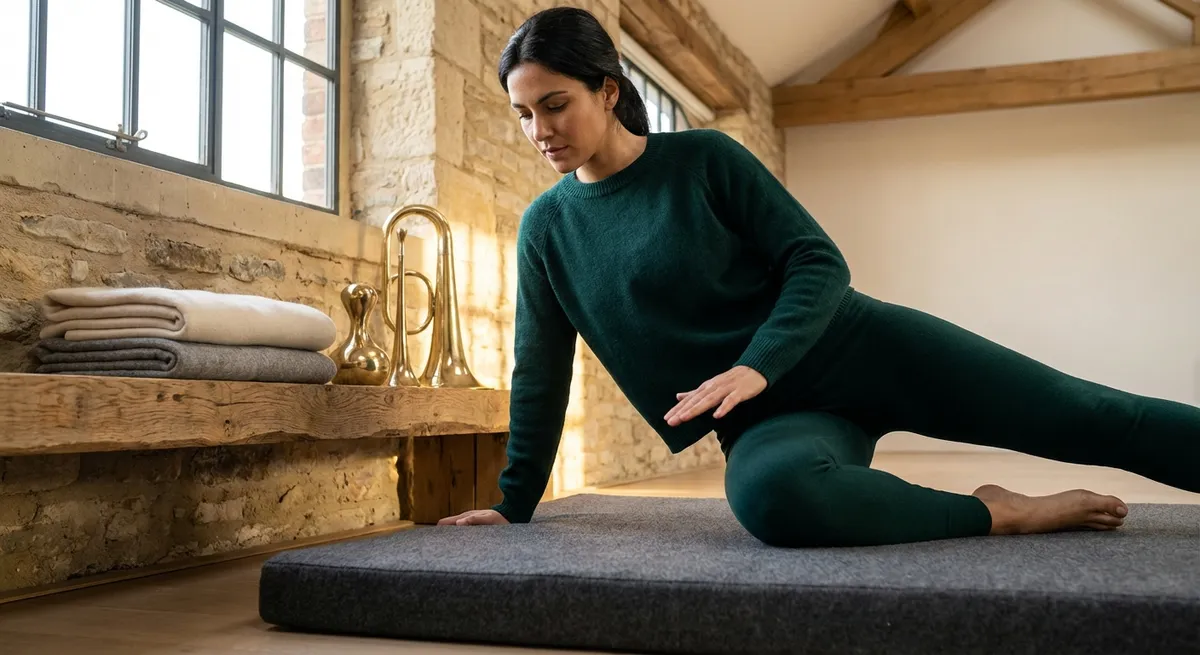
Mobility is often spoken of as a chore—something you “should” do. At Joint Health Living, we see it differently. Thoughtfully chosen mobility exercises can function as a daily luxury ritual for your joints: precise, intentional, and quietly transformative. When crafted well, mobility work does not simply keep you moving; it preserves the quality of how you move—your posture, your grace, your ease.
Below, you’ll find a curated exploration of mobility as a refined health practice, including five exclusive insights that discerning, joint-focused readers rarely see discussed in typical fitness content.
Mobility as Joint Skincare: A Philosophy of Daily Micro-Interventions
Consider mobility work as skincare for your joints: subtle, daily micro-interventions that compound over time, rather than dramatic, sporadic efforts. Just as a sophisticated skincare routine is tailored to texture, sensitivity, and long-term resilience, joint mobility should be customized to your history, your occupation, and your rituals of rest and movement.
The emphasis shifts from “working hard” to “working precisely.” Instead of over-stretching or exhausting your joints, you prioritize small arcs of movement, controlled tempo, and deliberate breath. Over time, this approach can reduce the sense of stiffness that accumulates from modern sedentary habits—desk work, driving, and passive screen time.
When mobility is reframed as daily refinement rather than recovery from damage, adherence improves. Five minutes between meetings, three minutes before a shower, a short evening sequence before reading in bed become your equivalent of serum, moisturizer, and SPF—quiet, consistent care that preserves joint elegance well into later decades of life.
Insight 1: The “End-Range Whisper” — Training the Edges Without Aggravation
Most people either avoid their joint end-ranges entirely or forcefully push into them. Both extremes are problematic. Think of your end-ranges—how far a joint can comfortably move—as a quiet room; entering should feel like a whisper, not a slam of the door.
“End-range whisper” mobility means:
- You move into the last 10–15% of your comfortable range with absolute control.
- You pause there, breathing smoothly, holding a low level of muscular engagement.
- You avoid bouncing, forcing, or chasing discomfort as a badge of honor.
- You exit the position just as slowly as you entered.
For example, in a standing hip extension (gently swinging your leg backward while holding a counter), you stop before your low back begins to arch or your pelvis tips forward. The end-range is defined not by how far your leg appears to move, but by the point just before your technique degrades.
This controlled exploration sends your nervous system a powerful message: “These positions are safe.” Over time, that safety signal often expands your usable range while decreasing joint apprehension. For painful or previously injured joints, end-range whispering can be the difference between sustainable mobility and constant flare-ups.
Insight 2: Capsule-Aware Mobility — Caring for the “Sleeve” Around Your Joints
Most mobility content obsesses over muscles and tendons. A more refined view considers the joint capsule—the fibrous “sleeve” wrapping many of your joints that helps maintain alignment, stability, and fluid exchange.
Capsular stiffness can produce a distinct quality of restriction: not a muscular pull, but a deep, dull limit to movement that feels almost “blocked.” Shoulder and hip joints are particularly prone to this.
Capsule-aware mobility recognizes that:
- Gentle, longer-held positions near the limit of painless motion can influence capsule pliability over months, not days.
- Slight changes in angle—rotating the limb inward or outward—can selectively load different regions of the capsule.
- Low-intensity, sustained holds (30–60 seconds) followed by slow, controlled active motion embed the gains into functional movement.
A practical example: in a seated external rotation stretch for the hip (crossing one ankle over the opposite knee), a few subtle variations—bringing the heel closer to the body, gently inclining the torso forward from the hips, or slightly rotating the pelvis—can change what part of the joint structure you are influencing. This is not casual stretching; it is targeted care for the joint’s architectural fabric.
For those serious about long-term joint comfort, this shift from “muscle stretching” to “capsule-conscious mobility” can unlock range where traditional stretching has plateaued.
Insight 3: Load-Infused Mobility — Why Light Resistance Elevates Joint Protection
Purely passive mobility—being stretched by gravity or another person—has its place, but it’s incomplete. Joints thrive when movement and gentle load coexist, because that is how your tissues experience life: stairs, shopping bags, suitcases, gardening.
Load-infused mobility means involving light resistance while exploring range, rather than separating “mobility” and “strength” into silos. This approach nourishes cartilage via intermittent compression, trains stabilizing muscles in the angles where you’re most vulnerable, and teaches your nervous system to remain calm in challenging positions.
Examples include:
- Ankle dorsiflexion with light resistance: Standing with one foot forward and slowly bending the front knee toward a wall while holding a light weight or kettlebell close to your chest. The load encourages your body to organize better alignment and gives the ankle a meaningful yet modest challenge.
- Controlled shoulder circles with a small weight: Slowly tracing arcs overhead with a 1–3 lb dumbbell, never rushing, never shrugging. The combination of load and control teaches the shoulder to glide smoothly rather than catching or snapping.
This is not about heavy lifting in precarious positions. It is about dignified, meticulous load—resistance that is light enough to feel elegant but substantial enough to signal to your joints, “You are not ornamental; you are functional.”
Insight 4: Temporal Mobility — Synchronizing Movement With Your Daily Clock
Joint sensation is not static across the day. Many people notice morning stiffness, midday fluidity, and evening fatigue. A sophisticated mobility practice respects these fluctuations and assigns different types of movements to different time zones of your day.
Consider this timing architecture:
- Morning: Wakeful lubrication
Favor small, rhythmic, low-intensity movements that “oil” the joints—gentle neck rotations, slow spinal cat-cow movements, ankle circles in bed, and light hip openers. The aim is circulation and reassurance, not deep stretching.
- Midday: Performance-aligned preparation
Before a demanding task (a long walk, a workout, or hours at a desk), choose active mobility that mimics your upcoming activity: dynamic leg swings within a controlled range, lunges with reachable depth, shoulder roll patterns for typing or overhead work.
- Evening: Decompression and downregulation
Reserve your most relaxing, longer-held positions for the evening—supine hip rotations, supported child’s pose, or lying thoracic rotations. Pair them with slow exhalations to signal to your nervous system that it can release protective tension.
By aligning the type of mobility with the timing of your day, you create a rhythm that respects your body’s natural variability. This temporal intelligence can reduce morning discomfort, improve daytime performance, and protect against the stiff, compressed feeling that often follows intensive workdays.
Insight 5: Mobility as a Posture Curator, Not Just a Flexibility Chase
Conventional mobility routines fixate on isolated joints—hip stretches, shoulder openers, ankle drills. A more elevated approach sees mobility as a curator of your overall posture: how the segments of your body stack, interact, and express themselves in motion.
Poorly directed flexibility can actually destabilize posture if you lengthen structures that are already over-stretched while neglecting those that are truly tight. A curated mobility practice begins with a clear question: What posture do I want to inhabit, and what joint behavior supports it?
For instance:
- If you desire a tall, open, confident upper body, mobility should emphasize thoracic (mid-back) extension and rotation, chest opening, and gentle strengthening of the deep neck flexors—rather than only stretching the neck or pulling the shoulders back aggressively.
- For fluid, dignified walking, you prioritize hip extension, ankle dorsiflexion, and gentle rotation in the pelvis and thoracic spine, rather than chasing extreme hamstring length you may not actually need.
This perspective transforms mobility from random stretching into structural artistry. Each exercise becomes a deliberate brushstroke shaping how you stand, walk, work, and rest. Your joints become not just pain-free, but harmoniously aligned with the posture you wish to present to the world.
Curated Practice: A Sample Daily Mobility Sequence for Joint-Conscious Living
To demonstrate how these insights weave together, below is a concise, refined sequence that can be completed in 10–12 minutes. It is intentionally modest and designed as a sustainable daily ritual rather than an exhaustive workout. Always adjust for pain, medical conditions, or professional advice.
Morning (3–4 minutes): End-Range Whisper for the Spine and Hips
- Cat-cow on all fours, moving slowly from tailbone to crown (1 minute). - Seated or standing hip circles, small and controlled, exploring the last 10–15% of range without forcing (1–2 minutes).
Midday (4–5 minutes): Load-Infused Ankle and Shoulder Mobility
- Ankle dorsiflexion lunge against a wall while holding a light weight at the chest, 6–8 slow reps per side. - Standing shoulder arcs with a 1–3 lb weight, tracing slow semi-circles in front and to the side, 5–6 controlled reps each direction.
Evening (3–4 minutes): Capsule-Aware Hip and Thoracic Rotation
- Supine figure-four position (ankle crossed over opposite knee), gently adjusting pelvic angle to explore different hip sensations; hold 30–45 seconds per side. - Lying thoracic rotations (“open book” stretch): knees stacked, arms extended, rotating the top arm slowly across the body, 5–8 fluid reps per side.
This sequence honors joint capsules, uses light load, respects the body’s daily clock, and focuses on functional posture rather than circus-level flexibility. It is understated, sustainable, and quietly protective.
Conclusion
Truly elevated joint care is not loud, extreme, or performative. It is subtle, disciplined, and informed by an understanding that your joints are not merely hinges—they are living, adaptive structures that respond exquisitely to the quality of your attention.
By integrating end-range whispering, capsule awareness, light load, temporal alignment, and posture-curated planning, mobility exercises become more than stretches. They evolve into a daily practice of biomechanical craftsmanship—one that protects your comfort, preserves your grace, and allows you to inhabit your body with quiet confidence for years to come.
Sources
- Harvard Health Publishing – The importance of stretching – Overview of how flexibility and mobility support joint health and daily function.
- Arthritis Foundation – Range-of-motion exercises – Practical guidance on safe, joint-friendly mobility approaches for people with arthritis.
- American Academy of Orthopaedic Surgeons – Joint health basics – Explains how movement, strength, and weight management contribute to long-term joint protection.
- Cleveland Clinic – Joint pain and exercise – Discusses the role of targeted exercise and mobility work in managing joint pain.
- Mayo Clinic – Stretching: Focus on flexibility – Evidence-informed perspective on safe stretching practices and their impact on mobility and injury prevention.
Key Takeaway
The most important thing to remember from this article is that this information can change how you think about Mobility Exercises.