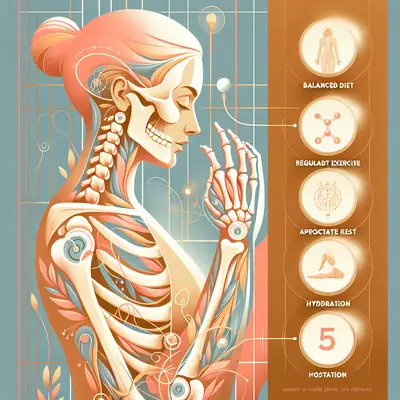
Healthy living, when viewed through the lens of joint health, becomes less about restriction and more about refinement. It is the art of designing a life in which your joints are not an afterthought, but a quiet beneficiary of every choice you make—how you move, what you eat, the way you rest, even how you respond to stress. This is not about athletic extremism or rigid rules; it is about building a personal environment where comfort, strength, and longevity coexist.
What follows are five exclusive, often overlooked insights that elevate joint care from basic maintenance to a thoughtful lifestyle—one that feels as considered as a well-curated home or a beautifully planned meal.
1. Train the “Silent Stabilizers” Before You Chase Strength
Most people associate joint health with big, visible muscles—quadriceps, biceps, glutes. In reality, the unsung heroes of joint longevity are the deep stabilizing muscles that sit closer to bone and are responsible for fine control rather than raw power.
Around the knee, hip, spine, and shoulder, these subtle stabilizers—such as the deep hip rotators, multifidus along the spine, and the rotator cuff—govern alignment with every step, reach, or twist. When they are undertrained, joints experience more shear, rotation, and compressive forces than they are designed to handle, slowly eroding cartilage and overloading ligaments.
A joint-conscious regimen prioritizes:
- Low-load, high-control work: mini band walks, controlled hip abduction, isometric holds, and slow, precise movements rather than explosive power.
- Single-leg and unilateral training: split squats, single-leg deadlifts, or unilateral rows that reveal and correct asymmetries that stress joints.
- Tempo-based strength: emphasizing slow lowering (eccentric) phases trains control, not just brute force.
By devoting 10–15 minutes at the beginning of each workout to these “silent stabilizers,” you cultivate grace under load—movement that looks effortless because the joints are being meticulously supported beneath the surface.
2. Curate an “Anti-Inflammatory Environment,” Not Just an Anti-Inflammatory Diet
Nutrition is often reduced to lists of “good” and “bad” foods, but for joint health, the broader context matters just as much as the ingredients themselves. Chronic low-grade inflammation—tied to osteoarthritis, rheumatoid arthritis, and general joint discomfort—is influenced by a full ecosystem of daily exposures.
An anti-inflammatory environment considers:
- Culinary fats with intention: Favor extra-virgin olive oil, avocado oil, nuts, seeds, and fatty fish (salmon, sardines, mackerel) to promote a healthier omega-3 to omega-6 balance, which is closely linked to inflammatory pathways.
- Minimal “hidden sugar” and refined starch: Excess added sugars and rapidly absorbed carbohydrates can amplify systemic inflammation and weight gain that compounds joint loading.
- Quieting alcohol and ultra-processed foods: For those with inflammatory arthritis, both can aggravate symptoms and disrupt restorative sleep, further amplifying pain.
- Hydration as joint care: Synovial fluid, which lubricates joints, depends on adequate hydration; even mild dehydration can heighten the perception of pain and stiffness.
- Body composition with nuance: The goal isn’t leanness at all costs, but reducing excess abdominal and visceral fat, which acts like an inflammatory organ and accelerates joint degeneration.
Think of your kitchen and dining rituals as a daily vote for or against inflammation. Joint-conscious eating is still pleasurable and abundant—colorful vegetables, aromatic herbs, rich olive oil, slow-cooked legumes, and thoughtfully chosen proteins—but it is also precise in its purpose.
3. Design Micro-Movements Into Your Day to Protect Cartilage
Cartilage, the smooth tissue that cushions your joints, behaves a bit like a well-made sponge. It does not have its own blood supply; instead, it relies on the gentle compression and release of movement to draw in nutrients and push out waste via the surrounding joint fluid.
Long stretches of stillness—desk work, extended travel, endless streaming—starve cartilage of this essential exchange. The solution is not more intense workouts, but more micro-movements spread throughout the day.
Elegant strategies to nourish cartilage include:
- The “every 30 minutes” principle: Stand, walk a short loop, perform 10–15 gentle calf raises or mini squats, or simply cycle your hips and shoulders through their range.
- Layered joint mobility breaks: For wrists, ankles, and neck, practice slow, controlled circles and figure-eights, focusing on smoothness over range extremes.
- Structured desk ergonomics plus motion: Even an ideal chair or standing desk is insufficient without built-in movement breaks; mobility is the missing ingredient.
- Evening mobility rituals: A 5–10 minute sequence before bed—knee hugs, hip openers, spinal rotations, and gentle shoulder mobility—restores fluidity after a static day.
Instead of viewing movement as a discrete event (the “workout”), reframe it as a constant dialogue with your joints. Every micro-movement is a touchpoint of nourishment for your cartilage and connective tissue.
4. Use Sleep as a Precision Tool for Pain and Repair
For those focused on joint health, sleep should not be treated as a passive default. It is a powerful, underused lever for pain modulation, tissue repair, and inflammation control. Research consistently shows that insufficient or poor-quality sleep lowers pain thresholds and amplifies perceived discomfort—especially in people with arthritis and chronic joint conditions.
A refined joint-care routine incorporates:
- Deliberate sleep quantity and timing: For most adults, 7–9 hours in a relatively consistent window supports hormonal balance, collagen repair, and immune regulation.
- Mattress and pillow alignment: Side sleepers with knee or hip pain often benefit from a supportive pillow between the knees; back sleepers may reduce lumbar and neck strain with a slim pillow and a small bolster under the knees.
- Evening wind-down free of joint stressors: Heavy meals, alcohol, and intense late-night exercise can increase nighttime inflammation and disrupt deep sleep, subtly increasing pain the next day.
- Relaxation techniques with a physical focus: Gentle diaphragmatic breathing and body scans before bed can downshift the nervous system, decrease muscle guarding around painful joints, and improve perceived restfulness.
Instead of treating sleep advice as generic wellness guidance, tailor it as intentionally as you would a training plan. For sensitive joints, a well-engineered night can be as therapeutic as the most skillful daytime exercise.
5. Treat Stress Management as Structural Support for Your Joints
The relationship between stress and joint health is not merely psychological. Chronic stress elevates cortisol and pro-inflammatory markers, disrupts sleep, tightens muscles, and increases the brain’s sensitivity to pain signals—all of which can cascade into more joint discomfort and slower recovery.
A sophisticated joint-health strategy therefore includes emotional and cognitive hygiene as a structural element, not an optional add-on.
Key practices include:
- Brief, regular nervous system resets: Two to five minutes of slow, extended exhalations, box breathing, or guided relaxation multiple times a day can reduce muscle tension around joints and lower systemic stress.
- Pain reframing: Working with a physical therapist, psychologist, or pain specialist to understand the difference between “threat” pain and “background” or “expected” discomfort can prevent fear-based avoidance of healthy movement.
- Joyful, low-impact activity: Walking in nature, tai chi, Pilates, or water-based exercise sneak in both movement and mood elevation, decreasing inflammation and supporting cartilage and musculature without punishing the joints.
- Boundaries around overload: Just as you would avoid overloading a healing joint, learn to identify and cap emotional overloading—excess commitments, constant connectivity, and leaving no room for recovery in your schedule.
When you design your life so that your nervous system is not constantly in “red alert,” your joints are no longer battling against a body that is perpetually braced. Calm, in this context, becomes structural protection.
Conclusion
Healthy living for joint longevity is not a single decision; it is a cultivated pattern of choices that quietly align over time. When you train the stabilizers before the show muscles, curate an anti-inflammatory environment, embed micro-movements into your day, use sleep with precision, and honor stress management as structural support, your joints become less a source of worry and more a foundation of quiet confidence.
This is the essence of living well between the joints: a life in which comfort, capability, and elegance in motion are not accidents of good fortune but the natural outcome of thoughtful design.
Sources
- Centers for Disease Control and Prevention – Osteoarthritis: Risk Factors and Management - Overview of osteoarthritis, risk factors such as excess weight, and lifestyle strategies that help protect joints
- Arthritis Foundation – The Role of Exercise in Arthritis Management - Explains how specific types of movement, including strength and low-impact exercise, support joint function and reduce pain
- Harvard Health Publishing – Foods that fight inflammation - Reviews dietary patterns and foods associated with lower levels of chronic inflammation relevant to joint health
- National Institutes of Health – Sleep and Pain - Research review on how insufficient or poor-quality sleep amplifies pain perception and impacts chronic pain conditions
- Mayo Clinic – Stress and the Body - Discusses how chronic stress influences inflammation, muscle tension, and overall physical health, including pain and recovery
Key Takeaway
The most important thing to remember from this article is that this information can change how you think about Healthy Living.