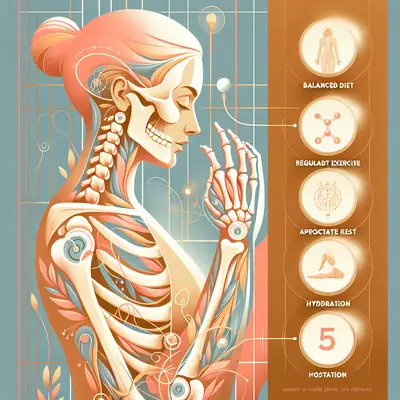
Healthy living, for those who care about their joints, is less about dramatic overhauls and more about exquisite calibration. It is the art of adjusting the small levers—how you stand, how you sleep, what you choose to repeat every day—until your body moves with quiet confidence instead of chronic negotiation. This is not a frantic race toward “fitness,” but a considered crafting of a life where movement feels trustworthy, sustainable, and deeply supported.
Below are five exclusive, under-discussed insights for those who regard their joint health as a long-term, high-value asset rather than an afterthought.
The Micro-Posture Principle: Refining the Moments Between Movements
Most posture advice focuses on sitting or standing “correctly” in a static way. But joints are not sculptures; they are hinges of a living architecture. What often matters more is how frequently you shift your posture, and the micro-adjustments you make throughout the day.
Think of posture as an ongoing dialogue between your spine, hips, knees, and feet—not a final, rigid position. Subtle actions such as un-crossing your legs every 10–15 minutes, lightly pressing your feet into the floor to activate hip and core muscles, or gently drawing your shoulder blades down and slightly back for a few breaths can dramatically change the loading on your joints over a full day.
For those who spend hours at a desk, consider a quiet posture ritual at the top of every hour: a 30-second scan from feet to crown. Ask: Are my knees locked? Am I leaning into one hip? Is my chin subtly jutting forward? These gentle corrections, done dozens of times, protect cartilage and soft tissue more effectively than a single “perfect” posture that collapses under fatigue.
Viewed this way, joint health becomes less about holding one ideal pose and more about cultivating a graceful, responsive relationship with alignment—micro-posture as a refined daily art.
The Precision Warm-Up: Investing in the First Five Minutes
Many people accept joint stiffness as an inevitable part of aging or long days, yet they treat warm-up as optional or cosmetic. Those who move exceptionally well into later decades usually have one thing in common: reverence for the first five minutes of movement.
A sophisticated warm-up is not random. It is targeted, joint-specific, and thoughtfully sequenced: mobilize, then activate, then move. For example, before a walk or strength session, you might:
- Gently circle ankles and wrists, then the hips and shoulders, with slow control
- Perform slow, pain-free knee bends while holding on to a stable surface
- Activate glutes and deep core with light bridges or side-lying leg raises
- Finish with a few controlled, smaller versions of the movements you’re about to do (e.g., short, deliberate strides before a brisk walk)
This deliberate preparation tells the nervous system: “We are about to ask more of these joints; please stabilize accordingly.” The result is cleaner tracking of joints, less compensatory strain, and better performance with less wear.
The refinement is in the mindset: treat the warm-up as a non-negotiable investment in joint longevity, not an optional prelude. Over years, those five minutes become a remarkably powerful insurance policy.
Nutrient Strategy for Cartilage: Beyond “Anti-Inflammatory” Buzzwords
Joint-conscious individuals often hear broad advice about “eating anti-inflammatory foods,” but the details that matter to cartilage and connective tissue are more specific and more sophisticated.
Cartilage and joint-supporting tissues rely on:
- Consistent, adequate protein to maintain the collagen matrix that gives cartilage its tensile strength. Distributing protein evenly across meals—rather than a single large evening portion—can better support muscle and connective tissue maintenance.
- Omega-3 fatty acids from sources like fatty fish (salmon, sardines, mackerel) or algae-based supplements, which may help modulate inflammatory processes that contribute to joint discomfort.
- Vitamin D and calcium to support bone health, crucial for the joint surfaces that cartilage overlays.
- Vitamin C and other antioxidants to support collagen synthesis and help counter oxidative stress around joint tissues.
- Polyphenols from foods like berries, olives, green tea, and extra-virgin olive oil, which have been linked to beneficial effects on inflammation and metabolic health.
Equally refined is the approach to body weight: not as a moral judgment, but as a mechanical reality. Every extra pound can increase the load on weight-bearing joints multiple times over with each step. A modest, sustainable reduction—even 5–10% of body weight for those above their ideal range—can materially decrease stress on knees and hips without aggressive dieting.
Thinking like a curator rather than a consumer—intentionally selecting nutrient-dense foods that directly support joint structures—transforms nutrition from generic “healthy eating” into precise joint-care strategy.
Recovery as a Luxury, Not an Afterthought
High-quality joint health is not built in the workout itself; it is built between sessions. Yet recovery is often treated as a nice-to-have rather than a central pillar. Those who maintain elegant movement into their later decades typically approach recovery with the same discernment they bring to their exercise and nutrition.
This includes three refined pillars:
Sleep quality as structural maintenance
During deep sleep, tissues repair, and inflammatory processes may recalibrate. Investing in a supportive mattress and pillow that maintain neutral alignment of the spine and hips is not indulgence—it is structural preservation. Experimenting with side-sleeping positions that keep knees slightly bent and supported (for example, with a small pillow between them) can reduce rotational strain on hips and lumbar joints.
Strategic rest days, not inactivity
A sophisticated rest day is not a collapse into the sofa; it is an intentionally lighter movement palette: slow walking, gentle range-of-motion work, or low-intensity cycling. This keeps synovial fluid circulating through the joint spaces, supporting cartilage nourishment while avoiding excessive load.
Calm nervous system, calm joints
Persistent stress heightens muscle tension and can increase the perception of pain. Simple, well-practiced relaxation techniques—such as five minutes of slow nasal breathing, or a brief body-scan meditation before sleep—create a more favorable environment for joint recovery. Over time, this reduces the background “noise” that often masquerades as joint pain.
When recovery is treated as an essential luxury—sleek, intentional, and well-designed—it becomes the quiet force that keeps joints resilient instead of reactive.
Intelligent Load: Treating Strength as Joint Insurance, Not Aesthetic Goal
Strength training is often discussed in terms of appearance. For joint-focused individuals, its significance is more structural and long-term: muscle is the dynamic scaffolding that protects joints from excessive force and instability.
The refinement lies in how you load:
- Favor movement patterns (hinge, squat, push, pull, carry) over isolated muscles. This trains the body to share load across multiple joints and tissues, reducing stress on any single area.
- Emphasize tempo and control over ego-driven weight. Slow, controlled lowering phases (eccentric control) can be particularly valuable for tendon and ligament resilience.
- Apply a principle of minimum effective dose: enough resistance and volume to maintain or build strength, but not so much that your joints consistently feel “unfinished” the next day.
- Be meticulous about joint-friendly angles. For example, using slightly elevated surfaces for squats if deep bending irritates the knees, or neutral-grip positions for upper body pressing to reduce shoulder strain.
- Integrate single-leg or unilateral work (e.g., step-ups, split squats, single-leg deadlifts) to address side-to-side imbalances that quietly stress hips, knees, and ankles over time.
Viewed through this lens, strength work becomes less about performance bravado and more about dignified self-insurance. You are building the muscular infrastructure that allows your joints to age with understated confidence.
Conclusion
Healthy living for joint-conscious individuals is not defined by extreme routines or rigid rules. It is defined by intelligence: small, consistent, elegantly chosen actions that accumulate into a body you can trust.
By refining micro-posture throughout the day, honoring precise warm-ups, curating a cartilage-conscious diet, elevating recovery to a priority, and treating strength as structural insurance, you create a lifestyle in which your joints are not obstacles to be managed, but assets to be preserved.
This is the quiet privilege of living well between the joints: a life where movement feels intentional, supported, and sustainable—year after carefully crafted year.
Sources
- National Institute of Arthritis and Musculoskeletal and Skin Diseases (NIAMS): Joint Health - Overview of how joints work, common joint problems, and protective strategies
- Harvard T.H. Chan School of Public Health: Protein - Evidence-based guidance on protein intake and distribution for tissue maintenance
- Arthritis Foundation: Benefits of Exercise for Arthritis - Details on how movement and strength training support joint health
- Centers for Disease Control and Prevention (CDC): Physical Activity and Arthritis - Research-backed recommendations for safe, joint-friendly activity
- Cleveland Clinic: Anti-Inflammatory Diet for Joint Health - Practical explanation of dietary strategies to help manage inflammation and joint discomfort
Key Takeaway
The most important thing to remember from this article is that this information can change how you think about Healthy Living.