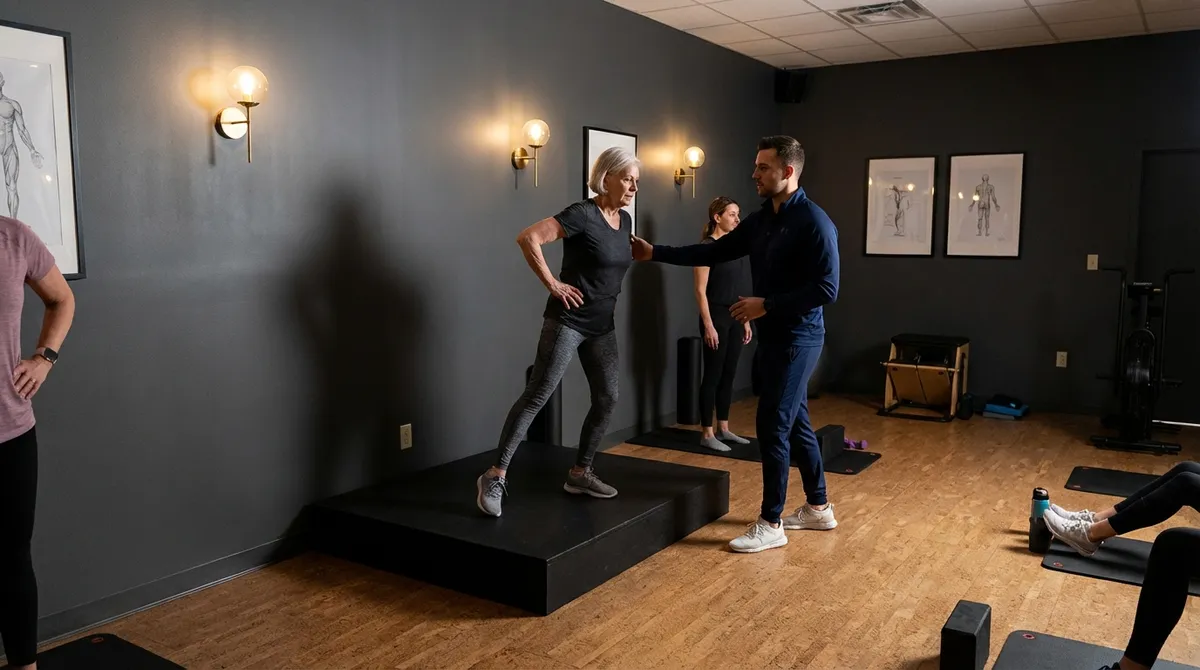
Mobility work, done well, feels less like a workout and more like a quiet luxury—an investment in how gracefully you inhabit your own body. For those who care about joint health, mobility is not about contorting into dramatic positions or chasing extreme flexibility. It is about precision, control, and the subtle strengthening of the structures that protect your joints every day. Think of it as tailoring for your musculoskeletal system: considered, exacting, and thoroughly worth the effort.
Below, you’ll find a refined approach to mobility exercises, with five exclusive insights designed for those who want more than generic “stretch and hold” routines. This is mobility curated for joint longevity, comfort, and confidence.
Redefining Mobility: Beyond Stretching and “Loosening Up”
Mobility is often confused with flexibility, but for joint health, the distinction matters. Flexibility is the capacity of muscles to lengthen; mobility is the ability to move a joint through its full, controlled range of motion. The critical word is “controlled.” A joint that moves far but wobbles under load is vulnerable. A joint that moves with steadiness, even in a modest range, is protected.
For those attentive to joint health, mobility work should feel deliberate and slightly “athletic,” not floppy or passive. Instead of sinking into long static stretches, you’re better served by small, precise movements: circling a hip as if tracing the edge of a fine porcelain plate, or rotating the shoulder within a comfortable range while maintaining a stable ribcage. This kind of mobility training teaches your brain and nervous system that your joints are safe to move, gradually expanding usable range instead of chasing dramatic shapes that the body does not truly own.
When you shift your mindset from “stretching tight areas” to “refining how my joints move,” your entire approach becomes more intelligent. Sessions become shorter, more focused, and—crucially—more sustainable. You are no longer fighting your body into positions; you are educating it.
Insight 1: The Luxury of Slowness—Tempo as a Joint-Saving Tool
One of the most underappreciated variables in mobility work is tempo. Moving more slowly is not simply a stylistic choice; it is a structural advantage for your joints.
When you slow a controlled movement—say, a deep, supported hip hinge or a shoulder circle at wall-contact pace—you allow the smaller stabilizing muscles around the joint to actually participate. Fast, casual motions tend to recruit the big prime movers first and let the fine-tuning muscles stay “asleep.” Over time, this can leave joints feeling clumsy and unprotected at their end ranges.
Practically, this means:
- Take 3–5 seconds for each direction of a movement: down and up, or clockwise and counterclockwise.
- Pause briefly at the point of mild resistance, not pain, and breathe.
- Notice if other areas are cheating—does your lower back arch to create the illusion of shoulder mobility, for example?
- If you cannot move slowly with ease, the range is likely too ambitious for your current joint control.
This unhurried tempo not only refines joint control but also down-regulates tension from the nervous system. Your body interprets slow, deliberate movement as safe, and in response, it often “allows” more authentic range. Slowness, here, is not indulgence—it is a form of joint protection.
Insight 2: Tension as a Precision Tool, Not an Enemy
Much wellness advice demonizes “tightness,” creating the impression that all tension is bad. For joint-focused mobility, tension is more nuanced. You are not trying to eliminate tension; you are trying to organize it.
Well-directed, low-level muscular tension around a joint is like finely calibrated scaffolding around a historic building. It protects structure, distributes load, and allows movement without collapse. The key is to cultivate the right amount of tension in the right places—especially around knees, hips, shoulders, and spine—while avoiding global, gripping effort that exhausts the system.
In practice:
- During a controlled squat or lunge variation, lightly “hug” the muscles around the joint—notice the quads and hamstrings co-contracting around the knee, or the glutes and deep hip rotators supporting the hip.
- In a shoulder mobility drill, gently engage the muscles between the shoulder blades while moving the arm, so the shoulder joint doesn’t glide excessively forward.
- Use breath to help calibrate: if you cannot maintain smooth, unforced breathing, the tension level is too high.
This approach reframes mobility exercises as an art of tension management: not floppy and lax, not rigid and braced, but refined and responsive. Joints thrive when the surrounding muscular “support staff” knows exactly how much to contribute.
Insight 3: End-Range Strength—The Missing Layer in Most Mobility Routines
Most people visit their end ranges (the deepest bend, the largest rotate) only in passive stretches, where the joint is essentially “hanging” on its tissues. For joint longevity, a far better approach is to gently strengthen at those outer edges of motion—without pain, without force.
End-range strength means you can both get into a position and actively support yourself there. For example, rather than simply pulling your thigh toward your chest with your hands, you might lift your thigh to a comfortable edge and then hold it there using your hip flexors, with breath steady and spine neutral. Or, instead of passively twisting your spine and letting gravity do the work, you actively use your core muscles to rotate a few degrees and then hold lightly, owning that twist.
Why it matters:
- Joints are most vulnerable where we are weakest, which is often near the end of their range.
- Adding gentle strength in these zones teaches your body that those ranges are not “danger zones” to be avoided but working territory.
- This not only improves control but may reduce the sense of stiffness, which is often the nervous system’s way of guarding unfamiliar territory.
When integrating end-range strength, start with minimalist versions: small ranges, low effort, short holds (3–5 breaths). The experience should feel like "almost delicate" effort, as if you are teaching the body fine handwriting, not asking it to lift heavy furniture.
Insight 4: Micro-Sessions and Habit Placement for Elegant Consistency
For joint health, consistency far outperforms intensity. The body responds more favorably to mobility that is integrated into the day than to heroic once-a-week sessions that leave you sore and disengaged.
Micro-sessions—2 to 5 minutes of focused mobility, performed several times a day—are often more powerful than a single 30-minute routine. For example, you might do a brief hip and ankle sequence before your morning coffee, a thoracic spine and shoulder circuit while your tea steeps, and a gentle neck and wrist sequence before you close your laptop.
The sophistication lies not just in what you do, but where you place it in your day:
- Attach brief mobility rituals to existing anchors: brewing coffee, waiting for a video call to start, brushing your teeth, or winding down before bed.
- Favor exercises that require minimal or no equipment—wall-supported shoulder glides, controlled hip circles, slow ankle rolls, seated spinal rotations.
- Treat these interludes as refreshment, not correction. This subtle shift transforms mobility from a chore into a quiet personal upgrade.
This habit-based approach respects your schedule and your energy. Instead of carving out a large, daunting block of time, you are weaving joint care into the fabric of the day—discreet, elegant, and sustainable.
Insight 5: Joint “Conversations”—Using Sensation as Intelligent Feedback
Those who care deeply about joint health must learn to distinguish meaningful signals from background noise. Not every sensation is a problem; not every ache is a warning. Mobility sessions can become a kind of dialogue with your body—if you know how to listen.
A refined approach to sensation might look like this:
- Discomfort that feels diffuse, muscular, and eases as you move gently is often acceptable.
- Sharp, localized pain in a joint, especially if it appears suddenly or worsens with repetition, deserves respect and modification.
- A feeling of “pinching,” catching, or instability in a joint is a cue to reduce range, slow down, or adjust alignment.
- Warmth and mild fatigue around supporting muscles after mobility work can signal useful engagement rather than harm.
Instead of powering through concerning sensations, you adjust and observe. Perhaps your knee alignment in a lunge needs a subtle shift, or your hip prefers a narrower stance. This is not timidity; it is technical refinement. Athletes and dancers with long careers often share this trait: they treat their bodies’ signals as data, not drama.
If a joint consistently protests, that is valuable information. It might signal the need for professional assessment, for more support around neighboring joints, or for variation in your movement patterns. Listening early is a form of prevention; it allows you to refine your approach before pain dictates your choices.
Conclusion
Mobility exercises, when approached with intention, become far more than a warm-up. They are a quiet, recurring vote for how you want to move ten, twenty, and thirty years from now. By embracing slowness as a tool, using tension intelligently, cultivating end-range strength, favoring micro-sessions, and treating sensation as conversation, you elevate joint care from routine maintenance to thoughtful craftsmanship.
For those who value health with a premium, curated sensibility, mobility is not an accessory—it is an essential. A few carefully chosen, consistently practiced movements can protect your joints, refine how you move through space, and lend an understated ease to everything from climbing stairs to stepping into a room. In a world that often glorifies extremes, there is something quietly powerful about this kind of measured, elegant care.
Sources
- Arthritis Foundation – Range-of-Motion and Flexibility Exercises – Overview of joint-friendly mobility and range-of-motion principles, with examples tailored to arthritis and joint protection.
- Harvard Health Publishing – The importance of stretching for joint health – Discusses flexibility, mobility, and how to stretch safely, including guidance on tempo and control.
- Mayo Clinic – Exercise and chronic disease: Get the facts – Explores how structured movement supports health, including the role of low-impact and joint-conscious exercise.
- National Institute of Arthritis and Musculoskeletal and Skin Diseases (NIAMS) – Provides background on joint structure, osteoarthritis, and why protecting end-range and load matters over time.
- Cleveland Clinic – Joint-Friendly Fitness – Practical guidance on protecting joints during movement, reinforcing concepts of alignment, controlled range, and appropriate intensity.
Key Takeaway
The most important thing to remember from this article is that this information can change how you think about Mobility Exercises.