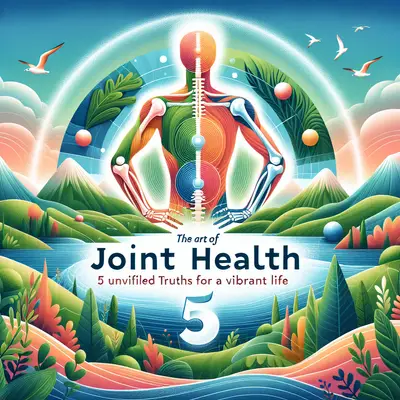
Healthy living, when viewed through the lens of joint health, becomes less about restriction and more about orchestration. Every choice—how you walk, work, rest, and recover—either preserves the grace of your movement or slowly erodes it. In a world that glorifies intensity, truly sophisticated health is quiet, intentional, and deeply protective of the structures that let you move through life with ease: your joints.
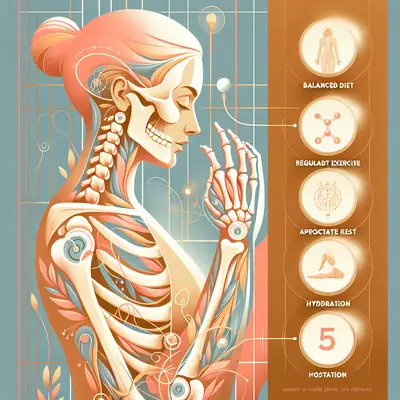
This blueprint is designed for those who care not only about longevity, but also about the caliber of their daily movement—how it feels to stand, to sit, to lift, and to age with unapologetic elegance. Below are five exclusive insights that elevate joint care from basic maintenance to high-level refinement.
Insight 1: Treat Cartilage Like a Luxury Textile, Not a Disposable Commodity
Cartilage does not regenerate easily; once significantly worn, it is difficult to restore. Thinking of cartilage like cashmere—precious, responsive to care, vulnerable to neglect—can transform how you move and train.
Excessive impact, poor alignment, and repetitive strain fray this “luxury textile” over time. Subtle refinements matter: landing softly when you walk down stairs, distributing load evenly when you stand, and avoiding abrupt, unprepared increases in exercise intensity. The goal is not to avoid loading your joints—cartilage actually benefits from measured, cyclical pressure that stimulates nutrient exchange through synovial fluid. It is the quality of load that distinguishes preservation from erosion.
You can upgrade your daily routine by building “cartilage-conscious” habits: choosing varied terrain when walking, alternating footwear with different support profiles, integrating low-impact conditioning such as cycling or water-based exercise, and reserving high-impact activities as carefully programmed exceptions, not defaults. Over time, these micro-decisions amount to a protective strategy for the material that cushions your life.
Insight 2: Precision Muscle Work as the Joint’s Silent Bodyguard
Strong muscles are often praised, but for joint health, it is precisely balanced strength that matters. Joints live between competing forces: if one muscle group overpowers another, that imbalance can subtly pull the joint out of its ideal track, increasing friction and wear.
A refined joint-centric regimen prioritizes “muscular diplomacy”—ensuring agonists and antagonists work in negotiated harmony. For example, around the knee, quadriceps strength means little without complementary hamstring and hip stability. Around the shoulder, powerful chest muscles without adequate scapular and rotator cuff support invite irritation and impingement.
Elevated training for joint longevity includes: unilateral exercises (working one side at a time) to expose imbalances, slow tempo strength work to refine control rather than ego-driven load, and regular re-assessment of movement quality, not just weight or repetitions. Think of this as tailoring for your musculoskeletal system—subtle, personalized adjustments that profoundly influence how your joints age.
Insight 3: The Anti-Inflammatory Lifestyle as a Daily Design Choice
Inflammation is not just a medical concept; it is a design theme running through your lifestyle. Chronic, low-grade inflammation quietly alters the internal environment of your joints, influencing pain, stiffness, and long‑term joint quality.
Joint-conscious individuals can treat anti-inflammatory living as a deliberate aesthetic: clean, minimal, unhurried. Nutritionally, this leans toward whole, unprocessed foods—color-dense vegetables, high-quality fats (such as extra virgin olive oil, fatty fish, nuts, and seeds), and restrained sugar and refined flour intake. Hydration is not merely about volume, but consistency; synovial fluid function benefits from a well-hydrated system throughout the day, not just sporadic large intakes.
Beyond food, managing inflammation includes honing your stress architecture: prioritizing restorative sleep, employing stress-regulation tools such as breathwork or short daily walks, and curating information intake to limit constant reactivity. Think of inflammation as the “background noise” of your physiology. Reducing that noise allows your joints to function in a calmer internal environment, where healing, not breakdown, is quietly favored.
Insight 4: Posture as Structural Wealth—An Asset You Reinvest in Daily
Posture has been trivialized into “sit up straight,” but for those serious about joint health, it is structural capital. How your spine stacks, how your pelvis sits, and how your feet contact the floor all shape the distribution of force through each joint, step after step, year after year.
Consider posture not as a frozen pose but as an evolving alignment strategy. A neutral, mobile spine allows forces to travel efficiently rather than accumulating at specific joints, such as the lumbar spine or knees. Feet that are strong and engaged—rather than collapsed or rigid—change how stress flows upward into ankles, knees, and hips. The goal is an elegant, “stacked” posture: ribs over pelvis, pelvis over mid-foot, chin neither jutted nor withdrawn.
Elevating posture goes beyond ergonomic chairs and standing desks. It’s about micro-recalibrations: gentle decompression stretches between meetings, brief standing intervals in long seated sessions, intentional foot contact and weight distribution when you stand in line. Over the years, this becomes compounding interest in your favor—less uneven wear, fewer compensatory patterns, and a structure that ages with quiet authority.
Insight 5: Recovery as a Ritual, Not an Afterthought
Recovery is often framed as something to “fit in,” but for premium joint health, recovery is a ritual—deliberate, rhythmic, and protected. Joints respond not only to what you do, but to how fully you allow tissues to rebound afterward.
A sophisticated recovery practice includes more than occasional rest days. It means actively programming variety: alternating higher and lower impact days; interspersing strength sessions with mobility and stability work; and deliberately sequencing high-load activities (like heavy lifting or running) with sessions that emphasize circulation, such as walking or light cycling. It also includes “micro-recovery”: gentle mobility breaks on travel days, a few minutes of joint-focused stretches in the evening, or contrast therapy (alternating warm and cool) where appropriate and medically safe.
Sleep is the ultimate recovery tool, and its quality has direct consequences for tissue repair and pain perception. Treating sleep like a non-negotiable appointment—not something borrowed against—creates an internal environment primed for collagen repair, hormone balance, and reduced inflammation. Over time, joints exposed to thoughtful, deliberately structured recovery move differently: they feel less reactive, more trustworthy, and more resilient under load.
Conclusion
Elevated joint health is not built on dramatic gestures, but on curated detail. When you treat your cartilage like a luxury fabric, your muscles like bespoke support, your inflammation like a design problem, your posture like structural wealth, and your recovery like ritual, you create a life in which movement feels composed rather than compromised.
Healthy living, in this joint-centric frame, becomes a form of long-term craftsmanship. Every refined choice—how you eat, train, stand, and rest—quietly invests in the joints that carry you through your most important moments. The reward is not just years added to life, but a caliber of movement that feels aligned with the standard you set for everything else.
Sources
- [National Institute of Arthritis and Musculoskeletal and Skin Diseases (NIAMS): Handout on Health – Osteoarthritis](https://www.niams.nih.gov/health-topics/osteoarthritis) - Overview of how cartilage wears, joint mechanics, and risk factors for degeneration
- [Harvard T.H. Chan School of Public Health: The Nutrition Source – Anti-inflammatory Diet](https://www.hsph.harvard.edu/nutritionsource/healthy-weight/diet-reviews/anti-inflammatory-diet/) - Evidence-based guidance on dietary patterns that help reduce systemic inflammation
- [American College of Sports Medicine: Position Stand on Quantity and Quality of Exercise](https://www.acsm.org/education-resources/trending-topics-resources/physical-activity-guidelines) - Recommendations on exercise dosing, load, and recovery relevant to joint-friendly training
- [Cleveland Clinic: Joint Health – How Exercise Helps Your Joints](https://health.clevelandclinic.org/exercise-joint-health) - Discussion of how appropriate movement and loading benefit joint structures
- [Mayo Clinic: Sleep and Health – How Sleep Affects Your Body](https://www.mayoclinic.org/healthy-lifestyle/adult-health/in-depth/sleep/art-20048379) - Explains the relationship between sleep, tissue repair, inflammation, and pain perception
Key Takeaway
The most important thing to remember from this article is that this information can change how you think about Healthy Living.