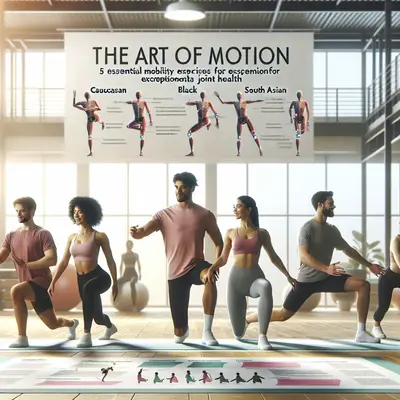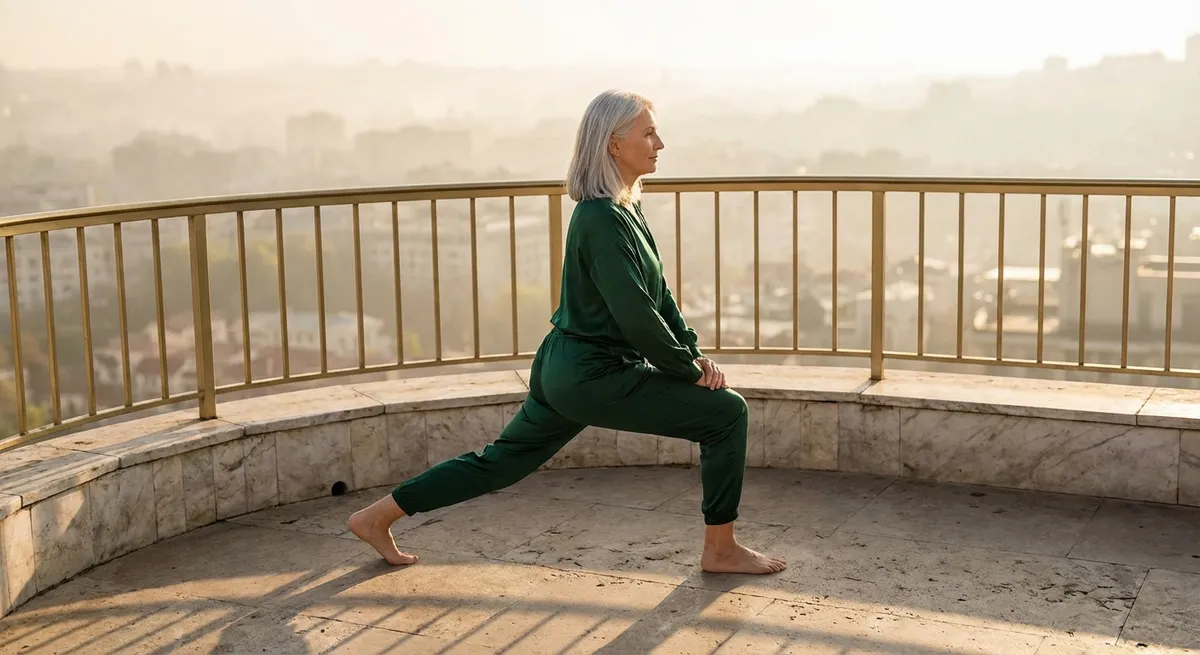
Mobility is often framed as something to preserve when it is threatened. A more refined approach is to treat it as a daily luxury—an elegant, deliberate practice that quietly upgrades how your joints move, feel, and age. When mobility work is curated with intention, it stops being a chore and becomes a subtle, intelligent investment in how you inhabit your body over decades.
Below is a sophisticated, joint‑centric guide to mobility—anchored in five exclusive insights that reward patience, precision, and a more discerning relationship with movement.
Mobility as “Joint Etiquette,” Not Just Flexibility
Most people confuse mobility with stretching, chasing “looseness” rather than control. For joint‑conscious individuals, the priority is different: mobility is about teaching your joints how to move with grace within their available range, not forcing them past it.
This is joint etiquette—respecting the architecture of your hips, knees, shoulders, and spine while ensuring each can rotate, glide, and bend without unnecessary friction. Instead of dramatic stretches held to discomfort, focus on slow, controlled arcs of movement: a hip gently tracing circles, a shoulder rotating under light tension, an ankle spiraling through its full range without collapsing. The goal is to refine the quality of motion rather than to chase extremes.
This etiquette‑based approach is especially valuable for those managing early arthritis or joint sensitivity. It can reduce unnecessary irritation while still sending your tissues the message they need to maintain strength, lubrication, and resilience. Over time, your joints begin to “remember” smooth movement patterns, and your muscles learn to support them with quiet precision rather than brute effort.
Exclusive Insight 1: Treat Synovial Fluid Like a Luxury Skincare Ritual
Just as a premium skincare routine depends on consistency, not drama, joint care depends on small, regular inputs that nourish your synovial fluid—the “moisturizer” inside your joints.
Synovial fluid acts like a fine lubricant, helping cartilage surfaces glide with minimal resistance. Unlike a topical product, however, it is activated from the inside out. Gentle, repeated movement is what “stirs” this fluid and distributes it across the joint surfaces. Think of slow knee bends, ankle circles, or controlled arm sweeps as the biomechanical equivalent of applying a serum: subtle, deliberate, and more effective when done daily.
For joint‑focused individuals, this means reframing “warm‑ups” as micro‑hydration sessions for your cartilage. Five meticulous minutes of slow, full‑range joint rotations in the morning and evening—neck, shoulders, wrists, hips, knees, ankles—may do more for your long‑term comfort than sporadic intense workouts. The movement does not need to be heroic; it needs to be consistent and thoughtful.
Exclusive Insight 2: Your Hips Are the Negotiators for Your Knees and Back
Sophisticated mobility work respects the chain, not just the individual link. Nowhere is this more evident than in the relationship between the hips, knees, and lower back.
When the hips are stiff—especially in rotation—other structures are forced to negotiate for them. The knees twist more than they should. The lower back bends where it should be stable. Over time, this negotiation becomes a quiet tax on your comfort, paid in subtle aches after sitting, walking, or climbing stairs.
A joint‑savvy mobility practice therefore elevates hip care to a central priority. This doesn’t require aggressive stretching. Instead, consider precise patterns such as:
- Gentle hip CARs (controlled articular rotations): standing tall, tracing slow circles with one knee, staying within a comfortable range.
- Supported deep hip flexion: sitting on a sturdy chair, drawing one knee toward the chest, then gently rotating the thigh inward and outward.
- Prone hip extensions: lying face down, lifting one leg a few inches while keeping the pelvis heavy, training the hip to extend without borrowing from the lower back.
When the hips are given permission to move well, the knees and spine often respond with quieter, more stable comfort. For those who value joint longevity, prioritizing hip mobility is one of the most leveraged decisions you can make.
Exclusive Insight 3: Stability and Mobility Are Not Opposites—They Are Partners
A refined mobility routine never treats stability and mobility as rivals. In reality, every elegant joint movement is underwritten by quiet stability from nearby structures.
For example, a graceful shoulder circle is only possible when the shoulder blade is supported by strong upper back muscles and a steady ribcage. A smooth, pain‑free squat demands both mobile ankles and hips, plus a spine that can stay tall and controlled. If mobility is pursued without this stabilizing foundation, joints are pushed into ranges they cannot safely manage.
The solution is to pair each mobility exercise with a stabilizing counterpart:
- After ankle circles, perform slow heel raises while maintaining perfect alignment.
- After gentle spinal rotations, add a brief isometric hold in a neutral, tall posture.
- After hip rotations, practice a single‑leg balance, allowing the hip to subtly adjust and stabilize.
This pairing not only protects your joints; it also teaches your nervous system that new ranges of motion are safe. Over time, those ranges become accessible in daily life—not just in your exercise routine—because your body trusts them.
Exclusive Insight 4: Your Nervous System Is the Quiet Gatekeeper of Mobility
Joints are not limited purely by anatomy; they are limited by the nervous system’s sense of safety. If your brain interprets a position as risky, it will subtly tighten muscles, restrict range, and send discomfort signals long before true structural limits are reached.
For discerning joint care, this means your mobility work should feel calm, precise, and unhurried. A premium mobility session is less about “pushing through” and more about cultivating a sense of ease while you explore movement. Slow breathing, controlled tempo, and an absence of sharp pain tell your nervous system that these movements are acceptable—and gradually, it releases its protective brakes.
Practical refinements include:
- Moving just to the “edge of stretch,” not into strain, and lingering for a few breaths.
- Keeping your face, jaw, and hands relaxed as you move, signaling global calm.
- Using a 1–10 comfort scale and staying in the 2–4 range for most mobility work, especially around sensitive joints.
This nervous‑system‑aware approach often yields better long‑term gains in mobility with less post‑session soreness and fewer flare‑ups—especially in individuals with arthritis or joint history.
Exclusive Insight 5: Joint‑Specific Micro‑Sessions Beat the “All‑or‑Nothing” Workout
Highly engaged, health‑literate individuals often fall into a familiar pattern: either they have time for a full, perfectly structured session—or nothing at all. Mobility does not respond well to this all‑or‑nothing mindset.
Instead, the most joint‑intelligent strategy is to scatter joint‑specific “micro‑sessions” through your day. Two minutes of ankle work while the kettle boils. Three minutes of hip rotations between meetings. A brief shoulder sequence before you open your laptop and after you close it. Each micro‑session is almost inconsequential on its own; together, they create a continuous background of gentle, beneficial input.
For those who sit often or travel frequently, this approach is particularly powerful. The body is spared the shock of being still for hours and then suddenly pushed into demanding activity. Instead, joints receive multiple small reminders of how to move. The outcome is often less stiffness upon standing, fewer “mystery aches,” and a more direct sense of ownership over your comfort.
This is mobility as a living habit, not an occasional event.
Designing an Elegant Daily Mobility Ritual
For a joint‑attentive individual, an ideal daily mobility ritual is simple, deliberate, and repeatable. Consider this refined template, which can be completed in 10–12 minutes, or broken into micro‑sessions:
Spine Sequence (2–3 minutes)
- Seated or standing spinal flexion and extension (gentle rounding and lengthening). - Small, slow rotational turns side to side, keeping your hips steady.
Hips and Knees (3–4 minutes)
- Supported hip circles (standing with light support, tracing slow circles with the knee). - Controlled chair squats, focusing on smooth descent and ascent.
Ankles and Feet (2–3 minutes)
- Ankle circles in both directions, one leg at a time. - Slow heel raises, feeling the entire forefoot stay grounded.
Shoulders and Wrists (2–3 minutes)
- Shoulder rolls and gentle arm circles, keeping the neck relaxed. - Wrist circles and light flexion/extension, especially if you type frequently.
Keep the experience quiet and deliberate: steady breathing, unhurried transitions, no rush to “perform.” Over weeks and months, this modest investment compounds—much like a well‑managed portfolio—into more fluid movement, quieter joints, and deeper confidence in your body’s capacity.
Conclusion
Mobility, at its most elegant, is not about contortion or spectacle. It is about teaching your joints how to move with dignity—well‑lubricated, well‑supported, and well‑respected. By honoring synovial fluid as a daily luxury, prioritizing hip intelligence, pairing mobility with stability, working with your nervous system, and embracing joint‑specific micro‑sessions, you create a quietly powerful framework for joint longevity.
In a world that often romanticizes intensity, a refined mobility practice is almost subversive: it is calm, precise, and deeply effective. Your joints do not require drama; they require consistency, attention, and a kind of movement that feels, in the best sense, like living in a well‑crafted body.
Sources
- [Arthritis Foundation – Range of Motion and Flexibility Exercises](https://www.arthritis.org/health-wellness/healthy-living/physical-activity/stretching-range-of-motion/range-of-motion-and-flexibility-exercises) - Overview of gentle mobility work and its benefits for joint comfort
- [Harvard Health Publishing – The Importance of Stretching](https://www.health.harvard.edu/staying-healthy/the-importance-of-stretching) - Discusses flexibility, mobility, and how controlled movement supports joint health
- [Johns Hopkins Medicine – Exercise and Your Joints](https://www.hopkinsmedicine.org/health/wellness-and-prevention/exercise-and-your-joints) - Explains how regular, low‑impact movement benefits cartilage, synovial fluid, and overall joint function
- [National Institute of Arthritis and Musculoskeletal and Skin Diseases (NIAMS) – Handout on Joint Health](https://www.niams.nih.gov/health-topics/joint-health) - Government resource on protecting joints through daily activity and smart exercise
- [Cleveland Clinic – Joint Pain and Exercise](https://health.clevelandclinic.org/how-to-work-out-when-you-have-joint-pain) - Practical guidance on safe movement strategies for people with joint sensitivity or arthritis
Key Takeaway
The most important thing to remember from this article is that this information can change how you think about Mobility Exercises.