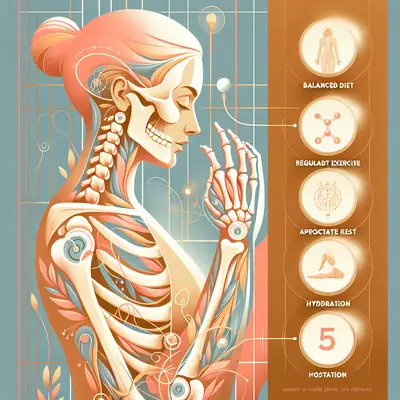
A refined life is rarely loud. It shows up in how you rise from a chair without bracing your hands, how you glide through a long day without aching knees whispering for attention. Healthy living, when curated with your joints in mind, becomes less about restriction and more about designing a daily rhythm that feels quietly capable, resilient, and beautifully sustainable.
Below, you’ll find a carefully composed approach to healthy living centered on joint longevity—complete with five exclusive, often-overlooked insights for those who take their mobility as seriously as their calendar.
Reframing Healthy Living Through a Joint-Centric Lens
Most wellness advice treats joints as a side note—something to address only once pain appears. A joint-centric lifestyle reverses that order: your mobility becomes the standard against which every choice is measured.
This doesn’t mean living in fear of discomfort. It means curating your habits with discernment. You begin to ask different questions: not “Is this healthy?” but “Will this support or erode my capacity to move elegantly ten years from now?” The answers subtly reshape your routines: how you sit at your desk, what you wear on your feet, the texture of the surfaces you walk on, even how you rest.
Healthy living, through this lens, is about precision. Instead of chasing dozens of trends, you fine-tune a few core practices that protect cartilage, support ligaments, and keep muscles fluid and responsive. Your aim is not athletic spectacle; it is the quiet confidence of knowing your body can handle your ambitions—today and in the years ahead.
Exclusive Insight 1: Micro-Loading — The Hidden Art of Joint-Respectful Strength
Traditional fitness advice often glorifies intensity, but joints thrive on consistency and moderation, not shock and awe. Micro-loading is the practice of using modest, carefully selected loads—lighter weights, controlled resistance bands, or bodyweight drills performed with precise form—to strengthen the structures that stabilize your joints.
Instead of sporadic, punishing workouts, picture short, deliberate sessions woven gently into your week. Think 15 minutes of slow, impeccable squats and hip hinges, or measured upper-body work where the emphasis is on joint alignment and muscle control, not exhaustion. Micro-loading reduces the risk of flare-ups while still signaling your bones and connective tissues to adapt and remain robust.
The elegance lies in the restraint: just enough challenge to stimulate, never so much that you compromise technique. Over time, this approach develops deep, durable strength—the kind you feel when carrying luggage, climbing stairs, or returning from a long day still feeling composed rather than depleted.
Exclusive Insight 2: The “Friction Audit” — How Your Day Quietly Strains Your Joints
Many joint complaints are less about one dramatic injury and more about countless small frictions built into your environment. A “friction audit” is a calm, methodical review of your day to identify where unnecessary strain is quietly accumulating.
Notice how low your favorite chair sits. Does it demand a knee-deep squat every time you stand? Observe your kitchen layout: are you constantly twisting to one side to reach frequently used items? Consider your commute: do your hips remain locked at the same angle for an hour each way? Even elegant shoes can become culprits if their design forces your knees or lower back to compensate.
By adjusting heights (slightly elevated chairs, a footrest, repositioned monitors), rethinking storage (placing heavier items between hip and chest level), and rebalancing daily tasks between sides of your body, you remove dozens of tiny insults to your joints. The result is not dramatic in any single moment—but over months and years, it’s transformative in how free and unburdened your movement feels.
Exclusive Insight 3: Joint-Focused Nutrition Beyond “Anti-Inflammatory” Buzzwords
Anti-inflammatory eating has become a wellness cliché, but for joint health, nuance matters. A sophisticated joint-supportive diet looks at three pillars: structural support, inflammation modulation, and metabolic balance.
Structural support means supplying the raw materials your cartilage, tendons, and bones require: adequate protein spaced evenly through the day; omega-3 fats from sources like fatty fish; and micronutrients such as vitamin D, calcium, magnesium, and vitamin K2. These are not trendy extras—they are the biochemical foundation of joint resilience.
Inflammation modulation goes beyond cutting “bad” foods. It’s about building a consistent pattern: richly colored vegetables, herbs and spices like turmeric and ginger, and choosing whole, minimally processed foods most of the time. Meanwhile, metabolic balance matters because excess body weight—even modestly above your optimal range—increases the mechanical load on weight-bearing joints and can contribute to systemic inflammation.
A refined approach to nutrition doesn’t demand perfection or performative restriction. Instead, it prizes a calm, repeatable pattern that quietly protects your joints in the background of an otherwise full and pleasurable life.
Exclusive Insight 4: The Rhythm of Recovery — Treating Rest as Joint Luxury, Not Afterthought
High standards in health are not defined by how much you can do, but by how well you recover. Joints, in particular, depend on what happens in your off-hours: cartilage is nourished through the gentle compression and decompression that occurs as you move, then restore, then move again.
Quality sleep is where much of this repair is orchestrated. A regular sleep schedule and a cool, dark, quiet bedroom are not indulgences; they are part of the infrastructure of joint preservation. During deep sleep, your body manages inflammation, repairs tissues, and recalibrates pain perception. Chronic sleep deprivation, conversely, has been linked to increased sensitivity to pain and higher inflammatory markers.
Beyond nighttime, consider “micro-recovery” during the day: a few minutes every hour to stand, move, or shift positions; brief, unhurried stretches; even a quiet moment to loosen your jaw and release your shoulders. Instead of collapsing at the end of the day, you scatter small rituals of restoration throughout it. This rhythm keeps joints from becoming stiff, swollen, or silently overworked.
Exclusive Insight 5: Practicing Movement Precision — Training Your Brain as Much as Your Body
Most people think of joints mechanically, but movement elegance is largely neurological. Your brain constantly predicts, coordinates, and refines how you move; when those patterns are sloppy, your joints often pay the price.
Movement precision means training attention and control, not just strength or flexibility. Slowing down a lunge to notice where your knee tracks, or practicing a simple balance drill while brushing your teeth, teaches your nervous system to recruit the right muscles at the right time. Over months, these micro-lessons create automatic patterns that protect your joints in unpredictable real-world scenarios—stepping off a curb, navigating a crowded staircase, catching yourself on an uneven path.
Disciplines that emphasize control—such as Pilates, tai chi, or well-instructed yoga—can be especially valuable. They refine proprioception (your sense of where your body is in space) and cultivate subtle stability around ankles, knees, hips, shoulders, and spine. The result is movement that feels poised rather than precarious, even when life is anything but calm.
Weaving Joint-Smart Choices Into a Life of Intention
Healthy living with a focus on joint vitality is not about shrinking your life to accommodate potential pain. It is about curating your environment, habits, and routines so that your mobility feels like an asset—not a limitation—well into the future.
Micro-loading strengthens without punishing. A friction audit removes invisible strain from your day. Thoughtful nutrition quietly fortifies the tissues that carry you. A rhythm of recovery turns rest into a strategic advantage. Movement precision elevates the way you inhabit your body in every moment.
Taken together, these practices form an understated yet powerful standard: a life in which your joints are not merely “fine,” but quietly, consistently supported—allowing you to move through your days with the kind of ease that feels, in its own way, luxurious.
Sources
- National Institute of Arthritis and Musculoskeletal and Skin Diseases (NIAMS) – Handout on Health: Osteoarthritis – Overview of how joints change over time, including risk factors and lifestyle considerations.
- Harvard Health Publishing – Foods that fight inflammation – Detailed discussion of dietary patterns and nutrients that may influence inflammation relevant to joint health.
- Arthritis Foundation – The Right Exercise for Your Joints – Guidance on joint-safe activity, including strength, flexibility, and balance work.
- Centers for Disease Control and Prevention (CDC) – Physical Activity and Arthritis – Evidence-based recommendations on activity levels and approaches for people concerned with joint health.
- Mayo Clinic – Sleep and Chronic Pain – Explores the relationship between sleep, pain perception, and recovery, relevant to long-term joint comfort.
Key Takeaway
The most important thing to remember from this article is that this information can change how you think about Healthy Living.