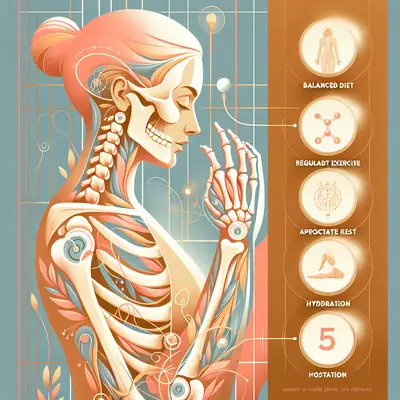
Healthy living is often framed as a broad aspiration—more sleep, better food, occasional movement. For those who care deeply about joint health, however, “healthy” becomes far more precise. It’s not just about feeling well in the moment; it’s about curating a body that moves with confidence and grace in ten, twenty, or thirty years. This is joint preservation as a lifestyle, not a reaction.
Below are five exclusive, nuanced insights designed for those who see their joints not as an afterthought, but as a long-term asset—worth protecting with the same discernment they bring to every other part of their lives.
The Micro-Load Philosophy: How You Move Between Workouts
Most people focus on what happens during their 45-minute workout. For joint health, the more revealing question is: what is happening the other 15+ waking hours?
Micro-loads—small, repeated forces on your joints—quietly shape cartilage health, tendon integrity, and muscular balance. Hours of sitting with rounded shoulders, crossing the same leg, or leaning into one hip create low-level, chronic stress that the joints eventually “remember.”
A micro-load–conscious lifestyle includes subtle corrections: changing sitting positions every 20–30 minutes, alternating which leg bears weight when standing, gently engaging your core when you lift everyday objects, and breaking up screen time with 2-minute mobility breaks. The aim is not perfection; it is variety. Joints thrive on well-distributed stress, not stagnation.
Cultivating this awareness turns your entire day into a quiet, protective practice. Your joints are no longer only “exercised” during workouts; they are stewarded from the moment you get out of bed to the moment you lie down.
Strength as Joint Luxury: Training the Muscles That Shield Your Joints
Tone and aesthetics are often the visible rewards of strength training. For joint-focused individuals, the true luxury is unseen: the way strong, well-balanced muscles act as shock absorbers around vulnerable structures.
The goal is targeted strength around key joint complexes—hips, knees, ankles, shoulders, and spine—rather than generic “full-body” routines. Deep hip stabilizers, the rotator cuff, and the muscles along the mid-back and core deserve special attention. When these muscles are robust, the joint no longer bears impact alone; the load is shared, cushioned, and better aligned.
This doesn’t require heroic weights. Thoughtful, slow, technically precise strength work—such as split squats for hip and knee control, single-leg deadlifts for ankle stability, and rowing variations for shoulder health—builds resilience without unnecessary strain. The refinement lies in movement quality: stable knees, aligned feet, neutral spine, unhurried tempo.
Over time, strength becomes a form of joint insurance: not dramatic, not loud, but quietly decisive in how comfortably you’ll be able to move as you age.
Anti-Inflammatory Eating as a Daily Joint Ritual
For those invested in long-term joint health, nutrition is not about restrictive rules—it is about persistent, low-level refinement. Joints are deeply influenced by systemic inflammation, and your daily plate can either soften or amplify that internal “noise.”
An elegant, joint-conscious way of eating emphasizes:
- Color-rich produce (berries, leafy greens, peppers) for antioxidants that help buffer inflammatory processes.
- High-quality fats—extra-virgin olive oil, avocado, nuts, and omega-3–rich fish like salmon or sardines—to support cell membranes and reduce inflammatory signaling.
- Moderate, steady protein intake from varied sources to maintain lean muscle, which supports load distribution through the joints.
- Thoughtful carbohydrate choices—intact grains, legumes, root vegetables—to stabilize blood sugar and avoid surges that can contribute to inflammation.
Equally important is what you subtly limit: ultra-processed foods, excessive added sugars, frequent deep-fried items, and high volumes of refined flour. These are not “forbidden,” but they are no longer the center of the plate.
This is not a short-term diet; it is a quiet, daily vote in favor of calmer joints. Over years, these votes accumulate in the cartilage, in the tendons, in the way your body recovers from activity. It is culinary discretion, expressed through joint comfort.
Precision in Rest: Sleep and Recovery as Cartilage Care
Sleep is often described as a reset for the brain. It is also when your joints perform some of their most important behind-the-scenes work.
During deep sleep, tissues repair microscopic wear, hormones that regulate inflammation are balanced, and the body reestablishes the equilibrium disturbed by the day’s loads. Inadequate or poor-quality sleep can heighten pain sensitivity, impair recovery from exercise, and sustain low-level inflammation that quietly erodes joint comfort.
A joint-conscious recovery ritual includes:
- A predictable sleep schedule that respects your natural rhythm.
- A wind-down period free of stimulating screens and last-minute work decisions.
- A supportive sleep surface—mattress and pillows that maintain spinal alignment rather than forcing it to adapt to them.
- Gentle evening movement, such as light stretching or slow walking, to decompress joints before bed.
Daytime recovery matters as well: alternating demanding activities, using short walking breaks to “refresh” the spine and hips, and respecting early signs of fatigue rather than pushing through every discomfort.
Think of sleep and recovery not as passive downtime, but as an active, strategic investment: the time when your joints consolidate the benefits of everything else you do right.
The Alignment Audit: Elegant Posture as Joint Strategy, Not Aesthetic
Posture is often reduced to a visual: shoulders back, chest open, chin forward. For joint health, posture is less about looking “upright” and more about how efficiently your joints share forces through the chain of the body.
An alignment audit means regularly checking in with how you stand, sit, walk, and even hold your phone. Is your weight centered between both feet, or does one leg habitually do more work? Do your knees lock back when you stand? Does your head migrate in front of your shoulders when you read or type? Each of these patterns adds a specific stress to particular joints.
Subtle changes—unlocking the knees, stacking ears over shoulders, gently drawing the ribcage back over the pelvis, or bringing the phone up to eye level instead of dropping your head—redistribute forces almost instantly. Over time, this consistent rebalancing becomes a key element of joint preservation.
The aim is not rigid perfection; it is fluid alignment. You cultivate a posture that adapts gracefully to different contexts—standing in a meeting, sitting at a dinner table, walking through an airport—without sacrificing your joints to convenience or habit.
Conclusion
Healthy living, when viewed through the lens of joint preservation, becomes an art of small, deliberate choices: how you load your body throughout the day, how you nourish quiet anti-inflammatory processes, how you prioritize strength, rest, and alignment.
For those who value long-term, uncompromised movement, these five insights are less a checklist and more a philosophy. They transform everyday routines into a refined strategy for poised longevity—where each step, each meal, each night’s sleep is part of a carefully curated future in which your joints remain not just functional, but genuinely comfortable.
Sources
- CDC – Arthritis and Physical Activity – Overview of how appropriate physical activity supports joint health and arthritis management
- Harvard Health Publishing – Foods that fight inflammation – Evidence-based discussion of anti-inflammatory dietary patterns and their impact on chronic conditions
- NIH – Sleep and Health – Explains the role of sleep in overall health, repair, and inflammation regulation
- Mayo Clinic – Strength Training: Get Stronger, Leaner, Healthier – Details the benefits of strength training, including joint protection and improved function
- Cleveland Clinic – Posture and Your Health – Explores the importance of posture and alignment for musculoskeletal comfort and joint health
Key Takeaway
The most important thing to remember from this article is that this information can change how you think about Healthy Living.