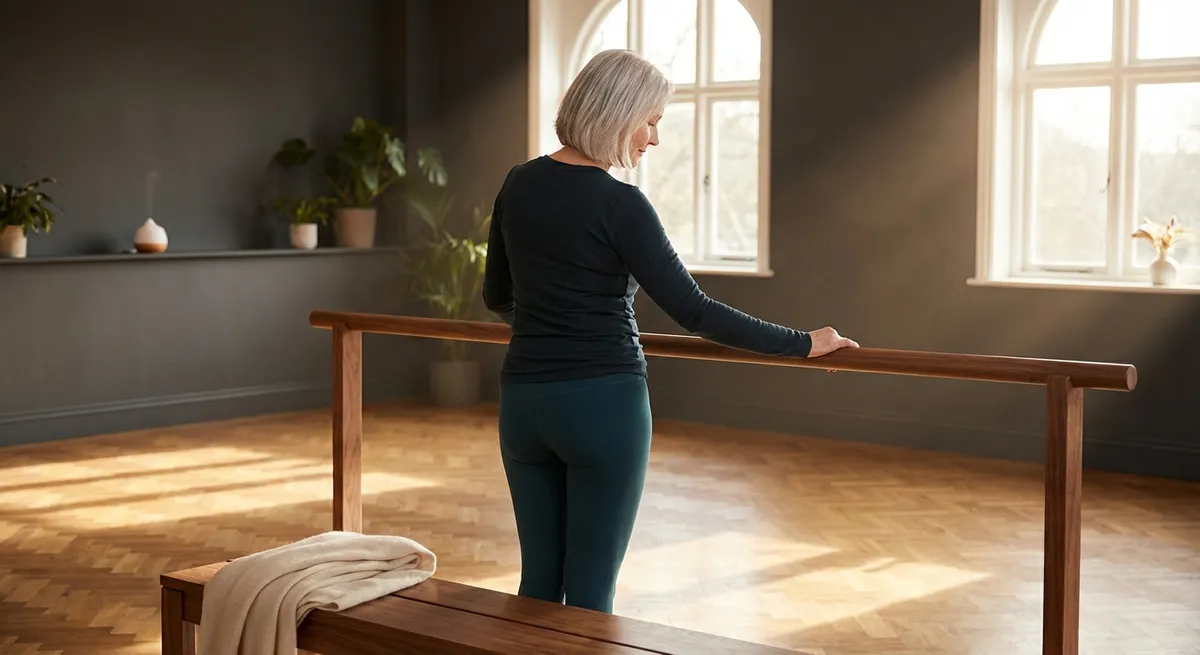
When mobility is treated as an afterthought, joints age loudly—through stiffness, ache, and constraint. When it is treated as a quiet, daily luxury, movement becomes something entirely different: poised, fluid, and deeply sustainable. Mobility exercises are not simply stretches; they are curated inputs to your cartilage, tendons, and nervous system that determine how gracefully you will move five, ten, and twenty years from now.
This is mobility as a refined practice, not a frantic fix. Below, you’ll find a considered framework for mobility work—elevated, joint‑savvy, and designed for people who care about how they move as much as how they live.
Mobility, Not Just Flexibility: The Subtle But Crucial Distinction
Flexibility asks: “How far can this joint be taken?” Mobility asks: “How far can this joint be taken with strength, control, and confidence?” For joint health, that distinction is everything.
A flexible muscle can be lengthened, but a mobile joint can inhabit its range with integrity. Mobility exercises integrate strength, motor control, and joint positioning, which helps distribute forces more evenly across cartilage and connective tissues. This is especially important as we age, when cartilage hydration decreases and compensatory patterns easily creep in.
By favoring mobility over passive stretching alone, you encourage the joint capsule, ligaments, and supporting musculature to share the workload, rather than allowing a few overburdened structures to take the strain. Practically, this looks like controlled circles, active end‑range holds, and slow transitions rather than sudden lunges into deep stretches. The result is range you can actually use in real life—getting out of low chairs, turning to look behind you, walking on uneven terrain—without provoking irritation.
Insight 1: Treat End Range as a Privilege, Not a Default
Most joint irritation happens at the extremes of motion, where tissues are least supported. For joint‑conscious mobility, end range should be earned carefully, not visited casually.
Instead of forcing a joint into its maximal angle, approach the outer edges as a place to hover with intention. Move to a mild stretch, then add gentle, precise muscle engagement—such as lightly pressing the limb into a towel, wall, or the floor—for 5–10 seconds before relaxing slightly and reassessing. This technique (often called “end‑range isometrics”) teaches your nervous system that these positions are safe and supported, while improving the strength of the small stabilizing muscles that protect the joint.
End ranges then become a carefully curated space: visited, maintained, and strengthened, rather than repeatedly attacked. Over time, joints respond with more available range and less post‑exercise soreness—a sophisticated balance of freedom and restraint.
Insight 2: Sequence Mobility in the Same Order Your Joints Age
Joints do not all age at the same pace. Hips, knees, and spine usually show early changes because they bear the brunt of daily load. A refined mobility ritual respects this hierarchy instead of randomly choosing exercises.
Consider a deliberate order:
- Spine – Gentle rotations and segmental flexion/extension to wake up the central “axis” of your body. A supple spine allows other joints to move without compensating.
- Hips and Ankles – Controlled circles, heel‑to‑toe rockings, and hip hinges to restore the foundation of walking, standing, and stair navigation.
- Shoulders and Upper Back – Scapular glides, arm sweeps, and thoracic rotations to improve posture and arm elevation.
- Knees and Wrists – Small‑arc bends, extensions, and light rotational work to refine alignment and joint tracking.
This top‑to‑bottom, core‑to‑periphery strategy ensures that your primary load‑bearing joints are attended to when you are fresh and focused. Over time, you’re less likely to default to poor mechanics—like twisting from the knee when the hip and spine are stiff—because you have already “cleared” the central, more influential segments.
Insight 3: Use Micro‑Intervals of Movement as Joint Insurance
For people who value their joints, the true mobility danger is not one missed workout; it is the six, eight, or ten hours in a day spent largely motionless. Joints are nourished by movement because cartilage relies on compression and decompression to circulate nutrients in the absence of direct blood supply.
Instead of relying solely on a dedicated 30‑minute session, introduce micro‑intervals of motion every 45–60 minutes. These need not be theatrical; subtle, consistent motions are more sustainable:
- Standing hip circles while you wait for the kettle to boil
- Ankle pumps and circles under the desk during a call
- Gentle seated spinal rotations between emails
- Two controlled squats or chair‑stands each time you get up
These micro‑sessions maintain synovial fluid movement, keep muscles slightly active, and prevent the prolonged static positions that stiffen fascia. Think of it as “mobility compounding”—small deposits of movement accruing interest in the form of smoother, less painful motion later in the day.
Insight 4: Align the Tempo of Movement With Your Pain and Inflammation Levels
The speed of your mobility work is not aesthetic; it is deeply therapeutic. Joints that are inflamed or recovering from a flare respond poorly to ballistic movement, yet they often benefit from slow, rhythmical motion that respects pain thresholds.
On high‑symptom days, favor:
- Very slow arcs of movement, staying well within comfortable range
- Shorter sets (20–40 seconds per joint) performed several times a day
- Gentle “rocking” motions instead of long static holds
On lower‑symptom days, you can experiment with slightly larger ranges and longer end‑range holds, always maintaining control. This pacing strategy aligns your mobility work with the state of your tissues, rather than imposing a rigid routine. It also reduces the risk of post‑exercise soreness that can discourage consistency.
The refinement here is responsiveness: you assess and then adjust. This creates a long‑term relationship with movement that feels collaborative, not combative.
Insight 5: Train Joint Position Awareness, Not Just Muscle Strength
People often focus on how strong a muscle is but overlook whether it knows where it is in space. Joint position sense (proprioception) is a quiet cornerstone of joint health: it determines how quickly you correct a misstep, how gracefully you descend stairs, and how smoothly you pivot.
You can integrate proprioceptive training into mobility work without turning your living room into a gym. A few examples:
- Perform slow ankle circles while lightly touching a wall for minimal balance support, then graduate to doing them without contact.
- Practice controlled hip abduction (leg out to the side) while standing, focusing on keeping your pelvis level and your toes softly facing forward.
- Add gentle “eyes‑closed” versions of very small, stable movements—such as standing weight shifts side to side—to heighten internal awareness.
This quiet upgrading of joint awareness decreases the micro‑stumbles, awkward foot placements, and abrupt twists that often irritate joints. Instead of merely being stronger, you become more precise.
Designing a Daily Mobility Ritual With Intention
From these insights, you can craft a daily practice that feels more like a tailored ritual than a chore. A sample framework might look like this:
- Morning (5–8 minutes): Slow spinal rotations, cat‑camel variations, and gentle hip circles to “wake” the central axis and hips.
- Midday micro‑intervals: A few ankle circles, two or three controlled squats to a chair, and wrist circles between tasks to interrupt long sits.
- Evening (5–10 minutes): Focused mobility for the joints that worked hardest that day—perhaps more deliberate hip work after a long walk, or shoulder and upper‑back mobility after computer‑heavy hours.
Build in one or two proprioceptive elements (like balance‑aware ankle work) and one or two end‑range isometric positions (such as a gentle, supported hip flexor stretch with light muscular engagement). Over time, these become ingrained rituals—quiet, non‑negotiable investments in your ability to move with ease.
This is not about chasing extreme range or contortionist feats. It is about cultivating the kind of movement that feels expensive: unhurried, articulate, and sustainable.
Conclusion
Mobility exercises, done with discernment, can become one of the most elegant tools in your joint‑health repertoire. By respecting end ranges, sequencing joints thoughtfully, embracing micro‑movement throughout the day, matching tempo to tissue state, and training awareness as much as strength, you create a movement practice that serves you well beyond the next workout.
Joints respond to how you live, not just how you exercise. When your day is threaded with poised, intentional motion, you’re not merely preserving function—you are curating a future in which sitting, standing, walking, and reaching remain quietly pleasurable for as long as possible.
Sources
- Harvard Health – Why stretching is important – Overview of the benefits of flexibility and mobility work for joint and muscle function.
- Arthritis Foundation – Range-of-Motion Exercises – Practical guidance on safe, daily movement patterns for people with joint concerns.
- NIH – Cartilage and Joint Nutrition Basics – Explains how joints and cartilage are nourished and how movement influences joint health.
- Mayo Clinic – Exercise and Chronic Joint Conditions – Discusses appropriate exercise types, including mobility‑oriented approaches, for joint conditions.
- Cleveland Clinic – Proprioception: Your Body’s Sixth Sense – Describes joint position sense and its importance for stability, balance, and injury prevention.
Key Takeaway
The most important thing to remember from this article is that this information can change how you think about Mobility Exercises.