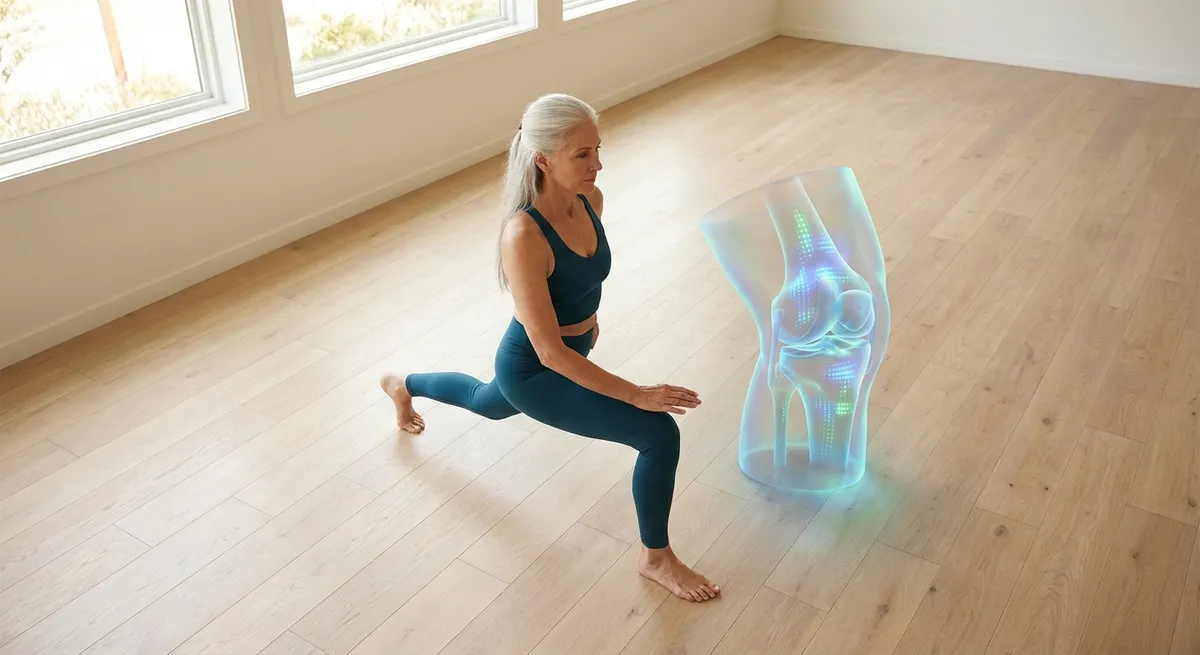
Joint care is no longer a reactive response to pain; it is becoming a deliberate, high-standard practice for those who expect longevity, performance, and elegance from their bodies. Instead of chasing quick fixes, a new culture of “intelligent joints” is emerging—where precision, subtlety, and foresight govern every choice, from the way you climb stairs to the way you recover from a long day at your desk.
This is joint care for people who think in decades, not days. Below are five exclusive, under-discussed insights that speak to a more refined, strategic approach to joint health—one that respects both science and lived experience.
The Micro-Load Principle: How You Stand Is Quietly Shaping Your Joints
Most joint conversations fixate on exercise, but the quiet hours—how you stand, sit, and shift your weight—often determine how gracefully your joints age. Joints respond continuously to “micro-loads,” the small, repetitive forces applied hundreds of times per day when you’re not thinking about movement at all.
When you habitually lock your knees while standing, drop your weight into one hip, or collapse your arches, you’re redistributing load away from muscles and into passive structures like cartilage, ligaments, and joint capsules. Over time, those small imbalances accumulate into stiffness, uneven wear, or pain that appears decades later and feels mysterious—until you trace it back to habitual posture.
An elevated strategy centers on conditional posture: you treat standing as an active position, not a default. That means softly unlocked knees, weight spread across the tripod of each foot (big toe, little toe, heel), and a subtle sense of lift through your spine. You’re not “posing”; you’re continuously fine-tuning load so that muscles—not joints—do the quiet heavy lifting.
This micro-load awareness extends to daily rituals: how you stand when you wait for coffee, how you lean at the sink, even how you queue at the airport. Each moment becomes an opportunity to realign, redistribute, and protect. Over years, this refined attention adds up to a body that feels unexpectedly light in situations where others feel compressed and sore.
Synovial Intelligence: Training Your Joints to Love Movement
Healthy joints are not just about bones and cartilage; they are about fluid. Synovial fluid—the lubricating liquid inside your joints—behaves almost like a luxury skincare serum for your cartilage. It delivers nutrients, removes waste products, and changes viscosity in response to movement and temperature.
What many people miss is that synovial fluid health is trained. Long, uninterrupted periods of stillness—such as extended computer work or long car rides—reduce fluid circulation and joint nutrition. In contrast, gentle, frequent movement cycles act like a pump for the joint capsule, refreshing the environment in which your cartilage lives.
An elevated practice incorporates “synovial sessions” into the day: two to five minutes of deliberately smooth, unhurried joint motions. These are not workouts; they are quiet rituals. You might circle your ankles before slipping on shoes, glide your hips in controlled figure-eights after a meeting, or explore gentle shoulder rotations between emails. Quality of movement matters more than intensity—think silk, not sandpaper.
Temperature also influences synovial fluid. A light warm-up before demanding tasks—such as gardening, tennis, or a long walk on uneven terrain—makes the fluid more viscous and protective. Rather than diving into activity cold, you create a prelude: dynamic yet controlled motions that signal your joints that something is coming, and you’d like them to be fully prepared.
Over time, this “synovial intelligence” reframes movement from something you do to your joints to something you do for them. Your joints start to crave motion, not fear it.
Load Curating: Treating Strength and Impact as a Personal Portfolio
Strength training is widely recommended for joint health, but the nuance lies in how you load your body. Joints are highly sensitive to the geometry of load: direction, speed, frequency, and distribution. A sophisticated approach treats every load—weights, impact, even bodyweight tasks—as part of a carefully curated portfolio rather than random stress.
First, there is vertical load (such as squats or stair climbing), which conditions cartilage and bone. Then there is shear and rotational load (like pivoting in sports or twisting while carrying groceries), which can be either profoundly beneficial or subtly damaging depending on control and preparation. Neglect one type and you under-prepare your joints; overload one type and you risk irritation or wear.
Instead of thinking in terms of “heavy or light,” consider “structured or chaotic.” Structured loading—deliberate, controlled, progressively adjusted—teaches joints exactly what to expect. Chaotic loading—sudden, unplanned spikes from sporadic high-intensity workouts or occasional weekend sports—often overwhelms them. In joint terms, it’s the difference between a stable investment and a volatile market swing.
A refined loading strategy might include:
- Consistent, moderate resistance training to support muscles around key joints (knees, hips, shoulders, spine).
- Periodic, well-prepared exposure to higher-impact moments (short sprints, agile footwork, light plyometrics) to keep bones and connective tissues responsive.
- Regular rotational and lateral work (side lunges, controlled trunk rotation, diagonal stepping) to prevent the body from becoming “one-direction strong” and multi-direction weak.
What emerges is not just stronger joints, but well-educated joints—accustomed to a range of forces and less rattled when life delivers the unexpected.
Joint-Rest Architecture: Designing Recovery With the Same Precision as Training
Many people think of rest as the absence of activity; in refined joint care, rest is architecture. It is designed, not improvised. Joints do much of their repair, remodeling, and inflammation resolution during your so-called “off” hours—particularly at night.
Sleep quality and position matter more than most joint-conscious individuals realize. A consistently twisted neck, a collapsed shoulder under your body, or unsupported knees can quietly undermine your best daytime practices. For example, side sleepers often benefit from strategic pillow placement between the knees and sometimes under the top arm, to keep hips, knees, and shoulders aligned rather than torqued. Back sleepers may need a modest pillow height to avoid pushing the head forward and stressing the cervical spine.
Even outside of sleep, joint-focused recovery can be intentionally curated. Gentle contrast of temperature (alternating warm and cool, under professional guidance when needed), short walks after long sitting stints, and deliberate “unloading breaks” where you recline with legs elevated can support venous return and help reduce joint swelling after demanding days.
Crucially, rest includes input control: limiting impulsive overuse on days when joints are already slightly irritated. That might mean editing your training session to favor low-impact options, or swapping a run for cycling or swimming. This is not fragility; it’s the same logic as protecting a premium instrument—careful, responsive, and future-oriented.
When rest is thoughtfully structured, the body learns a predictable rhythm of stress and restoration. Joints respond to that rhythm with greater resilience and fewer inflammatory “surprises.”
Sensory Refinement: Using Subtle Signals as Your Most Advanced Joint Technology
The most advanced joint monitoring device you possess is not wearable technology—it is your own sensory system. Pain is only one of many signals. Before pain, there are subtler hints: morning stiffness that lingers a bit longer than usual, a sense of “thickness” or fullness in a joint, slight reluctance to bear weight in a certain angle, or a faint “catch” during specific motions.
Many high-achieving individuals have trained themselves to override these signals in favor of productivity or performance. In the short term, this can seem efficient. Over years, it becomes expensive. Elevated joint care means retraining yourself to regard these early signals not as inconveniences, but as premium intelligence—early market data on your body’s internal economy.
This sensory refinement involves:
- Differentiating between “training effort” (muscular fatigue, heavy breathing) and “joint protest” (sharpness, pinching, grinding, or post-activity swelling).
- Respecting patterns. A sensation that appears once may be noise; a sensation that repeats under similar conditions is information.
- Adjusting load, range, tempo, or volume in real time when joints send a warning, rather than “finishing the set” or “getting the steps in” at all costs.
Some people find it helpful to keep a brief “joint journal” over a few weeks: noting when and where discomfort appears, what preceded it, and what improved it. Over time, this builds a personal data set as precise as any lab report—and far more directly applicable.
Sensory refinement turns joint care from rules-based compliance to a sophisticated, responsive partnership with your own body.
Conclusion
Intelligent joint care is not loud, extreme, or performative. It is quiet, exacting, and deeply long-term. It lives in how you distribute weight in a moment of stillness, how often you invite fluid motion into your day, how you curate load instead of chasing randomness, how intentionally you design rest, and how respectfully you interpret your body’s early whispers.
For those who value both performance and grace over a lifetime, joints are not an afterthought; they are primary infrastructure. When you address them with the same discernment you bring to other areas of your life—finance, career, aesthetics—you create a future in which movement remains not just possible, but pleasurable and precise.
Joint health, in this elevated sense, is not merely the absence of pain. It is the presence of poise.
Sources
- Centers for Disease Control and Prevention – Osteoarthritis – Overview of osteoarthritis, risk factors, and the role of joint load and activity
- Arthritis Foundation – Exercise and Arthritis – Guidance on safe movement, joint-friendly activity, and load management
- Harvard Health Publishing – The Importance of Strength Training for Joint Health – Explanation of how muscle strength supports and protects joints
- Mayo Clinic – Joint Pain: Causes and Treatment – Clinical overview of joint pain, early warning signs, and when to modify activity
- Johns Hopkins Medicine – Arthritis and Inflammation – Information on joint inflammation, stiffness, and the impact of rest, recovery, and daily habits on joint health
Key Takeaway
The most important thing to remember from this article is that this information can change how you think about Joint Care.