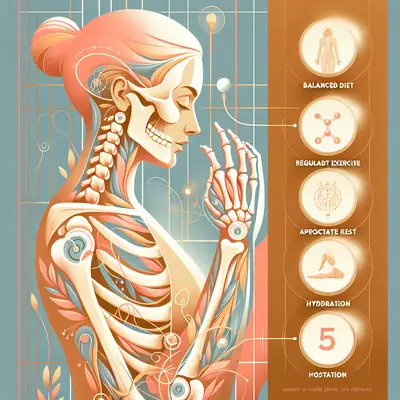
Living well with attentive joint care is less about restriction and more about refinement—curating the way you move, rest, and restore so that each day feels composed rather than constrained. For those who value longevity, subtle strength, and a quietly capable body, joint health becomes a central design element of a well-lived life, not a reluctant afterthought.
Below, you’ll find five exclusive, deeply considered insights for people who regard joint health as part of a broader philosophy of elevated living—where every step, stretch, and sip is chosen with intention.
The Micro-Mobility Mindset: Treat Movement Like Fine Details
Many health conversations focus on workouts, yet your joints are shaped just as much by what happens between those workouts. The accumulated “small moments” of movement—how you stand in a queue, reach for a glass, or rise from a low chair—either refine or erode joint comfort over time.
Begin by thinking in terms of micro-mobility: intentional, minute adjustments throughout the day rather than heroic efforts once or twice a week. Every 30–45 minutes, add a short mobility ritual: gentle ankle circles under your desk, a slow neck rotation between meetings, or a brief hip-opening stand-and-stretch after emails. These brief pulses of motion encourage synovial fluid circulation (your joints’ natural lubrication), help maintain cartilage nourishment, and support joint range of motion.
What distinguishes the micro-mobility mindset is precision, not intensity. Focus on smooth, unhurried execution and alignment—your knee tracking over your toes when you rise from a chair, your shoulders staying relaxed as you rotate your spine, your head stacked over your ribcage when you stand. With repetition, these elegant micro-movements become part of your physical signature—subtle, efficient, and deeply protective of your joints.
Strength With Restraint: Training Connective Tissues, Not Just Muscles
Conventional training culture often glorifies bigger, faster, heavier. For discerning joint health, the priority shifts: you are training your connective tissues—tendons, ligaments, cartilage—as much as your muscles. These structures adapt more slowly, and honoring that pace is what separates long-term resilience from short-lived performance.
Think in terms of “strength with restraint.” Use moderate loads and immaculate control, especially at the beginning and end of a movement—where joints are most vulnerable. Slow eccentrics (lowering a weight over 3–5 seconds), isometric holds (pausing in a stable joint position), and tempo-based training can be especially valuable. They invite your tissues to strengthen without the abrupt forces that often aggravate joints.
Opt for movements that create joint congruence (where the joint surfaces meet securely) rather than shear (where they slide and strain). For example, controlled step-ups over deep lunges for sensitive knees, or a hip hinge (like a Romanian deadlift) rather than repetitive forward rounding of the spine. It may feel humble in the moment, but over months and years, this quieter way of training lets you keep doing what you love while others pause for recovery.
The Anti-Inflammatory Table: A Discreet but Powerful Joint Ally
For joints, your dining table is as influential as your gym. Chronic, low-grade inflammation can subtly accelerate cartilage wear and pain sensitivity, yet it often responds remarkably well to sustained dietary refinement rather than dramatic, short-lived overhauls.
Prioritize foods with documented anti-inflammatory and antioxidant effects: richly colored vegetables, berries, extra-virgin olive oil, fatty fish such as salmon or sardines, nuts, and seeds. These are not trendy additions; they are structural supports for your joints. Omega-3 fatty acids, polyphenols, and certain vitamins and minerals contribute to modulating inflammatory pathways and supporting cartilage and bone metabolism.
Equally important is what you dial down: excessive refined sugars, ultra-processed snacks, and frequent heavy drinking can nudge inflammation in the opposite direction. This isn’t about asceticism; it’s about choosing foods that make your joints feel as composed as your calendar. Many people with joint concerns notice that a consistently Mediterranean-style or plant-forward pattern—not a rigid “diet”—translates into quieter, less reactive joints over weeks to months.
Hydration is part of this same aesthetic of internal care. Cartilage is highly water-dependent, and mild dehydration can make movement feel subtly “stiffer.” Keeping a glass carafe or a favorite water bottle at hand turns hydration into a visual cue and a gentle ritual rather than a chore.
Sleep as Structural Maintenance: The Night Shift for Your Joints
Sleep is not simply recovery for your mind; it is structural maintenance for your joints. During deep sleep, the body orchestrates a complex choreography of tissue repair, hormonal regulation, and inflammation modulation—processes that influence how your joints will feel when you stand up in the morning.
Approach sleep like you would a thoughtfully curated environment: invest in a mattress and pillows that support neutral joint positions. For many, side-sleeping with a pillow between the knees reduces torque through hips and lower back, while back-sleeping with a pillow under the knees can relieve strain on the lumbar spine. Avoid overly high pillows that thrust the neck forward; instead, aim for alignment where your ears, shoulders, and hips would stack in a straight line if viewed from the side.
Evening rituals matter as much as bedding. Late-night screens, heavy meals, and alcohol can all interfere with restorative sleep stages, where joint-related repair processes are most active. Swapping an hour of scattered scrolling for a short stretch sequence, a warm shower, or a few minutes of relaxed diaphragmatic breathing can visibly change how your joints feel by dawn. Think of bedtime not as an end, but as the beginning of your joints’ most important workday.
Precision Recovery: Reading Your Joints’ Signals With Nuance
The difference between wear and wisdom often comes down to how attentively you listen to your joints. Pain, stiffness, and fatigue are data, not inconveniences. The skill is learning to interpret that data with nuance rather than reacting in extremes—pushing through everything or avoiding all effort.
Cultivate a “joint feedback scale” that feels personal and precise. A mild, fleeting discomfort that eases as you move often signals deconditioning or normal adaptation; sharp, escalating, or lingering pain is a red flag requesting modification. Adjust variables with finesse: reduce range of motion slightly, lighten the load, shift to a different plane of movement (for example, lateral instead of deep forward bending), or intersperse more restorative days between demanding sessions.
Thoughtful recovery tools—such as gentle hydrotherapy, light massage, or short sessions with a foam roller—can support circulation and relaxation without overwhelming already sensitive tissues. However, no recovery tool substitutes for strategic pacing. The most sophisticated approach is not maximal treatment, but accurate calibration: enough load to sustain strength and mobility, enough rest to allow adaptation. Over the years, this measured responsiveness allows your joints to remain capable instead of constantly catching up.
Conclusion
A life that honors joint health is not defined by avoidance; it is shaped by intention. How you move in the in-between moments, how you train with restraint, what you place on your plate, how you curate your nights, and how you respond to your body’s signals—these choices quietly decide whether your joints feel like limitations or trusted partners.
By adopting a more cultivated, detail-oriented approach to joint care, you are not simply preventing discomfort; you are designing a body that can accompany your ambitions—gracefully, reliably, and for far longer than habit alone would allow.
Sources
- Arthritis Foundation – Joint Health Basics - Overview of joint structure, cartilage, and synovial fluid function
- Harvard T.H. Chan School of Public Health – The Nutrition Source: Anti-Inflammatory Diet - Evidence on dietary patterns and inflammation relevant to joint health
- National Institutes of Health – Omega-3 Fatty Acids Fact Sheet - Details on omega-3s and their role in inflammation and chronic disease
- Johns Hopkins Medicine – Exercise and Your Joints - Guidance on joint-safe exercise principles and load management
- National Institute of Arthritis and Musculoskeletal and Skin Diseases (NIAMS) – Sleep and Chronic Pain - Discussion of how sleep interacts with chronic musculoskeletal pain and recovery
Key Takeaway
The most important thing to remember from this article is that this information can change how you think about Healthy Living.