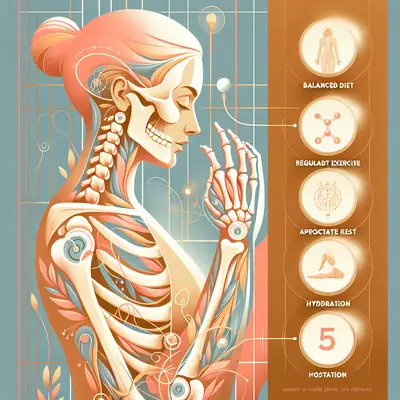
Healthy living, when viewed through the lens of joint health, is less about chasing extremes and more about curating an environment in which your body moves with poised confidence. This is not the frantic wellness of trends, but a quieter, more discerning practice: deliberately choosing what supports your cartilage, calms your inflammation, and preserves your range of motion over decades. For those who expect their bodies to keep pace with an ambitious life, joint health becomes a form of long-term craftsmanship.
Below are five exclusive, detail‑oriented insights designed for people who want their joints to feel capable, composed, and reliably comfortable—today and in the years to come.
1. Think in “Joint-Friendly Hours,” Not Just Workouts
Most advice focuses on the hour you exercise, but for your joints, the other 23 hours matter just as much. Joints respond to total mechanical load across the day, not simply to the stress of a workout or a single activity.
Consider how many hours you spend in each of these states: seated, standing, walking, and in intentional movement. Long, uninterrupted periods in any one position—especially sitting—allow fluid to stagnate in the joint space and can exacerbate stiffness. Introducing brief “joint-friendly” micro-breaks every 45–60 minutes (60–120 seconds of gentle movement) can rehydrate cartilage, normalize joint lubrication (synovial fluid distribution), and reduce end‑of‑day soreness.
Rather than obsessing over steps or calories, aim to refine your movement cadence: an elegant rhythm of short walks, subtle stretches, and positional changes throughout the day. This approach respects that joint tissue is living, responsive material—less like a hinge and more like a garden that thrives under consistent, moderate tending.
Practical refinement:
- Set a subtle reminder (watch or phone) once per hour.
- On each reminder, stand, roll your ankles, softly bend and straighten your knees, circle your wrists, and gently rotate your neck.
- Keep it under two minutes; the goal is frequency, not intensity.
2. Elevate Strength Training into Joint “Armor,” Not Bulk
For joint longevity, strength training is less about visible muscle and more about precise, well-distributed support. Muscles act as shock absorbers and stabilizers; when they are intelligently strengthened, they reduce the chaotic forces that travel through cartilage, ligaments, and tendons.
This “joint armor” is built by focusing on control over load. Slow, well‑aligned movements with modest resistance often protect joints better than heavier, careless lifting. Eccentric control—resisting force as you lower a weight or descend a step—teaches your soft tissues to absorb impact gracefully, which can be especially protective for knees, hips, and shoulders.
A sophisticated approach avoids both over-guarding (never loading the joint) and reckless bravado (overloading compromised tissue). The sweet spot is thoughtful progression: adding small increments of difficulty only when movements feel stable, coordinated, and pain-free.
Practical refinement:
- Prioritize multi-joint movements (like hip hinges, step-ups, light squats, and rows) 2–3 times per week.
- Use a tempo such as 3 seconds down, 1 second up, focusing on smoothness and alignment.
- If a movement produces sharp, localized joint pain that persists afterward, regress the load or range instead of pushing through.
3. Curate an Anti-Inflammatory Plate with Joint-Specific Intent
Nutrition advice often stops at “eat clean,” but people serious about joint health benefit from a more curated, joint-specific approach. Systemic, low‑grade inflammation can subtly accelerate cartilage wear and amplify pain signals; the goal is not aesthetic dieting, but biochemical calm.
Focus on foods that deliver a trio of benefits:
- Anti-inflammatory fats – Omega-3 fatty acids (from salmon, sardines, mackerel, walnuts, flaxseed, and chia) help modulate inflammatory pathways that are central in conditions like osteoarthritis and rheumatoid arthritis.
- Polyphenol-rich plants – Berries, cherries, extra-virgin olive oil, leafy greens, and herbs such as turmeric and ginger provide compounds that can help temper oxidative stress within joint tissues.
- Collagen and its building blocks – Gelatin, bone broth, and collagen supplements, paired with adequate vitamin C (citrus, bell peppers, berries), support the structure of cartilage and connective tissue.
Rather than adopting a rigid “perfect” diet, think in terms of a weekly pattern. Are most of your meals quietly anti-inflammatory, with a few chosen indulgences, or are you regularly stoking inflammation with excessive refined sugars, ultra-processed foods, and heavy alcohol intake?
Practical refinement:
- Aim for at least two fatty fish meals weekly.
- Include a deeply colored plant at every meal (berries at breakfast, leafy greens at lunch, cruciferous vegetables at dinner).
- If using collagen or gelatin, pair it with a vitamin C source in the same meal to support collagen synthesis.
4. Treat Sleep as Your Nightly Joint Restoration Ritual
Sleep is often discussed in terms of cognition and mood, but it is also when your joints do some of their most critical repair work. Inadequate or poor‑quality sleep can heighten pain sensitivity and disrupt the hormonal environment needed for tissue recovery, including the balance of growth hormone, cortisol, and inflammatory mediators.
From a joint-health perspective, the target is not only duration, but depth and consistency. Fragmented sleep—even if it totals seven or eight hours—can leave you more pain-sensitive the next day. Over time, chronic sleep debt can amplify inflammatory activity, which may worsen symptoms in arthritis and other joint conditions.
Creating an evening routine that is as deliberate as your morning exercise can transform sleep into a non-negotiable pillar of joint care. A calm nervous system supports relaxed muscles, better alignment, and reduced overnight clenching or guarding.
Practical refinement:
- Aim for 7–9 hours of sleep with a consistent wake time, even on weekends.
- Reserve the final 30–45 minutes of the evening for low‑stimulation rituals: warm shower, gentle stretching, reading a paper book, or soft music.
- Consider evaluating your sleep position in relation to joint comfort (for example, a pillow between the knees for side sleepers with hip or low-back sensitivity).
5. Upgrade Your Environment into a Subtle Joint-Support System
Healthy living for joint-conscious individuals goes beyond gym sessions and meal plans; it extends into the micro-design of your home and work spaces. Small environmental choices, repeated daily, create either friction or ease for your joints.
Thoughtful ergonomics can reduce unnecessary strain: a chair that encourages neutral spine alignment and feet flat on the floor; a workstation where screens are at eye level and wrists are in a soft, neutral position; lighting that prevents habitual forward head posture as you strain to see. At home, minute details—like the height of frequently used shelves, the weight of cookware, or the choice of shoes worn indoors—quietly dictate how often you twist, overreach, or carry more than your joints appreciate.
Rather than waiting for pain to dictate change, treat your environment like a bespoke suit: adjusted, tailored, and re-tailored as your life and body evolve.
Practical refinement:
- Evaluate your primary work area: screen height, chair support, keyboard and mouse placement. Make one adjustment each week.
- Keep frequently used items (pots, bags, files) between mid-thigh and chest height to avoid frequent deep bends or high reaches.
- Choose supportive, cushioned footwear or insoles for hard floors at home to reduce cumulative load on knees, hips, and spine.
Conclusion
Healthy living, when elevated for joint-focused individuals, is not a series of grand gestures—it is an accumulation of quiet, intelligent decisions. Thinking in joint‑friendly hours, cultivating protective strength, designing an anti-inflammatory plate, honoring sleep as nightly restoration, and refining your environment are all acts of long-term self-respect.
Over months and years, these choices compose a body that moves with assurance rather than apprehension—a body prepared not only to function, but to do so with a certain elegance. Your joints are not mere hardware to be endured; they are the living architecture that allows you to inhabit your life fully. Treating them with this level of consideration is not indulgence; it is wise stewardship.
Sources
- [National Institute of Arthritis and Musculoskeletal and Skin Diseases (NIAMS) – Handout on Health: Osteoarthritis](https://www.niams.nih.gov/health-topics/osteoarthritis) – Overview of osteoarthritis, joint structure, and factors influencing joint health
- [Arthritis Foundation – Best Foods for Arthritis](https://www.arthritis.org/health-wellness/healthy-living/nutrition/anti-inflammatory/best-foods-for-arthritis) – Evidence-informed guidance on anti-inflammatory eating patterns for joint comfort
- [Harvard T.H. Chan School of Public Health – The Nutrition Source: Fats and Heart Health](https://www.hsph.harvard.edu/nutritionsource/what-should-you-eat/fats-and-cholesterol/) – In-depth explanation of healthy fats, including omega-3s, and their role in inflammation
- [U.S. Department of Health & Human Services – Physical Activity Guidelines for Americans](https://health.gov/our-work/nutrition-physical-activity/physical-activity-guidelines) – Recommendations on movement, strength training, and activity patterns relevant to joint-supportive exercise
- [Johns Hopkins Medicine – Sleep and Pain](https://www.hopkinsmedicine.org/health/conditions-and-diseases/pain/sleep-and-pain) – Discussion of how sleep quality affects pain perception and chronic pain conditions
Key Takeaway
The most important thing to remember from this article is that this information can change how you think about Healthy Living.