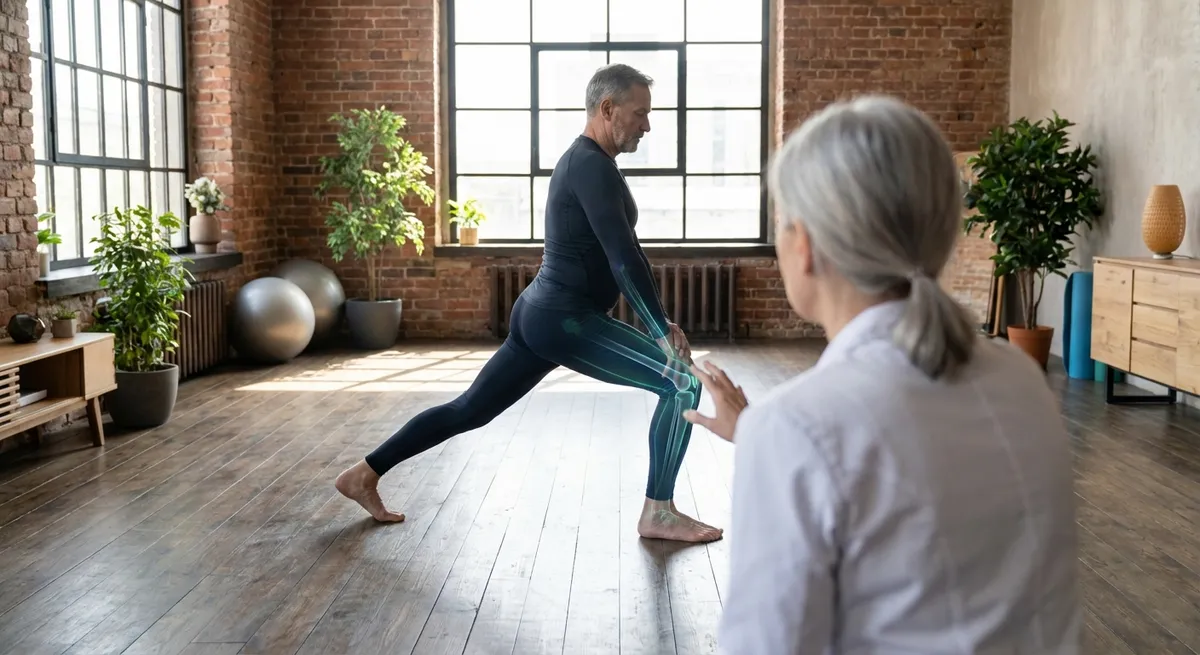
Joint health is rarely lost in a single moment; it erodes—or endures—through thousands of tiny decisions. For those who care not just about staying mobile, but moving with quiet precision and grace, joint care becomes less of a “fix” and more of a craft. This is an invitation to refine that craft: five exclusive, often overlooked insights that transform joint protection from basic maintenance into a considered, long-term strategy.
Insight 1: Treat Load Like Currency—Invest It, Don’t Spend It
Most people think of joint strain only in terms of “too much” or “too little” movement. A more sophisticated lens views mechanical load like a financial portfolio: strategic, diversified, and long-term.
Every step, lunge, or lift is a “withdrawal” from your joints’ capacity. Structured strength training, however, is an “investment” that enhances how much load your joints can tolerate tomorrow. The distinction is in intention and control.
Prioritize controlled, multi-joint strength work—think slow, well-aligned squats, hip hinges, and rowing patterns—over chaotic, high-impact randomness. Research consistently shows that strong muscles act as shock absorbers, reducing the direct load on cartilage and ligaments.
Equally critical is learning your personal load threshold: the point where beneficial challenge stiffens into irritation. That might be 6,000 steps rather than 10,000, or three sets of lunges instead of five. Use subtle feedback—lingering stiffness, swelling, or “echo” pain the next morning—as a guide to dial in your personal “sweet spot” for load. Your goal is not maximal effort; it’s sustainable capacity, built with intention.
Insight 2: Train Your Transitions—the Micro-Movements That Quietly Decide Joint Comfort
We spend far more time transitioning between positions than holding them: standing from a chair, stepping out of a car, pivoting to pick up a bag. Yet most joint conversations focus on the main events—workouts, runs, yoga sessions—while the transitions remain untrained and imprecise.
Tiny, habitual “sloppiness” in transitions accumulates. Twisting through the knee when you turn, collapsing into one hip when standing up, or repeatedly rising from chairs with momentum instead of muscular control all create subtle, repeated micro-strain.
Bring deliberate precision to these overlooked movements:
- When standing from a chair, place both feet flat, hinge slightly at the hips, engage your thighs and glutes, and stand up through your legs, not by pulling from your lower back or pushing through your hands.
- When turning, especially with knee or hip concerns, pivot your whole body—hips, shoulders, and feet together—rather than leaving the foot planted while the upper body rotates.
- When descending stairs, think “soft landing”—light, controlled placement, knees tracking over the center of the foot, not collapsing inward.
This is joint care as micro-choreography: elegant, efficient transitions that feel almost imperceptible, yet protect critical structures over tens of thousands of repetitions.
Insight 3: Synovial Intelligence—Using Warm-Up as Targeted Joint Nutrition
The fluid inside your joints—synovial fluid—isn’t just a passive lubricant; it’s a dynamic transport system that delivers nutrients to your cartilage. Movement is what circulates that fluid. But not all movement is equal.
Instead of generic stretching before activity, think of your warm-up as a precision-designed irrigation system for your joints:
- Use slow, controlled joint circles—ankles, hips, shoulders, wrists—within a comfortable range, gradually expanding as warmth increases.
- Incorporate closed-chain movements (where hands or feet stay in contact with the ground or a surface), such as wall push-ups, mini-squats, or gentle step-ups, to load joints in a stable, predictable way.
- Favor rhythmic, repetitive patterns for 5–10 minutes—like easy marching in place, gentle cycling, or light walking—before asking your joints for more intense work.
This kind of warm-up not only improves lubrication but also primes the nervous system, enhancing proprioception (your body’s sense of position and movement). The result is more precise movement patterns and fewer erratic forces on cartilage and ligaments.
Think of it this way: you would never drive a performance vehicle hard with a cold engine. Your joints deserve the same level of respect.
Insight 4: Curate Your Environment So Your Joints Don’t Have to Work Against It
Sophisticated joint care extends beyond your body into the spaces you inhabit. The environment either supports aligned, efficient movement—or subtly sabotages it all day long.
Consider a quiet audit of your daily landscape:
- Floors and footwear at home: Hard surfaces plus unsupportive slippers or bare feet can amplify impact through knees, hips, and spine. A few well-placed cushioned rugs in high-traffic areas and house shoes with structured support can significantly reduce cumulative stress.
- Workstation geometry: Hips slightly higher than knees when sitting, feet fully supported, and screens at eye level reduce awkward spinal and neck postures that eventually influence shoulder and hip mechanics. When the spine is stacked, joints downstream are under less compensatory pressure.
- Frequently used storage: Heavy items stored low or high force repeated bending or overhead reaching, often with compromised form. Relocating daily-use items to mid-level height is a subtle but powerful act of joint preservation.
- Stairs and handrails: Treat handrails as partners, not decorations. Light support during descent can meaningfully reduce knee load, particularly on days when joints feel vulnerable.
Environmental refinement is where joint care becomes almost invisible—woven into your architecture and routines, reducing strain without constant willpower.
Insight 5: Make Recovery Rhythmic, Not Random
Many people view recovery as something you do after a flare or intense workout. A more elevated approach treats recovery like a rhythm—predictable, scheduled, and integrated into the fabric of your week.
Cartilage, tendons, and ligaments adapt more slowly than muscles. You may feel “strong enough” to repeat a demanding session the next day, but your joint-supporting tissues may still be in the process of microscopic repair. Over time, this mismatch can manifest as stiffness, swelling, or pain that seems to come “out of nowhere.”
Consider these refined recovery strategies:
- Structured rest days that still include gentle movement—like walking, light mobility work, or restorative yoga—rather than complete inactivity, which can leave joints feeling thick and unresponsive.
- Temperature therapies chosen purposefully: cooler temperatures (ice packs or cool compresses) to calm acute irritation; gentle warmth (a warm shower or heat pack) to ease chronic stiffness and promote relaxation—especially before mobility work.
- Evening decompression rituals that downshift your nervous system: breathing exercises, brief stretching sessions, or a slow, 5-minute walk can help reduce muscle guarding and joint compression before sleep.
- Sleep as non-negotiable joint care: Deep sleep is when tissue repair is most active. A consistent sleep schedule, quiet bedroom environment, and a pre-sleep wind-down routine all enhance your body’s capacity to repair joint structures.
When recovery is built into your week as rhythm rather than rescue, your joints experience less volatility and more reliable comfort.
Conclusion
Elevated joint care is less about grand gestures and more about thoughtful refinement—how you load, how you transition, how you warm up, how you arrange your environment, and how you recover. These five insights are not quick fixes; they are quiet upgrades that compound over time.
The reward is not merely the absence of pain, but the presence of fluid, confident movement—the ability to walk, lift, reach, and turn with a sense of control and ease that feels both powerful and understated. In a world that often celebrates intensity, choosing precision for your joints is a subtle, deeply intelligent luxury.
Sources
- Arthritis Foundation – Exercise and Arthritis – Overview of how structured movement and strength training support joint health and reduce pain
- Mayo Clinic – Joint Pain: Causes, Symptoms and Treatment – Explains common contributors to joint discomfort and the role of activity modification
- Harvard Health Publishing – Why Your Joints Ache – Discusses joint mechanics, cartilage health, and strategies to reduce stress on joints
- NIAMS (NIH) – Handout on Health: Osteoarthritis – Details how load, movement, and lifestyle factors influence joint structures over time
- Cleveland Clinic – Joint Health: Keeping Your Joints Healthy – Practical clinical guidance on activity, environment, and recovery strategies for long-term joint protection
Key Takeaway
The most important thing to remember from this article is that this information can change how you think about Joint Care.