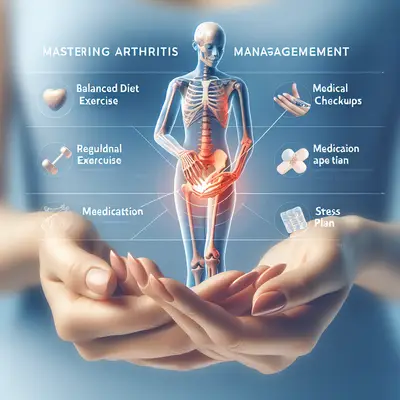
Arthritis management need not feel like a lifelong compromise. When approached with precision, it becomes a quiet, deliberate craft—one that protects your joints, refines your routines, and allows you to participate fully in the life you’ve curated. Rather than chasing quick fixes, the most effective approach treats each day as an opportunity for subtle calibration: of movement, environment, nutrition, and even mindset. The result is not simply less pain, but a more intentional way of inhabiting your body.
Below are five exclusive, less-discussed angles on arthritis management that appeal to those who value nuance, data, and discretion over trends.
Insight 1: Managing Arthritis by Managing Micro-Load, Not Just “Exercise”
Most people are told to “stay active” or “exercise more,” but these broad directives often ignore what actually shapes joint comfort: micro-load—the cumulative, often invisible mechanical demands placed on your joints from the moment you wake up to the moment you sleep.
Micro-load includes how you:
- Step out of bed (abruptly or with gradual weight-bearing)
- Lower into chairs (with control or by dropping weight)
- Reach for items (from optimal height or by overreaching and twisting)
- Stand during conversations (locked knees versus soft, aligned joints)
When micro-load is unmanaged, even a flawless workout routine can be undermined by thousands of tiny, unconsidered stresses.
Strategic micro-load management might include:
- Soft landings: Consciously avoid “plopping” into seats; use your arms and core to control descent.
- Shorter lever arms: Bring objects closer to your body before lifting; avoid extended reaches with straight elbows that torque the joints.
- Structured transitions: When rising from sitting, lean slightly forward and engage your legs and core rather than pushing solely through the hands and wrists.
- Micro-breaks: For desk work or long standing, insert 30–60 seconds of gentle joint motion every 30–45 minutes to disrupt static loading.
Over time, this precision quietly lowers the mechanical “noise” your joints are exposed to all day, preserving energy for the movements that truly matter to you—be it walking, travel, or time with family.
Insight 2: Joint-Friendly Strength Training as a Luxury, Not a Last Resort
Many associate strength training with performance or aesthetics, but for arthritis, it is the quiet luxury item of your health routine—a powerful tool that cushions, stabilizes, and defends joints when done thoughtfully.
Strong muscles act like bespoke shock absorbers and precision stabilizers. They help guide joint motion along healthier paths, reducing erratic strain on cartilage, ligaments, and capsule structures. The key is not intensity for its own sake, but intelligent strength:
- Stable first, heavy later: Build controlled, pain-free ranges of motion before chasing load. For example, pain-free bodyweight sit-to-stand work often precedes weighted squats.
- Closed-chain preference: Exercises where the hands or feet are fixed (like wall push-ups, mini-squats, step-ups) typically distribute load more comfortably across joints.
- Tempo as a tool: Slower eccentric phases (the lowering portion) can improve control and strength with less joint shock, especially in knees and shoulders.
- Joint-specific tuning:
- Knees: Focus on quadriceps, glutes, and hamstrings with movements like supported squats, bridges, and step-ups.
- Hips: Side-lying leg raises, clamshells, and band walks to stabilize the pelvis and offload both hip and knee.
- Hands and wrists: Putty squeezing, gentle grip devices, and isometric holds—always short of pain.
Working with a physical therapist or well-qualified trainer who understands osteoarthritis or inflammatory arthritis can help tailor a plan that feels more like a custom solution than a generic gym routine. The outcome is graceful capability: moving through your world with strength that doesn’t scream for attention.
Insight 3: Circadian Rhythm as an Underestimated Arthritis Tool
While discussions of arthritis often center on joints and movement, the body’s master timekeeper—your circadian rhythm—plays a quiet but potent role in how you experience pain, stiffness, and inflammation.
Inflammatory markers, hormone levels, and pain perception fluctuate over the 24-hour cycle. Poor sleep quality or irregular schedules can amplify inflammatory signals and alter pain thresholds, turning what might have been mild discomfort into persistent, disruptive pain.
Strategic circadian alignment for arthritis might look like:
- Protecting your “core sleep”: Aim for a consistent 7–9 hours, but prioritize a stable window (e.g., 10:30 p.m. to 6:30 a.m.) rather than fluctuating bedtimes.
- Light hygiene: Morning daylight exposure (10–20 minutes outdoors) helps anchor your internal clock and indirectly modulates inflammation and energy.
- Smart timing of movement: Many people with arthritis feel stiffer in the morning. Instead of forcing high-intensity activity early, use mornings for gentle mobility and reserve strength work or longer walks for the time of day you naturally feel most limber.
- Medication consistency: Several arthritis medications and supplements are more effective or better tolerated when taken at the same time each day, supporting a predictable internal rhythm. Always confirm timing with your clinician or pharmacist.
Think of circadian alignment as the background lighting of your health: subtle, often unnoticed when it’s right, but profoundly disruptive when ignored.
Insight 4: Precision Nutrition That Targets Inflammation and Cartilage Support
Nutrition for arthritis is often reduced to simplistic phrases—“eat anti-inflammatory foods,” “avoid sugar”—but a more refined approach looks at specific pathways: inflammation, oxidative stress, cartilage metabolism, and body weight distribution.
A precision-oriented nutrition strategy may include:
- Targeted healthy fats:
- Increasing marine omega‑3s (from fatty fish such as salmon, sardines, mackerel) supports anti-inflammatory pathways.
- Moderating omega‑6 intake from ultra-processed foods and refined vegetable oils (e.g., certain fried snacks) helps rebalance inflammatory signaling.
- Cartilage-supportive micronutrients:
- Vitamin C (citrus, berries, peppers) for collagen synthesis.
- Vitamin D and calcium (fortified dairy or alternatives, leafy greens, sunlight exposure) for bone and joint integrity.
- Polyphenols (olive oil, green tea, berries, turmeric) that may modulate oxidative stress and inflammation.
- Weight as a mechanical lever, not just a number:
Even modest weight reduction in those with excess body weight can significantly reduce joint load, especially in the knees. The goal is not perfection but shifting the mechanical equation in your favor.
- Personalized tolerances:
Some individuals notice that certain foods (e.g., heavy refined carbohydrates, excessive alcohol, high-sodium meals) worsen their stiffness or swelling. Keeping a brief, non-obsessive symptom and food log for a few weeks can reveal your unique sensitivities without resorting to restrictive, unsustainable diets.
The most elegant nutrition pattern for arthritis is rarely extreme. It is consistent, predominantly unprocessed, rich in plants and healthy fats, and layered with a few targeted, evidence-based choices.
Insight 5: Building a “Joint-Smart Environment” That Works Quietly in Your Favor
Arthritis is deeply influenced by the spaces you inhabit. Most advice stops at “use ergonomic equipment,” but a truly joint-smart environment is one that minimizes unnecessary strain while maximizing independence and grace.
Consider environmental refinements in three domains:
1. The Home Layout
- Elevate frequently used items (pots, pantry basics, daily dishes) to waist-to-chest height to avoid repetitive squatting, bending, or overhead reaching.
- Use lever-style door handles and faucets, which are friendlier to hands and wrists than traditional knobs.
- Add railings or stable support near stairs and in showers—not as “medical equipment,” but as subtle, well-designed fixtures.
2. The Workstation
- Chair height that allows hips and knees at roughly 90 degrees, with feet flat and weight evenly distributed.
- Keyboard and mouse positioned so elbows remain close to the body and wrists are in a neutral, straight position.
- A headset for phone calls to eliminate prolonged neck rotation or shoulder elevation.
3. The “Movement Infrastructure”
- Keep a light resistance band, soft ball, or hand putty where you naturally spend time—by the sofa, desk, or bedside—to enable brief, frequent joint-conditioning “snacks.”
- Place a yoga mat or thick rug in a spot you pass often to encourage short mobility rituals throughout the day.
When your environment does part of the work for you, arthritis management feels less like constant willpower and more like a thoughtfully engineered lifestyle—quietly protective, yet aesthetically and practically aligned with how you prefer to live.
Conclusion
Managing arthritis with sophistication is less about heroic effort and more about precision: how you distribute load across your day, how you build strength, how you respect your internal clock, how you nourish your tissues, and how you design the spaces you inhabit. Each of these elements, on its own, is modest. Together, they form a coherent, powerful architecture for long-term joint comfort.
This is not about “fighting” arthritis at every turn. It is about quietly reclaiming authorship over how you move, rest, and engage with your world—so that your joints are supported not just in moments of pain, but in the full arc of your daily life.
Sources
- Centers for Disease Control and Prevention – Osteoarthritis – Overview of osteoarthritis, risk factors, and management options
- Arthritis Foundation – Exercise and Arthritis – Guidance on safe and effective physical activity tailored to joint conditions
- Mayo Clinic – Rheumatoid Arthritis: Lifestyle and Home Remedies – Practical strategies for managing inflammatory arthritis day to day
- Harvard Health Publishing – Foods that Fight Inflammation – Evidence-based overview of dietary patterns that influence inflammation
- National Institute of Arthritis and Musculoskeletal and Skin Diseases (NIAMS) – Handout on Health: Osteoarthritis – Detailed information on osteoarthritis symptoms, diagnosis, and treatment options
Key Takeaway
The most important thing to remember from this article is that this information can change how you think about Arthritis Management.