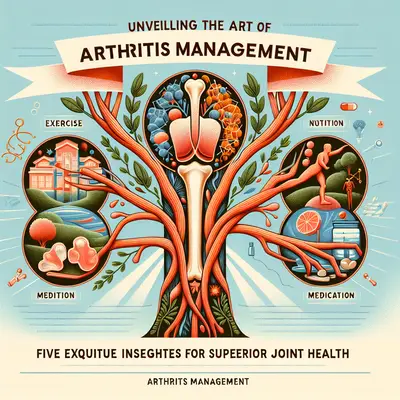
Arthritis seldom arrives with drama; it settles in quietly, reshaping the way you move, work, and even rest. Yet living elegantly with arthritis is not about denial or bravado—it is about cultivating quiet control. When management is thoughtful and precise, your joints stop being a daily negotiation and instead become part of a well-orchestrated life. This approach values subtle, intelligent decisions over extremes and quick fixes. Below are five exclusive, often overlooked insights that refine arthritis management into a deliberate, high-standard practice.
Insight 1: Treat Inflammation Like a Daily Vital Sign
Most people only think about inflammation when a joint flares. A more sophisticated approach treats inflammation as something you track and anticipate—much like heart rate, blood pressure, or sleep quality.
Begin by noticing your personal “early-warning” signals: a faint morning stiffness that lasts a little longer, a slight heat in a frequently used joint, or a subtle dip in grip strength. These cues often appear before pain escalates. Pair this body awareness with a simple tracking system—perhaps a minimalist app or an elegant paper journal where you log sleep, stress levels, diet changes, and activity. Over several weeks, patterns begin to emerge: perhaps long flights, certain foods, or late-night work consistently precede next-day stiffness.
This micro-level tracking allows you to intervene earlier and more gently. Instead of waiting for a severe flare that demands aggressive rescue strategies, you can respond with modest adjustments: slightly dialing back high-impact activity, prioritizing an early night, adding an anti-inflammatory meal, or preemptively using physician-approved modalities like topical NSAIDs or a brief cold pack session. Over time, you move from reacting to crises toward managing inflammation with the composure of someone who is always one step ahead.
Insight 2: Design Your Environment as a Silent Co‑Therapist
Refined arthritis management extends beyond the body to the spaces you inhabit. Your home, office, and daily routes can either amplify joint stress or quietly protect you from it.
Think of your environment as a silent co‑therapist—always present, never complaining, but either helping or hindering. Drawer pulls that require pinching, heavy cookware, low coffee tables, deep sofas, or a laptop perched too high or low all demand micro-compromises from your joints throughout the day. A premium strategy is to redesign these “friction points” with deliberate care:
- Choose door levers instead of round knobs to protect finger joints.
- Opt for lightweight, well-balanced cookware and kettles with ergonomic handles.
- Adjust monitor height so your neck and shoulders remain neutral, reducing compensatory joint strain.
- Place most-used items between shoulder and hip height to minimize bending and overhead reaching.
Over the course of a day, these adjustments remove dozens of unnecessary joint stressors you likely never noticed. The benefit is cumulative, not dramatic. What you gain is quieter evenings, fewer “mystery” flare-ups, and the sense that your space has been curated not just for aesthetics, but for joint longevity.
Insight 3: Use Movement Like a Tailored Prescription, Not a Generic Rule
“Stay active” is conventional advice. Refined arthritis management goes several levels deeper: it treats movement as a tailored prescription—precise in dose, type, and timing.
Rather than chasing arbitrary step counts or intense workout trends, consider three movement categories and how they serve your joints:
- Stability work (e.g., isometric holds, controlled balance exercises) reinforces joint support without excessive motion.
- Mobility work (e.g., gentle range-of-motion drills, controlled joint circles) maintains fluidity and prevents stiffness creeping into your baseline.
- Strength work (e.g., measured resistance training with impeccable form) allows surrounding muscles to carry more of the mechanical load, protecting vulnerable joint surfaces.
The nuance lies in how you cycle these. On days when your joints feel calm, you might emphasize strength and slightly challenge your capacity. On days with subtle stiffness, shift toward mobility and stability, treating them as “active restoration” rather than skipping movement entirely. Timing also matters: many people with arthritis feel more limber late morning or early afternoon. Anchoring your main movement session in your natural rhythm can improve not just performance, but comfort and recovery.
The result is a movement plan that feels less like a chore and more like a curated routine—composed, intentional, and harmonized with your body’s changing needs.
Insight 4: Elevate Pain Management Beyond “Toughing It Out”
Pain tolerance is often admired, but in arthritis management, simply enduring pain can distort how you move and accelerate joint wear. A more elevated approach regards pain management as a protective, not indulgent, practice.
First, distinguish types of pain. There is the expected, mild sensation of working muscles or a stretched joint within safe limits, and then there is sharp, escalating, or lingering pain that signals overload or active inflammation. The latter is not a badge of honor; it is actionable information. When pain begins to reshape the way you walk, climb stairs, or hold a utensil, your body compensates—often shifting stress to other joints and structures.
Thoughtful pain management blends modalities:
- Strategic pharmacologic tools (oral or topical medications) prescribed and monitored by your clinician, used at the right time rather than as a last resort.
- Physical strategies such as heat for stiffness, cold for acute swelling, and compression where recommended.
- Cognitive tools like pacing, breaking tasks into shorter segments, and pre-emptive rest before fatigue distorts your movement.
Instead of glorifying stoicism, this mindset prizes precision: use just enough support to move well and confidently. That confident, natural movement pattern is itself a powerful long-term protector of your joints.
Insight 5: Curate Your Care Team as Carefully as Your Lifestyle
A sophisticated arthritis plan recognizes that no single professional can cover all dimensions of your joint health. The modern, discerning standard is to intentionally curate a small but excellent team around you—people who communicate, respect your goals, and understand that you are not simply trying to “get by,” but to maintain a high-quality life.
This team might include:
- A rheumatologist or orthopedic specialist to guide diagnosis, medications, and disease-modifying strategies.
- A physical therapist experienced in arthritis and biomechanics to tailor movement, address imbalances, and prevent secondary issues.
- A primary care physician to oversee the broader health picture—cardiovascular risk, bone health, sleep, and mood.
- A registered dietitian if nutrition is an area where you desire structure rather than guesswork.
The difference between a merely adequate and an elevated experience is coordination. Share your priorities explicitly: perhaps it’s preserving the ability to travel, to work in a hands-on profession, or to maintain a particular form of exercise you love. A well-chosen team aligns treatments with those personal benchmarks. With time, your care becomes less reactive and more strategic—less about crisis intervention, more about preserving the lifestyle that reflects who you are.
Conclusion
Elegance in arthritis management is not flashy. It looks like small, consistent refinements: noticing early signs instead of waiting for a flare, shaping your environment to protect your joints, moving with intention rather than obligation, treating pain as vital feedback, and surrounding yourself with a carefully selected team. These are quiet decisions, but their impact is anything but subtle.
When you engage with your arthritis at this level of detail, your joints stop dictating your life’s rhythm. Instead, they become thoughtfully managed partners in a body that is not perfect, but deeply well cared for. Over years, this quiet control becomes its own form of luxury: the freedom to keep living on your own terms.
Sources
- Centers for Disease Control and Prevention – Arthritis Basics - Overview of arthritis types, symptoms, and general management recommendations
- Arthritis Foundation – Managing Arthritis Pain - Detailed guidance on pain strategies, including medications, lifestyle, and self-management
- Mayo Clinic – Rheumatoid Arthritis: Self-Management - Practical self-care and daily living recommendations for people with inflammatory arthritis
- Johns Hopkins Medicine – Osteoarthritis Treatment - Evidence-based options for managing osteoarthritis through lifestyle, therapy, and medical care
- National Institute of Arthritis and Musculoskeletal and Skin Diseases (NIH) – Handout on Health: Rheumatoid Arthritis - Comprehensive government resource on rheumatoid arthritis, including diagnosis, treatments, and living with the condition
Key Takeaway
The most important thing to remember from this article is that this information can change how you think about Arthritis Management.