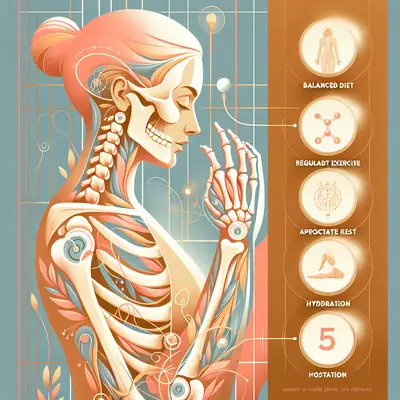
Healthy living, at its most refined, is not loud. It is a series of nearly invisible choices—a certain way of standing at the sink, the angle of your wrist on a keyboard, the tempo of your evening walk. For those who care about joint health, the goal is not frantic optimization but cultivated ease: joints that feel quietly reliable, day after day, year after year.
This is joint care as a form of understated luxury: deeply considered, meticulously executed, and designed to age gracefully with you. The insights below move beyond generic advice and into the nuanced details that truly matter when you are curating a life that protects your joints as carefully as you might protect a cherished timepiece.
The Architecture of Alignment: Training Your Eye for Subtle Joint Angles
Most joint guidance stops at “maintain good posture.” In practice, that’s too vague. The real advantage comes from cultivating an almost architectural awareness of joint angles—especially in everyday positions you hold for long periods.
When you sit, your hips and knees ideally rest around 90 degrees, with your feet supported, not dangling. Your wrists should hover in a neutral line from forearm to hand, avoiding even a slight upward “cocking” that stresses small joints and tendons. Knees should track in line with your second toe when climbing stairs or squatting, rather than collapsing inward.
This micro-attention to angles pays enormous dividends over time. Even a few degrees of repetitive misalignment can, over years, create uneven cartilage wear, tendon overload, and subtle inflammation that eventually becomes pain. Consider using your phone camera as a quiet biomechanical mirror: film yourself walking, rising from a chair, or working at your desk, and look for asymmetries—one shoulder higher, one foot rotating outward, a habitual lean. Correcting these small architectural details is one of the most elegant, low-effort ways to future-proof your joints.
The Invisible Cushion: Strategic Recovery as a Daily Ritual
People often think of “recovery” as something reserved for athletes. In reality, anyone focused on long-term joint health needs a deliberate recovery plan—especially if your work or lifestyle involves repetitive motion, prolonged sitting, or frequent travel.
Rather than waiting for fatigue or pain, schedule your micro-recovery the way you schedule meetings. A two-minute intermission every 30–45 minutes of computer work, where you stand, roll your shoulders, gently flex and extend your knees and ankles, and open your hips, can significantly reduce cumulative strain. Joints respond best to cyclical load: regular movement alternated with deliberate rest.
Evening routines are a luxurious opportunity for subtle joint renewal. A 5–10 minute sequence of slow, pain-free range-of-motion drills for ankles, hips, wrists, and shoulders—performed on a mat with intentional breathing—helps lubricate joints with synovial fluid and signals tissues to recover rather than stiffen overnight. Paired with sufficient sleep and calm nervous system regulation (dim lighting, reduced screens, quiet reading), this ritual becomes an invisible cushion between today’s demands and tomorrow’s mobility.
Precision Fueling: How You Eat for Collagen, Cartilage, and Calm Inflammation
A premium approach to joint health reframes nutrition from “good vs. bad foods” into a targeted support system for connective tissue, cartilage, and low-grade inflammation. The details matter.
Collagen-rich foods (such as slow-cooked bone broth, skin-on fish, and certain cuts of meat) provide amino acids like glycine and proline that support the building blocks of cartilage and ligaments. Pairing these with vitamin C–rich ingredients—citrus, berries, bell peppers, or even a squeeze of lemon—enhances collagen synthesis, making the meal more joint-intentional without feeling restrictive.
Healthy fats are another refined layer: extra-virgin olive oil, walnuts, flaxseeds, and oily fish (salmon, sardines, mackerel) bring omega-3 fatty acids that can help modulate joint inflammation over time. Spices like turmeric, ginger, and garlic add both flavor and anti-inflammatory potential, elevating the plate while supporting joint comfort. At the same time, quietly reducing ultra-processed foods, excessive sugar, and routine alcohol intake helps minimize inflammatory noise in the background.
This is not about a rigid “joint diet” but about precision fueling: using every meal as a subtle, pleasurable opportunity to feed the tissues you most want to preserve.
Strength Without Strain: Curating a Minimalist Strength Portfolio
For joint longevity, strength training should feel more like careful curation than punishment. The goal is not maximum intensity but strategic support—building the muscles that offload stress from your joints while avoiding exercises that quietly erode them.
A minimalist strength portfolio for joint protection often includes: controlled squats or sit-to-stand variations for hips and knees; deadlifts or hip hinges for glutes and hamstrings; rows and pull-downs for shoulder stability; and gentle core work to protect the spine. Movements should be slow, with deliberate control through the full (but pain-free) range of motion, and weights should be heavy enough to feel challenging but never jarring.
Pay attention to how your joints feel 24 hours after a session. Lingering sharpness, swelling, or a sense of “joint heaviness” is feedback to refine your approach: perhaps a lighter load, fewer repetitions, or a different angle. Prioritize exercises that make your joints feel more stable and responsive in daily life, not just stronger in the gym. Over time, this curated collection of movements becomes a quietly powerful asset, allowing you to lift, carry, and move through the world with confidence and ease.
Environmental Elegance: Designing Spaces That Protect Your Joints for You
Truly sophisticated joint care extends into your environment. Instead of relying on willpower and constant reminders, you can design your home and workspace to default toward joint-friendly choices.
Ergonomic seating that supports your lower back and allows your feet to rest flat on the floor reduces cumulative strain on the hips and spine. An adjustable desk permits fluid alternation between sitting and standing. If you spend time in the kitchen, consider raising low work surfaces slightly or using a supportive mat to reduce pressure on knees and feet while standing.
Footwear is another subtle but powerful environmental cue. Within your home, opt for supportive, well-cushioned shoes or slippers rather than walking barefoot on hard flooring for hours at a time—especially if you have existing knee, hip, or foot concerns. Strategically placed supports, such as a small step for one foot while standing at a counter, or a footrest under your desk, can offload the lumbar spine without drawing any attention.
By curating these small environmental details, your surroundings begin to work on your behalf, preserving your joints quietly in the background, every hour of every day.
Conclusion
Healthy living for joint longevity is not a single grand gesture; it is a refined accumulation of subtle habits. The angles at which you move, the way you recover between tasks, the precision with which you nourish your tissues, the strength you build without strain, and the spaces you design around you—all of these create a kind of “quiet luxury” for your joints.
Over time, these understated practices translate into something profoundly valuable: the freedom to move with confidence, to stand and walk and rise without hesitation, and to trust that your joints will meet your life’s demands with poise. That is the ultimate premium: a body whose ease has been carefully, intentionally, and elegantly preserved.
Sources
- [National Institute of Arthritis and Musculoskeletal and Skin Diseases (NIAMS) – Handout on Joint Health](https://www.niams.nih.gov/health-topics/joint-health) – Overview of how joints work and evidence-based strategies to protect them
- [Harvard T.H. Chan School of Public Health – Healthy Eating Plate & Anti-Inflammatory Guidance](https://www.hsph.harvard.edu/nutritionsource/healthy-eating-plate/) – Details on dietary patterns that support reduced inflammation and overall tissue health
- [Arthritis Foundation – Exercise and Arthritis](https://www.arthritis.org/health-wellness/healthy-living/physical-activity) – Research-backed recommendations on strength, flexibility, and joint-friendly movement
- [Mayo Clinic – Ergonomics: Desk Setup for Joint and Back Health](https://www.mayoclinic.org/healthy-lifestyle/adult-health/in-depth/office-ergonomics/art-20046169) – Practical guidance for joint-protective workspaces
- [Cleveland Clinic – Collagen and Joint Health](https://health.clevelandclinic.org/collagen-supplements-for-your-joints) – Discussion of collagen’s role in joint structures and what evidence supports in terms of nutrition and supplementation
Key Takeaway
The most important thing to remember from this article is that this information can change how you think about Healthy Living.