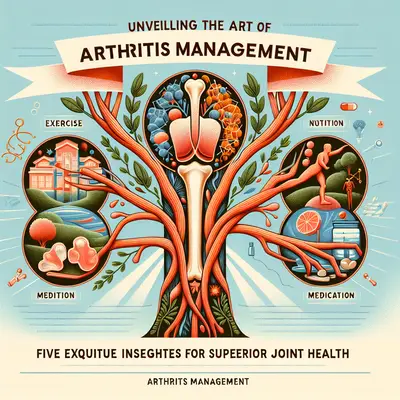
Arthritis rarely announces itself loudly at first. It arrives in whispers: a stiffness in the morning, a hesitation on the stairs, a subtle negotiation with each step. Yet for those who care deeply about the quality of their movement—and the elegance of how they inhabit their bodies—managing arthritis is not simply about pain control. It is about preserving a life in full motion, with deliberation, intelligence, and a refined sense of agency.
What follows is an elevated approach to arthritis management, built around five exclusive insights for those who expect more from their care than generic advice and quick fixes.
Reframing Arthritis: From Disease to Long-Term Design Project
Most discussions around arthritis center on pathology—what is “wrong” with the joints. A more discerning approach considers arthritis as a long-term design project: how will you architect your days, your movements, and your environment to quietly support your joints over decades?
This shift matters. When you stop viewing arthritis as something happening to you and instead as a complex condition you are co-managing, your decisions become more strategic and less reactive. The goal is not perfection or “cure,” but a stable, intelligent equilibrium where your joints are consistently respected.
This reframing encourages you to track patterns rather than isolated flare-ups: What happens to your knees after three consecutive days of high-intensity activity? How does your sleep quality influence morning stiffness? Which shoes reliably bring ease, and which always leave a trace of discomfort? Over time, you are not merely “coping” with arthritis—you are curating a lifestyle that gently, persistently biases your joints toward comfort.
A design mindset also supports emotional resilience. Setbacks become information, not failures. A flare is not proof that “nothing works,” but a data point: an invitation to refine timing, dosage, or boundaries. In this way, arthritis management becomes an evolving craft rather than a static diagnosis.
Precision Movement: Subtle Adjustments with Outsized Impact
For people devoted to joint health, the crude binary of “exercise vs. rest” is no longer enough. Precision movement is about two things: how you move, and how consistently you honor your current capacity.
Instead of chasing intensity, focus on alignment. Small changes—such as tracking your knees over your toes during squats, engaging the glutes before stepping up, or lengthening through the crown of the head when you rise from a chair—reduce unnecessary shear and compressive forces inside the joint. Under professional guidance (such as a physical therapist or highly qualified movement specialist), you can refine your gait, your posture, and your habitual transitions (sitting, standing, bending) so that every repetition is protective rather than erosive.
Low-impact, joint-conscious practices—such as targeted strength training, Pilates, tai chi, or water-based exercise—are particularly powerful. They develop the musculature that stabilizes joints while avoiding the jolting forces that accelerate wear. This is not about fragility; it is about precision.
A useful mental model: treat every movement as if you were being filmed in slow motion. Is the motion smooth or truncated? Do you brace or hold your breath? Are some joints compensating for others? These quiet observations often reveal the “hidden stressors” contributing to your pain more clearly than any single workout ever could.
The Anti-Inflammatory Lifestyle: Beyond the Buzzwords
Most people now know that inflammation and arthritis are intertwined, but few approach anti-inflammatory living with the nuance it deserves. For the joint-conscious individual, the question is not “What is the trendiest anti-inflammatory diet?” but “What precise adjustments create repeatable, measurable ease in my own body?”
Start by focusing on nutritional quality rather than restriction. Emphasize colorful vegetables, high-quality proteins, omega‑3–rich foods (such as fatty fish, walnuts, and flax), and minimally processed fats (such as extra-virgin olive oil). These choices collectively promote an internal environment that is less hospitable to chronic, low-grade inflammation.
Equally crucial is what you dial down: ultra-processed foods, excess added sugars, heavy alcohol intake, and repeated large spikes in blood sugar, all of which can exacerbate systemic inflammation. For many individuals with arthritis, moderating these inputs noticeably reduces stiffness and swelling over time, even if the change is subtle rather than dramatic.
Sleep, stress, and inflammation are also tightly interwoven. Poor or fragmented sleep is associated with higher inflammatory markers and greater pain sensitivity. Likewise, ongoing psychological stress can provoke or amplify inflammation-driven symptoms. Incorporating grounding rituals—breathwork, short walks, gentle stretching before bed, even brief digital “fasts”—may seem almost too simple, yet they often have a disproportionate impact on how arthritic joints feel from week to week.
The refined approach is to experiment systematically. Adjust one or two variables—bedtime, added sugars, alcohol frequency, or even your late-evening screen habits—and watch how your joints respond over several weeks. You are not “on a plan”; you are calibrating your personal anti-inflammatory blueprint.
Medication and Advanced Therapies: Strategic, Not Reluctant
For many, there is a quiet reluctance to fully engage with medical therapy, either from fear of side effects or a desire to “tough it out.” But for those who value future mobility as much as present comfort, well-chosen medications and advanced therapies are not admissions of defeat; they are strategic assets.
In inflammatory forms of arthritis—such as rheumatoid arthritis, psoriatic arthritis, or axial spondyloarthritis—early and appropriate disease-modifying therapy can literally change the trajectory of the condition, preserving joint integrity and function long-term. Under-treatment, by contrast, silently allows joint damage to accumulate. Regular follow-up with a rheumatologist and periodic objective assessments (blood tests, imaging as needed) are part of an elevated standard of care.
For osteoarthritis, medications such as topical NSAIDs, carefully managed oral pain relievers, and occasionally joint injections (corticosteroids, hyaluronic acid, or other emerging options) can be thoughtfully integrated into a broader lifestyle plan. They are not substitutes for movement and strength, but they may create a window of reduced pain that makes high-quality exercise and daily functioning feasible.
The premium mindset is to be proactive and informed, not passive. Understand why a particular medication is being suggested, what outcome it aims to achieve (pain control, inflammation reduction, joint protection), and how you will monitor effectiveness and side effects. Consider second opinions not as an act of distrust, but as a refinement of your strategy—especially when facing decisions about biologic drugs, targeted synthetic agents, or surgical interventions such as joint replacement.
Curating Your Physical Environment: Invisible Support for Everyday Ease
Arthritis expresses itself most acutely in the ordinary: opening jars, standing from low seats, navigating stairs, typing at a desk. The environment you move through, touch by touch, either amplifies strain or quietly diffuses it.
Thoughtful environmental curation begins with small, non-obvious changes. Elevate frequently used seating so that standing up requires less torque at the knees and hips. Replace overly soft, collapsing sofas with firmer, supportive surfaces. Position commonly used items at waist height to reduce repeated deep bending. Choose door handles, faucet levers, and cabinet pulls that respect limited grip strength or thumb mobility.
Footwear is another crucial domain. Well-constructed shoes with adequate cushioning, stable soles, and a fit that neither compresses the forefoot nor fails to support the arch can transform the feel of every step. For some, working with a podiatrist or physical therapist to explore orthotics, rocker-bottom soles, or other specialized configurations is less of an indulgence and more of an investment in day-long joint comfort.
Even your “digital environment” matters. Setting reminders for movement breaks, using speech-to-text for longer messages, and optimizing workstation ergonomics (monitor height, keyboard spacing, chair support) prevents subtle, cumulative aggravation of hands, wrists, neck, and spine.
This is arthritis management at its most understated: no dramatic interventions, just a constellation of refined choices that collectively allow your joints to move with less effort, less protest, and more grace.
Conclusion
Living well with arthritis is less about heroics and more about quiet mastery. It is an ongoing conversation between your physiology, your environment, your daily rituals, and the expertise you draw upon. When approached with intention, arthritis management becomes neither a burden nor an afterthought, but a defining aspect of how you care for yourself—deeply, intelligently, and consistently.
By treating arthritis as a long-term design project, honing precision movement, cultivating a truly anti-inflammatory lifestyle, engaging strategically with medical therapies, and curating your surroundings with care, you stack the odds in favor of sustained mobility and comfort. The result is not merely the absence of pain, but the presence of something more compelling: a life in which your joints quietly support the way you choose to live, rather than dictate it.
Sources
- [Arthritis Foundation – Managing Arthritis](https://www.arthritis.org/health-wellness) – Comprehensive, patient-focused guidance on living with different types of arthritis, including movement, medication, and lifestyle strategies.
- [Centers for Disease Control and Prevention – Arthritis](https://www.cdc.gov/arthritis/index.htm) – Evidence-based information on arthritis prevalence, risk factors, self-management education, and recommended activity guidelines.
- [National Institute of Arthritis and Musculoskeletal and Skin Diseases (NIAMS)](https://www.niams.nih.gov/health-topics/arthritis) – Detailed overviews of various forms of arthritis, treatment options, and current research directions.
- [Mayo Clinic – Arthritis: Diagnosis and Treatment](https://www.mayoclinic.org/diseases-conditions/arthritis/diagnosis-treatment/drc-20350778) – Clinical perspective on diagnostic approaches, medications, and non-pharmacologic therapies for arthritis management.
- [Harvard Health Publishing – Diet and Inflammation](https://www.health.harvard.edu/staying-healthy/foods-that-fight-inflammation) – Explores how dietary patterns influence inflammation and how this relates to conditions such as arthritis.
Key Takeaway
The most important thing to remember from this article is that this information can change how you think about Arthritis Management.