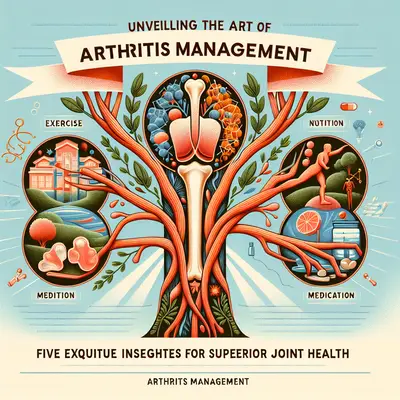
Arthritis may be common, but the way you live with it does not have to be. Beyond symptom control, there is a more refined standard: an approach that protects your joints, respects your time, and preserves the small luxuries of daily life—slipping into shoes without effort, rising from a chair without bracing, waking without stiffness as your first conscious thought. This is arthritis management as quiet mastery: subtle, deliberate, and deeply considered.
Below are five exclusive, evidence-aligned insights crafted for those who want more than basic advice—people who expect their health strategy to be as intentional and elevated as the rest of their lives.
1. Treat Your Day Like a Joint “Budget” — and Spend It Strategically
Most people think of arthritis as a pain problem; in reality, it is also an “energy and load” problem. Each joint has a daily capacity—an invisible budget of stress and strain. How you “spend” that budget determines whether you end the day stiff and inflamed or comfortable and composed.
Rather than asking, “Can I do this?” ask, “What will this cost my joints later?” A long walk on hard pavement, standing through a social event in unsupportive shoes, or hours at a kitchen counter without breaks all draw heavily from your joint budget. If you know you’ll spend more at one point in the day (for example, an evening event that requires more standing), deliberately reduce load earlier—using a stool while prepping meals, elevating your feet, or choosing seated tasks over standing ones.
Equally important is how you distribute that load. Micro-breaks—pauses of 60–90 seconds every 20–30 minutes to stretch gently, shake out your hands, change your posture—can prevent your joint “account” from dipping into an overdraft of inflammation. Over a week, these small calibrations function like compound interest for your joints, quietly preserving comfort and capacity.
2. Curate a Quietly Supportive Environment (So Your Joints Do Less Work)
A premium approach to arthritis management starts at home—specifically in the details you no longer force your joints to handle. Instead of pushing your body to fit your environment, refine your environment to serve your body.
Consider your three main zones of strain: kitchen, bathroom, and workspace.
- In the kitchen, lightweight cookware, electric openers, and long-handled utensils reduce repetitive gripping and twisting from wrists and fingers. Position frequently used items between mid-thigh and shoulder height to avoid deep bending or overhead reaching.
- In the bathroom, lever-style faucets, a higher toilet seat, a shower chair, and a handheld shower head quietly transform daily tasks into joint-respecting rituals. These are not signs of decline—they’re signs of discernment.
- At your desk, elevate screens to eye level, keep your keyboard and mouse close to avoid shoulder strain, and use a chair that allows both feet flat on the floor with hips slightly higher than knees. For many with hip or knee arthritis, this one adjustment can significantly reduce the “effort” of standing up.
This is environmental design as joint protection—subtle upgrades that allow your body to move with less mechanical resistance, so your joints are never quietly battling your surroundings.
3. Use Strength Training as Precision Medicine, Not Just Fitness
For arthritis, targeted strength training is not an optional upgrade—it is a form of precision medicine. Strong muscles act like finely tuned shock absorbers, capturing the impact that would otherwise be delivered directly into cartilage and bone.
The key is placement and intention rather than intensity.
- For knee or hip arthritis, emphasize gluteal strength (hip thrusts, bridges, controlled step-ups) and quadriceps conditioning (wall sits, sit-to-stands from a chair, short-range squats within comfort).
- For hand arthritis, prioritize isometric holds (gently pressing fingers into soft putty or a sponge, or holding a light grip on a towel) over aggressive squeezing that provokes pain.
- For spine arthritis, focus on deep core stability (bird-dogs, dead bugs, and gentle planks) more than repeated bending or twisting.
Two sophisticated rules help maintain safety and elegance in your training:
- Pain should not spike beyond mild, temporary discomfort (no more than 2–3 out of 10) and should settle within 24 hours.
- Progress by precision before load—better alignment, smoother control, and full-range motion before you add resistance.
Think of this not as “working out,” but as commissioning custom architecture for your body—each movement designed to redistribute load away from the joints you wish to protect.
4. Refine Your Inflammation Strategy Beyond “Just Take the Pill”
Medication can be extraordinarily helpful in arthritis—but using it well requires a level of sophistication that goes beyond “take it when it hurts.”
A more elevated approach includes:
- Rhythmic rather than chaotic use of prescribed anti-inflammatory medications or disease-modifying drugs. Many arthritis medications work best when taken consistently as directed, not reactively. Work with your rheumatologist or primary care physician to construct a schedule that anticipates your lifestyle (for example, timing medication around heavier activity days or travel).
- *Understanding what each medication actually does. NSAIDs reduce inflammation and pain; acetaminophen targets pain but not inflammation; disease-modifying antirheumatic drugs (DMARDs) and biologics, used in inflammatory arthritis such as rheumatoid arthritis or psoriatic arthritis, can actually slow disease progression. Knowing the difference helps you avoid layering multiple drugs with overlapping risks unnecessarily.
- Integrating non-pharmaceutical anti-inflammatory strategies* such as consistent sleep, stress regulation, and movement. High, unrelieved stress and fragmented sleep are powerful amplifiers of pain perception and inflammatory processes. A calming pre-sleep ritual, a fixed wake time, and simple breathwork or meditation practices turn your nervous system from a pain amplifier into a more neutral observer.
This is not “anti-medication” thinking; it is medication with intention—paired with lifestyle strategies so your joints receive steady, thoughtful care rather than erratic, last-minute rescue.
5. Build a “Relapse Plan” Before You Need It
Flare-ups are not a failure; they are part of the arthritis landscape. What separates a draining episode from a manageable one is whether you’ve prepared for it in advance.
A sophisticated arthritis management plan includes a personalized flare protocol that you can activate the moment symptoms intensify. This may involve:
- A pre-discussed medication adjustment plan with your clinician (for example, when to temporarily increase NSAIDs, when to call about steroids, or when to check in urgently).
- A simplified movement pattern: shorter walks on level surfaces, gentle range-of-motion exercises, and a temporary pause on high-load or impact activities. Staying entirely still often worsens stiffness.
- An environmental shift: a pre-assembled “flare basket” with ice or heat packs, a supportive brace if recommended, easy-open food options, and any tools that reduce strain (jar openers, reachers, etc.).
- A communication script for family or colleagues, so you can reduce non-essential obligations without needing to explain in exhaustive detail each time.
By treating flares as anticipated events rather than unexpected crises, you reclaim a sense of control. The result is a more stable, less chaotic experience of living with arthritis—one where your identity is not reduced to your symptoms, even on the harder days.
Conclusion
Arthritis management at its highest standard is not about chasing zero pain; it is about crafting a life where discomfort no longer dictates the terms. By budgeting your joint load with intention, curating an environment that collaborates with your body, using strength training like tailored medicine, approaching inflammation with strategy, and preparing for flares in advance, you begin to live above the condition rather than underneath it.
This is quiet mastery: a series of deliberate, almost invisible choices that allow you to move through your day with greater ease, dignity, and subtle luxury—on your own terms.
Sources
- Centers for Disease Control and Prevention – Arthritis Basics – Overview of arthritis types, risk factors, and general management principles
- Arthritis Foundation – Managing Arthritis – Practical guidance on exercise, lifestyle, and treatment options for people living with different forms of arthritis
- Harvard Health Publishing – Exercise and Arthritis – Evidence-based discussion of how strength and aerobic training protect joints and reduce symptoms
- Mayo Clinic – Rheumatoid Arthritis Treatment – Detailed review of medications and strategies used to control inflammatory arthritis and prevent joint damage
- National Institute of Arthritis and Musculoskeletal and Skin Diseases (NIH) – In-depth information about osteoarthritis, including causes, treatments, and self-care strategies
Key Takeaway
The most important thing to remember from this article is that this information can change how you think about Arthritis Management.