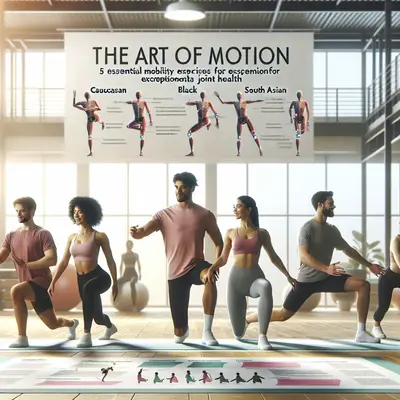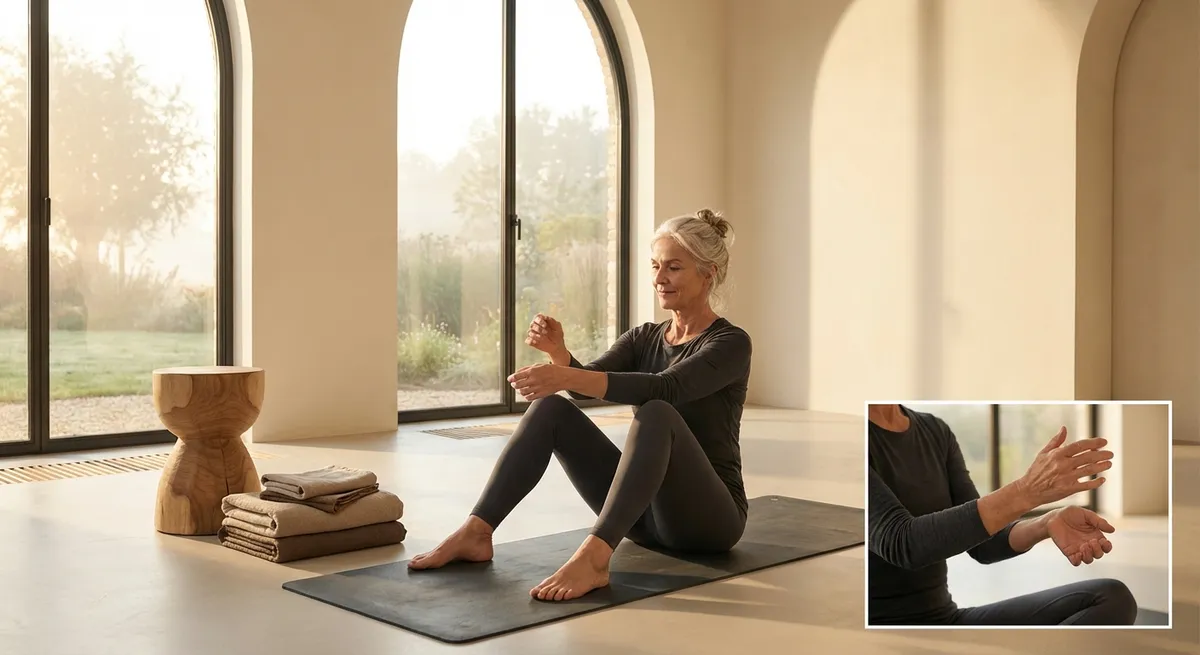
Mobility work, done well, feels less like exercise and more like a finely tailored suit—subtle, precise, and made just for you. For those who care deeply about joint health, the goal is not athletic bravado; it is the quiet confidence of knowing your body will respond with grace when you ask it to move. This is the art of mobility as a daily ritual: deliberate, intelligent, and exquisitely protective of your joints over the long term.
Below, we explore a refined approach to mobility exercises, with five exclusive insights designed for people who take joint health seriously—and are no longer satisfied with generic stretching advice.
Mobility, Not Just Flexibility: A Different Standard
Flexibility is the ability to reach a position; mobility is the ability to own it. For joint health, that distinction is everything.
Traditional stretching often emphasizes length—how far a muscle can extend—without asking whether the joint is stable, or whether you can generate strength through that range. Mobility training, by contrast, focuses on controlled motion: how well the joint glides, how precisely you can move into and out of positions, and how evenly the surrounding muscles participate.
For arthritic or sensitive joints, this difference is critical. Excessive passive stretching can actually irritate tissues if the joint is forced into positions it cannot yet support. Controlled mobility drills—slow, deliberate movements, often with gentle muscle engagement—encourage synovial fluid circulation, nourish cartilage, and refine proprioception (the body’s sense of position). Over time, this approach builds a “luxury range” of motion: not just farther, but smoother, stronger, and more reliable.
When you evaluate any exercise for joint health, ask a simple question: “Do I control this range, or am I hanging on my ligaments?” Mobility work earns its place in your routine when the answer is clearly, confidently, yes.
Insight 1: Treat Joint Motion Like Fine Motor Work, Not a Stretch Contest
Most people move their joints in large, imprecise arcs—swinging a leg, rolling a shoulder, twisting a spine. For joints that you plan to rely on for decades, refinement matters more than amplitude.
A more sophisticated approach is to think of mobility as fine motor work for your joints:
- Move slowly enough that you can feel where motion is smooth and where it catches.
- Keep tension minimal but intentional, like writing with a fountain pen instead of a marker.
- Avoid using momentum; every degree of movement should feel placed, not flung.
For instance, consider controlled hip circles while standing: instead of drawing the largest circle you can manage, aim for a smaller, perfectly smooth circle. Imagine “polishing” the joint surface from within, maintaining a tall posture and steady breathing. This teaches your nervous system to support your hips with nuance, not just power.
This level of fine control does more than feel elegant—it provides early feedback. A joint that begins to resist a specific angle of motion is often whispering long before it shouts. Regular, precise mobility work lets you hear those whispers and adjust your training, workload, or recovery before irritation becomes pain.
Insight 2: Sequence Hips, Spine, and Ankles as a Single Mobility Chain
Joint pain rarely exists in isolation. A stiff ankle will often ask the knee to twist; an immobile hip will offload its work onto the lower back. Mobility exercises become exceptionally effective when you treat key joints as a single kinetic chain rather than separate projects.
For daily practice, consider a structured sequence that flows from ground up:
- Ankles – Gentle dorsiflexion and plantarflexion (bending up and down), as well as slow ankle circles with the knee bent to target the joint specifically.
- Hips – Controlled hip hinges and standing leg circles, or seated hip rotations where you deliberately rotate the thigh inward and outward.
- Spine – Segmental flexion and extension (articulating the spine one vertebra at a time), followed by controlled rotations through the thoracic spine (mid-back).
The elegance lies not in doing “more,” but in progressing methodically. When ankles are more mobile, the knee no longer needs to absorb rotational stress. When hips and thoracic spine move well, the lumbar spine is spared from excessive twisting and bending. The result is a more intelligently distributed workload: no single joint carries the entire burden of each movement.
Over time, this chain-based approach often reduces the diffuse, hard-to-pinpoint aches that come from compensation patterns. The body moves as it was designed: multiple joints sharing load gracefully rather than a single area bearing the brunt.
Insight 3: Short, Frequent Sessions Outperform Occasional “Hero” Stretching
For those committed to joint preservation, the schedule is as important as the exercise selection. The nervous system adapts to what it experiences frequently, not what it experiences intensely once in a while.
A refined mobility practice therefore favors short, daily sessions over infrequent, drawn-out routines. Think 8–15 minutes, woven into your day:
- A quiet mobility ritual on waking to “wake up” stiff joints.
- Brief, targeted movement breaks during screen time to counter static postures.
- A gentle, unwinding sequence before bed that prioritizes slow breathing and low joint load.
This micro-dosing approach respects the realities of modern life while aligning with how tissues remodel. Cartilage, ligaments, and joint capsules respond best to consistent, moderate stimulation. Sudden, aggressive stretching—especially in older or arthritic joints—can provoke irritation, while regular, measured motion signals the body to maintain lubrication and tissue quality.
Treat mobility as a daily hygiene practice, not a special event. Just as you wouldn’t schedule a three-hour brushing session instead of everyday dental care, your joints benefit more from regular, subtle attention than occasional extremes.
Insight 4: Use Muscle Engagement to “Wrap” and Protect the Joint
One of the most underappreciated ways to make mobility exercises joint-friendly is to use gentle muscle activation as a protective “wrap” around your joints. Rather than relaxing completely into a stretch, maintain a light but deliberate contraction in the surrounding muscles.
This strategy offers three advantages:
- Stability: Activated muscles guide the joint along a safer path and prevent it from collapsing into vulnerable positions.
- Circulation: Muscle contractions act as a pump, helping move blood and lymph through the area—supporting joint nutrition and recovery.
- Nervous System Safety: The brain is more comfortable allowing deeper ranges of motion when it senses strong, responsive muscles around a joint.
For example, in a simple seated hamstring stretch, instead of flopping forward and hanging on your ligaments, gently press your heel into the floor as you hinge forward from the hips. You won’t fold as far, but what you gain is far more valuable: controlled range, better joint alignment, and lower risk of aggravating tendons or cartilage.
In arthritic joints especially, this combination of movement plus light contraction helps maintain strength in a protective range, rather than chasing maximal length at the expense of comfort and stability.
Insight 5: Align Mobility With How You Actually Live
The most sophisticated mobility routine is the one that mirrors your real life. Joints do not care how well you perform an abstract stretch; they care how well you move through the tasks you repeat daily.
Start by observing your specific movement patterns:
- Do you spend hours seated at a desk? Prioritize hip flexors, thoracic spine extension, and neck mobility.
- Do you frequently lift, carry, or climb stairs? Emphasize ankle dorsiflexion, hip rotation, and controlled spinal rotation.
- Do you garden, cook, or work at low heights? Train deep, supported squats and pain-free kneeling transitions.
Then, design your mobility work around those realities. For example, if kneeling is part of your day, practice gradual, supported transitions to and from the floor—perhaps using a chair or countertop for balance. This builds capacity in precisely the ranges you ask of your knees and hips, under conditions you actually encounter.
This life-tailored approach subtly shifts mobility from “exercise” to “insurance.” Every drill has a clear purpose: to make the motions you care about—getting out of a car, walking on uneven ground, playing with grandchildren—feel effortless, not precarious. The payoff is not only less pain, but a richer sense of confidence in your own movement.
Integrating Mobility Into a High-Standard Joint Care Routine
Mobility training is at its best when it feels like a high-standard ritual rather than a chore—a deliberate investment in joint longevity and daily elegance of movement. When you:
- Prioritize controlled motion over passive stretching
- Address joints as interconnected chains
- Favor consistent, brief sessions over occasional extremes
- Use muscle engagement to protect and guide the joint
- Tailor exercises to the realities of your life
—you create a mobility practice that genuinely respects your joints.
This is not about chasing dramatic contortions or impressive ranges of motion. It is about cultivating joints that move quietly, reliably, and without drama—today and years from now. In that sense, mobility is not merely exercise; it is a long-term design choice for how you wish to inhabit your body.
Sources
- [Arthritis Foundation – Range-of-Motion Exercises](https://www.arthritis.org/health-wellness/healthy-living/physical-activity/stretching/range-of-motion-exercises) – Overview of why gentle, consistent movement supports joint function and comfort.
- [Harvard Health Publishing – The importance of stretching](https://www.health.harvard.edu/staying-healthy/the-importance-of-stretching) – Discusses flexibility, mobility, and safe approaches to joint-friendly stretching.
- [Mayo Clinic – Exercise and arthritis: Improve joint pain and stiffness](https://www.mayoclinic.org/diseases-conditions/arthritis/in-depth/arthritis/art-20047971) – Explains how movement, including range-of-motion work, benefits arthritic joints.
- [Cleveland Clinic – Mobility vs. Flexibility](https://health.clevelandclinic.org/mobility-vs-flexibility) – Clarifies the distinction between flexibility and mobility and why both matter for joint health.
- [NIH – Physical Activity and Health for Older Adults](https://www.cdc.gov/physicalactivity/basics/older_adults/index.htm) – Outlines evidence-based guidance for safe, regular movement to preserve joint and overall function.
Key Takeaway
The most important thing to remember from this article is that this information can change how you think about Mobility Exercises.