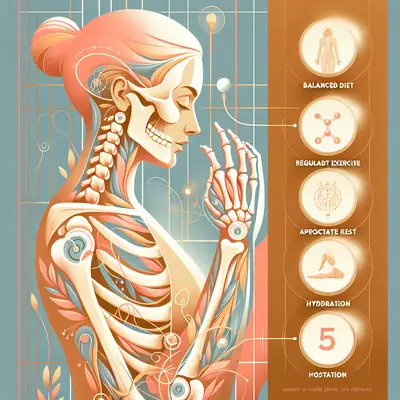
Joint health is rarely lost in a single dramatic moment. More often, it erodes quietly—through subtle misalignments, small daily compromises, and years of overlooking how we move, rest, and nourish ourselves. For those who care deeply about preserving their mobility, comfort, and independence, “healthy living” becomes less about trends and more about deliberate design.
This is an invitation to craft a life that quietly defends your joints—through choices that feel elevated, intentional, and sustainable. Below are five exclusive, under-discussed insights that those serious about joint health will recognize as difference-makers.
The Hidden Luxury of Friction Management
We tend to think of joints in terms of bones and cartilage, but friction is the silent intruder that shapes how those structures age. Every time you stand, twist, or descend a staircase, the forces across your joints can multiply to several times your body weight. Over months and years, that mechanical “noise” adds up.
A friction-conscious lifestyle begins with small details. The shoes you wear indoors, for example, are not trivial: a well-cushioned, supportive sole can transform how force travels from the ground up into your ankles, knees, hips, and spine. Look for shoes with structured heel counters, moderate cushioning, and non-slip soles, and reserve them for indoor use only to maintain their integrity.
Surfaces matter as much as footwear. Hard tile and concrete amplify impact; thoughtfully placed rugs or a well-chosen standing mat in the kitchen or home office can soften each step. Even your exercise environment plays a role: a wooden or sprung floor, or a padded mat for floor work, is gentler on cartilage than unforgiving ground. Friction management is not about fragility—it’s about respecting your joints enough to optimize the terrain they work on, day after day.
Intelligent Muscle Tone: The Understated Joint Insurance
Strong muscles do not just look sculpted—they behave like intelligent shock absorbers for your joints. Yet for joint-conscious individuals, the goal is not maximal strength at all costs; it is calibrated strength placed in the right locations, in the right proportions, for the right movements.
Stability around a joint comes from balanced support. Overdeveloping one muscle group while neglecting its counterpart can pull a joint subtly out of its optimal tracking pattern, increasing wear on cartilage and strain on ligaments. For example, strong quadriceps with underactive hamstrings, or dominant chest muscles with weak upper back, can alter how your knees and shoulders move under load.
An intelligent strength strategy favors controlled tempo over raw intensity. Slow, deliberate movements—think three seconds up, three seconds down—enhance joint position awareness (proprioception) and help you build precision rather than simply power. Prioritize multi-joint, functional exercises (such as sit-to-stand variations, gentle step-ups, or hip-hinge patterns) that mirror real-life movement, rather than isolated machine exercises that ignore how the body moves as a system. The result is not only better strength but a more “organized” body that moves with grace and conserves joint integrity.
Anti-Inflammatory Living Beyond the Plate
Anti-inflammatory eating has become a familiar concept, but for someone serious about joint preservation, the conversation must extend far beyond salmon and extra-virgin olive oil. Inflammation is influenced by a network of daily inputs: sleep quality, stress levels, physical activity, and even how consistently you maintain your routines.
Chronic sleep deprivation subtly heightens inflammatory markers and can amplify pain perception, making joints feel stiffer and more tender even without structural change. Protecting a 7–9 hour sleep window, keeping a regular sleep–wake schedule, and creating a cool, dark, and quiet bedroom environment are not luxuries—they are joint-care essentials.
Stress physiology is equally central. Persistent psychological stress nudges the body toward a pro-inflammatory state, which can exacerbate symptoms in arthritis and other joint conditions. Gentle, repeatable rituals—breathing practices, short outdoor walks, or a brief evening stretch sequence—create a calming rhythm for the nervous system and can translate into quieter joints over time. When combined with an evidence-informed eating pattern rich in colorful vegetables, oily fish, nuts, seeds, and minimal ultra-processed foods, you have a full-bodied anti-inflammatory lifestyle rather than a single “anti-inflammatory meal.”
Micro-Movements: The Art of Never Letting Joints Go “Offline”
The modern body is often either “on” at the gym or “off” at the desk or on the sofa, with little nuance in between. Joints, however, thrive on gentle variability: modest amounts of movement, distributed throughout the day, nourish cartilage via the flow of synovial fluid and prevent surrounding muscles from becoming stiff and reactive.
Micro-movements are the elegant antidote to static living. They are tiny, deliberate interruptions in stillness—a slow ankle circle at your desk, three gentle shoulder rolls between emails, a hip shift and spinal rotation when you stand up from a chair. Individually, they feel insignificant; cumulatively, they create a day that refuses to let joints stagnate.
Consider establishing “movement anchors” linked to daily cues: a short mobility sequence whenever you start the kettle, one or two controlled squats every time you stand from a chair, or a 30–60 second stretch when you close a work session. These small acts require no equipment, no outfit change, and no dedicated “workout time,” but they keep joints metaphorically online—aware, nourished, and resilient. Over months and years, this subtle continuity of motion can matter as much as your formal exercise routine.
Precision Weight Management: A Quiet, Powerful Lever
Weight is often discussed in blunt, oversimplified terms, but for joint health, the nuance is profound. Extra body mass translates directly into greater mechanical load, especially on weight-bearing joints like the hips, knees, and ankles. Even modest, sustained reductions in weight can meaningfully reduce pain and improve function in individuals with joint concerns, particularly osteoarthritis.
What often goes unspoken is how strategic the approach must be. Rapid, aggressive weight loss that sacrifices muscle mass can paradoxically harm joint stability by removing the very tissue that shields joints from impact. A refined approach prioritizes preserving or slightly increasing lean muscle while gently reducing excess fat through moderate caloric adjustments, consistent activity, and adequate protein intake.
This precision extends to time horizon: a sustainable, gradual shift—say, 0.5–1 pound per week for those who have weight to lose—is far more protective than extremes. It also respects life quality; enjoyable, nutrient-dense meals, mindful portions, and a preference for whole foods can be aligned with social and culinary pleasure. In this context, weight management becomes not a punishment but a strategic, dignified act of joint conservation.
Conclusion
Healthy living, when viewed through the lens of joint preservation, looks less like a collection of isolated habits and more like a coherent design philosophy. Manage friction with intention, cultivate intelligent muscle tone, extend anti-inflammatory thinking beyond the plate, keep joints subtly engaged with micro-movements, and approach weight as a precise, protective instrument rather than a blunt goal.
Over time, these choices accumulate into something rare and valuable: a body that feels trustworthy, movements that feel smooth and quiet, and a future less defined by limitation. This is the quiet resilience of well-cared-for joints—a form of health that is not loud, but unmistakably refined.
Sources
- National Institute of Arthritis and Musculoskeletal and Skin Diseases: Handout on Health – Osteoarthritis - Overview of how osteoarthritis affects joints and the role of weight, activity, and joint mechanics
- CDC: Osteoarthritis – Risk Factors and Management - Discusses risk factors such as excess weight, joint injury, and physical inactivity, plus management strategies
- Harvard Health Publishing: Foods that fight inflammation - Explains the role of dietary patterns and specific foods in modulating inflammation
- Mayo Clinic: Exercise and chronic disease – How physical activity boosts joint health - Describes how regular, appropriate exercise supports joints, muscles, and overall health
- Arthritis Foundation: The Role of Weight in Osteoarthritis - Details how weight influences joint load and how modest weight loss can improve joint symptoms
Key Takeaway
The most important thing to remember from this article is that this information can change how you think about Healthy Living.