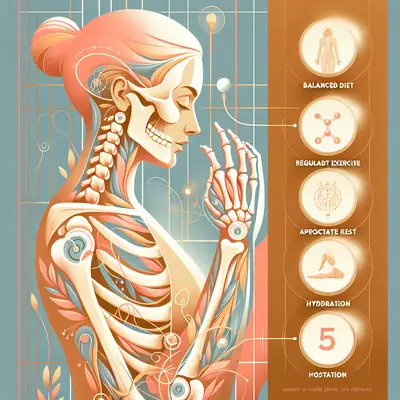
Healthy living is often framed as a race toward peak performance. For those who care about their joints, however, the goal is different: preservation, not punishment; elegance, not excess. True joint-focused living is less about dramatic overhauls and more about thoughtful refinement—subtle choices made consistently that, over time, protect what matters most: your ability to move with ease and dignity.
This is an approach to wellness that respects the details. It honors the fact that joints are not just hinges but sophisticated interfaces between your life and your environment. Below, you’ll find a refined perspective on healthy living that places joint integrity at the center—along with five exclusive, often-overlooked insights that people serious about long-term joint health will genuinely appreciate.
Healthy Living, Reframed Around Joint Preservation
When we speak about “healthy living,” the conversation typically orbits around weight, appearance, and cardiovascular metrics. Yet your joints silently arbitrate whether any of that actually feels livable. They dictate how you step out of bed, whether you enjoy an evening walk, how long you can travel, and how independently you can age.
A joint-centered view of healthy living asks a different set of questions:
- Does this habit support or erode the cartilage that cushions my joints?
- Does this routine calm or provoke the quiet inflammation that accumulates over years?
- Does this exercise pattern respect the architecture of my hips, knees, spine, and hands?
- Does my environment—my chair, shoes, mattress, and even my lighting—make movement effortless or subtly taxing?
Healthy living, in this refined context, becomes the ongoing art of reducing unnecessary friction—literal and metaphorical—on the body’s most essential moving parts.
The Foundation: Strength, Alignment, and Gentle Consistency
A premium approach to joint health does not chase extremes. It favors consistency over intensity. The foundation rests on three pillars: strength, alignment, and gentle repetition.
Strength protects. Research consistently shows that well-conditioned muscles around the joints reduce load and improve stability, which can help lower the risk of osteoarthritis progression and ease pain when it’s already present. Thoughtfully building the quadriceps and gluteal muscles supports the knees; strengthening the hips and core stabilizes the spine; conditioning the shoulders and upper back preserves posture and reduces strain on the neck and wrists.
Alignment distributes forces. Subtle adjustments—how your foot lands during a walk, how your knee tracks over your toes during a squat, how your pelvis tilts when you stand—directly alter the stress that joints must absorb. Precision in form is not a cosmetic flourish; it is one of the most powerful tools for long-term joint preservation.
Gentle consistency rewrites your baseline. You don’t need heroic workouts; you need daily, repeatable patterns like 20–30 minutes of low-impact movement, regular posture resets during the workday, and a bedtime routine that allows tissues to recover. Over months and years, this quiet discipline builds a body that moves with less resistance and more reliability.
Exclusive Insight 1: Treat Cartilage Like a “Luxury Fabric” That Responds to Use
Most people think of cartilage as something that inevitably “wears out.” A more accurate—and empowering—metaphor is a luxury fabric that must be used, not stored, to maintain its integrity.
Cartilage is avascular; it has no direct blood supply. It relies on the movement of joint fluid to receive nutrients and remove waste. This means your daily motion pattern is essentially the laundering and conditioning cycle for your joints.
People focused on joint health will appreciate this nuance:
- Motion is nutrition for cartilage. Low-impact, cyclical activities such as walking, swimming, and cycling act like a gentle cleanse and reconditioning treatment for joint surfaces.
- Too little load is as harmful as too much. Total rest starves cartilage; extreme impact shreds it. The sophisticated sweet spot is moderate load, frequently applied.
- Varied movement is protective. Changing your terrain, pace, and direction subtly shifts how forces are distributed across cartilage, avoiding concentrated wear on a single region.
With this lens, healthy living includes not just moving more, but moving wisely—with awareness that each step, each bend, is part of an ongoing care ritual for your joint surfaces.
Exclusive Insight 2: Precision in Micro-Posture Matters More Than “Perfect” Posture
Classic advice obsesses over a single ideal posture—chin tucked, shoulders back, spine neutral. A more refined understanding is that joints thrive not on one “perfect” position, but on micro-variations within a safe range.
For the joint-conscious individual, this is a liberating and sophisticated upgrade:
- Static “perfect” posture can still overload joints. Sitting “tall” without movement for hours compresses spinal discs and stiffens hips, even if your alignment appears flawless.
- Micro-movements prevent stagnant stress. Subtle shifts—changing leg positions, gently rolling shoulders, slightly adjusting pelvic tilt—redistribute forces before discomfort appears.
- Workspace design should invite motion, not just alignment. A premium chair and ergonomic desk are only truly valuable if they encourage position changes, not freeze you in place.
Healthy living for your joints is less about memorizing one correct posture and more about cultivating a dynamic stillness—where you look composed and feel at ease because your body is making elegant micro-adjustments all day long.
Exclusive Insight 3: Joint-Intelligent Strength Training Is About Direction, Not Just Load
Standard fitness advice focuses on how heavy you lift. Joint-conscious living adds another layer: In what direction are your joints being asked to bear that load, and how often?
For those serious about preservation:
- Joint-friendly strength work respects joint lines. Exercises are chosen and executed so that knees track in line with the second toe; hips hinge without excessive lumbar flexion; shoulders move without aggressive internal rotation under load.
- Multiple planes of motion matter. Training only in straight lines (forward/backward) can leave cartilage and supporting tissues under-prepared for real-life diagonals and rotations. Controlled lateral lunges, rotational core work, and gentle multi-directional movements offer a more complete “insurance policy.”
- Tempo and control outrank bravado. Slower, controlled repetitions build tendon and ligament resilience without shocking the joint. This is especially crucial as collagen quality changes with age.
Healthy living, reoriented around joint protection, elevates strength training from a numbers game to a craft—where the quality of joint loading matters as much as the quantity.
Exclusive Insight 4: Sleep and Stillness as Active Tools for Joint Recovery
While sleep is universally recommended for general health, those who prioritize joint preservation can treat it as a structured, intentional recovery strategy.
The details are where the advantage lies:
- Joint position during sleep influences overnight stress. Side sleepers benefit from placing a pillow between the knees to keep hips and knees aligned; back sleepers often do better with a small pillow under the knees to reduce lumbar tension.
- Deep, uninterrupted sleep modulates inflammation. Poor sleep is associated with higher inflammatory markers, which can exacerbate joint pain and accelerate degenerative processes over time.
- Even “stillness” needs nuance. If you wake feeling more stiff than when you went to bed, consider the firmness of your mattress, pillow height, and whether your sleeping position forces certain joints into end-range positions for hours.
In a refined healthy-living strategy, the bedroom becomes as much a joint-care environment as the gym: a place where surfaces, temperature, and routines are calibrated to allow your joints to truly reset.
Exclusive Insight 5: Subclinical Inflammation Is a Lifestyle Metric, Not Just a Lab Value
For a joint-conscious individual, inflammation is not just a medical term appearing on bloodwork; it is a daily barometer that can be influenced—quietly but meaningfully—by lifestyle choices.
This insight shifts healthy living from a generic “anti-inflammatory” buzzword to a more tactical approach:
- Diet shapes your inflammatory baseline. Patterns rich in whole, minimally processed foods—especially fatty fish, olive oil, vegetables, and legumes—support lower systemic inflammation compared to highly processed, sugar-heavy diets.
- Subtle weight changes matter at the joint level. Every additional pound can add several pounds of load across key weight-bearing joints, particularly the knees. Even modest weight reductions have been shown to meaningfully improve joint pain and function.
- Stress and joint pain are entangled. Chronic stress can amplify pain perception and promote inflammatory signaling. Deliberate down-regulation strategies—such as breathwork, mindful walks, and structured decompression rituals—are not indulgences; they are joint-care interventions.
Healthy living, at its most sophisticated, recognizes inflammation as something you shape every day with your plate, your schedule, your sleep, and your stress hygiene. The joints quietly register the result.
Bringing It Together: A Lifestyle That Moves Lightly on Its Own Future
When you place joint health at the center of your healthy living strategy, something elegant happens: extremes begin to feel less interesting. The lure of punishing workouts, rigid diet rules, or posture perfection gives way to something more sustainable—and more luxurious in the truest sense: a body that moves comfortably, predictably, and with quiet confidence.
You begin to design your days so that:
- Your joints receive steady, nourishing movement instead of sporadic overload.
- Your strength work is clean, controlled, and structurally respectful.
- Your environment invites gentle motion and alignment instead of stiff stillness.
- Sleep becomes an intentional decompression chamber, not an afterthought.
- Food, stress management, and weight are viewed through the lens of inflammation and load, not appearance alone.
This is healthy living as daily preservation—an approach that treats mobility, not as something to be maximized at all costs, but as something to be stewarded with care. In doing so, you give your future self a profound gift: the ability to move through life with less negotiation and more ease.
Sources
- [Centers for Disease Control and Prevention – Osteoarthritis Basics](https://www.cdc.gov/arthritis/basics/osteoarthritis.htm) - Overview of osteoarthritis, risk factors, and the role of weight and activity in joint health
- [Arthritis Foundation – Benefits of Exercise for Arthritis](https://www.arthritis.org/health-wellness/healthy-living/physical-activity/getting-started/why-physical-activity) - Evidence-based guidance on how movement supports joint function and reduces pain
- [Harvard Health Publishing – Foods That Fight Inflammation](https://www.health.harvard.edu/staying-healthy/foods-that-fight-inflammation) - Explanation of how dietary choices influence systemic inflammation relevant to joint health
- [NIH – National Institute of Arthritis and Musculoskeletal and Skin Diseases: Handout on Health – Osteoarthritis](https://www.niams.nih.gov/health-topics/osteoarthritis) - Detailed discussion of osteoarthritis, including the importance of muscle strength and lifestyle factors
- [Johns Hopkins Medicine – Sleep and Inflammation](https://www.hopkinsmedicine.org/health/wellness-and-prevention/the-connection-between-sleep-and-inflammation) - Insight into how sleep quality affects inflammatory processes that can impact joint comfort and health
Key Takeaway
The most important thing to remember from this article is that this information can change how you think about Healthy Living.