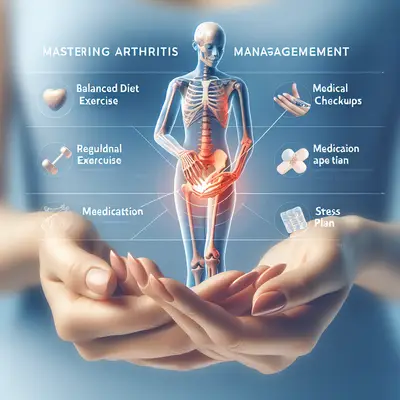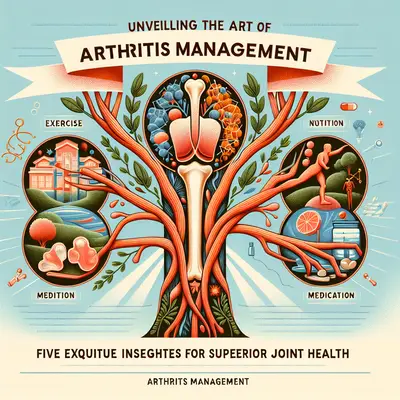
Arthritis management is often framed around pain scales and prescription plans. Yet for those who value longevity, nuance, and a high standard of daily comfort, the real conversation is more refined: How do you orchestrate your lifestyle so that your joints are quietly protected, supported, and honored over time? Below, we explore five exclusive, under-discussed shifts that elevate arthritis care beyond the basics—subtle adjustments that compound into a future of more fluid, dependable movement.
Insight 1: Treat Inflammation as a 24-Hour Environment, Not an Episode
Most arthritis guidance focuses on how to respond when pain flares. A more sophisticated approach is to view your inflammatory load as an around-the-clock “climate” you’re constantly shaping. Every meal, every night of sleep, every stress response either nudges that climate toward calm or chronic simmer.
Begin by thinking in terms of “inflammatory stacking.” A single indulgent meal, a short night of sleep, or a stressful workday may not be catastrophic alone—but three or four of these in sequence can materially shift how your joints feel. Rather than chasing pain, aim to reduce the number of days when inflammatory factors stack up.
This means aligning several low-profile habits: a Mediterranean-style eating pattern rich in olive oil, fish, nuts, legumes, and deeply colored vegetables; a stable sleep window that protects seven to nine hours most nights; and a deliberate “off switch” in the evening—light stretching, breathwork, a brief walk, or reading away from screens. None of these feel dramatic, which is precisely the point. Together, they quietly reframe your baseline from “barely managing” to “systemically supported.”
Insight 2: Upgrade Movement from Exercise to Joint-Specific Curation
Generic exercise advice—“move more,” “stay active”—is too blunt an instrument for joints that need precision. Arthritis management is less about volume of exercise and more about intelligent selection, timing, and progression.
Think of your joint care routine as curation. For weight-bearing joints (hips, knees, ankles), prioritize low-impact loading that respects cartilage and synovial structures while preserving strength: controlled step-ups, partial-range squats to a high bench, resistance band work, and incline rather than speed on walks or treadmills. For hands and wrists, micro-movements matter: gentle tendon glides, thumb opposition drills, and light grip exercises that preserve dexterity without provoking irritation.
The refined detail: respect “joint mood” in real time. On high-symptom days, shift to range-of-motion and isometric holds (tension without joint movement), which maintain muscle engagement without shear forces on the joint surfaces. On lower-symptom days, lean into strength and stability work. This dynamic responsiveness creates a sophisticated feedback loop—your body informs your training, and your training supports your body, instead of forcing a rigid routine at any cost.
Insight 3: Master Heat, Cold, and Compression as Precision Tools
Most people treat heat pads, ice packs, and braces as emergency responses. A more elevated approach is to use them proactively as part of your daily joint strategy, with the same intentionality you might apply to skincare or nutrition.
Warmth before movement, cold after higher-demand activity, and compression during load-bearing tasks form a simple but powerful architecture. For example, a warm shower, heated wrap, or paraffin bath for hands before morning activity can improve tissue extensibility and reduce stiffness. After a longer walk or busy day on your feet, a short interval of cool therapy can help temper reactive inflammation.
Compression—when thoughtfully selected and properly fitted—can lend subtle mechanical support and enhance proprioception (your body’s sense of joint position). This can reduce micro-instability that often exacerbates pain. The sophistication lies in restraint: mild compression, moderate temperature, and limited duration (typically 15–20 minutes for heat or cold) to support, not shock, your tissues. Overuse of extreme cold or intense heat can backfire; your goal is thoughtful modulation, not assault.
Insight 4: Design Your Spaces so Joints Work Less, Not Harder
Ergonomics is often discussed in office terms, but true joint-conscious living extends to every environment you inhabit. The refinement here is to invest in “joint-friendly architecture”—small, elegant changes that mean your joints are asked to do less brute work throughout the day.
In the kitchen, slightly elevating your most-used prep surface or using a supportive anti-fatigue mat reduces compressive load on hips and knees. Strategically placing often-used items at mid-level shelves prevents repetitive deep bending or overhead reaching. For those with hand or thumb arthritis, upgraded tools—lightweight cookware, wide-grip utensils, electric can and jar openers—translate directly into less cumulative strain.
In the living area, a chair or sofa at a height that allows you to stand without using your hands becomes a quiet asset to your knees and hips. In the bathroom, a subtle shower seat, grab bars that match your design aesthetic, and a raised toilet seat can preserve both energy and joint integrity. Each modification is small, but together, they create a living landscape where your joints are rarely pushed to their mechanical limits in everyday tasks.
Insight 5: Elevate Conversations with Your Clinician from Symptom Lists to Strategy
A premium approach to arthritis care also means refining how you interact with your healthcare team. Instead of arriving at appointments with a general statement like “it still hurts,” come prepared with data and direction. Capture a brief weekly snapshot: which joints are most active, what activities provoke or ease symptoms, how medications or supplements feel over time, and how sleep or stress appears to influence your joints.
This allows you to move the conversation from “what can you give me for this pain?” to “how can we build a long-term plan that protects function, supports bone and cartilage, and keeps my lifestyle as full as possible?” Ask specifically about strength preservation, cardiovascular safety, bone density, and the role of weight management or comorbidities (like diabetes, hypertension, or cardiovascular disease).
A sophisticated management plan might blend targeted pharmacologic therapy (from topical agents and NSAIDs to disease-modifying treatments where appropriate) with personalized physical therapy, dietitian-guided nutrition, and, when indicated, consultation with a rheumatologist or orthopedic specialist. When you position yourself as a partner in strategy—not a passive recipient of prescriptions—you unlock far more nuanced care.
Conclusion
Arthritis management, at its most refined, is not about heroics or sudden overhauls. It is about hundreds of quiet decisions that tilt your biology in favor of ease, resilience, and longevity. By shaping your inflammatory “climate,” curating your movement with intention, using physical modalities with precision, designing spaces that respect your joints, and elevating your clinical conversations, you move beyond basic symptom control into a more deliberate, composed way of living with arthritis.
For those who value a life that feels both capable and considered, these understated shifts are not luxuries—they are the framework for joints that remain as dependable as the life you’re building around them.
Sources
- Arthritis Foundation – Arthritis and Inflammation – Overview of how inflammation relates to different forms of arthritis and why it matters for long-term joint health
- Mayo Clinic – Arthritis: Diagnosis and Treatment – Evidence-based guidance on arthritis therapies, including medications, physical therapy, and lifestyle strategies
- NIH – Mediterranean Diet and Chronic Disease – Discussion of Mediterranean-style eating and its benefits for chronic conditions influenced by inflammation
- CDC – Physical Activity for Arthritis – Recommendations on safe, joint-friendly physical activity and its role in reducing pain and improving function
- Johns Hopkins Medicine – Joint Protection Techniques – Practical strategies for modifying activities and environments to reduce joint stress and protect function over time
Key Takeaway
The most important thing to remember from this article is that this information can change how you think about Arthritis Management.