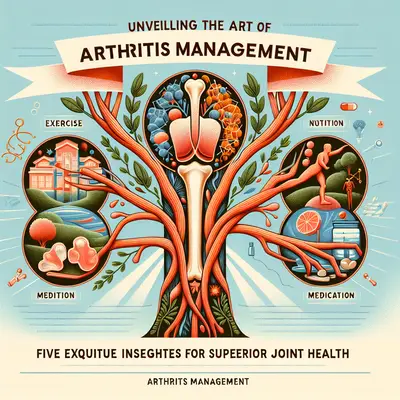
Arthritis may be common, but the way you respond to it does not have to be ordinary. Beyond pain scales and prescription refills lies an elevated approach: curating your routines, your environments, and even your self-talk with the same discernment you might bring to a well-composed wardrobe or a thoughtfully designed home. This is arthritis management as a quiet refinement of daily life—where each choice subtly protects, preserves, and even enhances your joints.
Below are five exclusive, under-discussed insights for those who want more than “just getting by” with arthritis—and instead prefer an intentional, high-standard relationship with joint health.
Curating Micro-Movements: Designing the Way You Reach, Turn, and Rise
Most arthritis guidance focuses on formal exercise sessions, but it is the countless small movements between them that often determine how your joints feel at sunset. The way you reach for a glass, stand from a chair, or twist to grab a seatbelt can either gently protect cartilage or quietly strain it.
Begin by observing your “micro-movements” for a single day. Notice how often you bend from the waist instead of hinging from the hips, how many times your wrists absorb your body weight getting up from low seating, or how you pivot on a stiff knee when turning. Then, deliberately refine these motions: plant both feet before turning, bring items closer to your body before lifting, and choose hip-hinging over spinal rounding.
Consider elevating everyday surfaces—slightly higher chairs, counters, and bedside tables—so your joints move through a more neutral range instead of deep, compressive angles. These subtle changes support what rheumatologists often refer to as “joint protection principles,” but executed with the same intentionality you might reserve for ergonomic office design or tailored clothing.
This is not about moving less; it is about moving with exquisite precision so every mundane moment becomes an opportunity to protect your joints, not deplete them.
Precision Strength: Training the Muscles That Quietly Guard Your Joints
Strength training is often recommended for arthritis, but generic routines can overlook the muscles that most discreetly safeguard your joints—especially around the hips, knees, and hands. Instead of chasing “full-body workouts,” think in terms of joint guardians: small but crucial muscles that determine how gracefully your joints load and unload.
For lower-body arthritis, this often means focusing on the gluteus medius (side hip stabilizer), deep hip rotators, hamstrings, and the small muscles around the ankles. When these are strong, each step distributes force more evenly, reducing the sharp, localized stress that can aggravate joint surfaces. For hand and wrist arthritis, targeted exercises for finger flexors and extensors, grip strength, and forearm stabilizers can transform simple acts like pouring coffee or opening jars from painful tests into effortless rituals.
Prioritize slow, controlled movements over heavy weights. Time-under-tension training—where you lift and lower with deliberate slowness—can build strength without the joint shock that often accompanies explosive motions. Resistance bands, water-based resistance, and isometric holds (contracting muscles without moving the joint extensively) can offer remarkable gains while preserving comfort.
Working with a physical therapist or exercise professional who understands arthritis allows you to build a precision program: fewer but better exercises, carefully chosen to serve your joints rather than simply “burn calories.”
The Rhythm of Relief: Timing Your Day Around Your Joints’ Natural Cycles
Arthritis pain and stiffness rarely stay constant; they follow a rhythm. For many, mornings are tight, midday brings relief, and late evenings reintroduce fatigue and soreness. Others experience flares linked to long meetings, travel days, or particular weather shifts. Managing arthritis elegantly means structuring your day around this personal rhythm, not fighting against it.
Track your symptoms for 7–14 days—time of day, activities, sleep quality, and even weather conditions. Patterns will emerge. Use this data as you would a personal performance profile: schedule more demanding physical tasks for your “golden window,” whether that is mid-morning or early afternoon, and reserve gentler, more supportive activities for your challenging hours.
This might mean placing your most intensive walking, strength training, or errands during your best-joint period, and scheduling stretching, gentle mobility work, and heat therapy for your stiffest times. Aligning medication timing, anti-inflammatory meals, and rest intervals with these natural fluctuations can amplify their impact—relief arrives precisely when you are most likely to need it.
Think of your day as choreography: not simply “busy versus free,” but “joint-friendly versus joint-demanding” blocks, woven together with intention.
Anti-Inflammatory Dining as a Daily Ritual, Not a Restriction
Most people hear “anti-inflammatory diet” and think of lists—foods to avoid, foods to add. A more refined approach views eating for joint health as a daily ritual of curation: building plates that calm, rather than provoke, the immune and inflammatory systems that drive arthritis discomfort.
Instead of obsessing over perfection, focus on upgrading the “baseline” of your meals. Favor:
- Deeply colored vegetables and fruits (berries, leafy greens, red cabbage, peppers) that are rich in antioxidant and anti-inflammatory compounds.
- High-quality fats such as extra-virgin olive oil, walnuts, and fatty fish (salmon, sardines, mackerel) known for omega-3 content.
- Intact whole grains and legumes that stabilize blood sugar and support a calmer inflammatory environment.
Equally important are your “silent inflaming agents”: ultra-processed snacks, refined sugars, and excess alcohol, which may not cause immediate pain but can subtly heighten systemic inflammation over time. Instead of abrupt elimination, approach them as rare indulgences, not staples.
Elevate the experience of anti-inflammatory eating. Use beautiful serveware, take time to plate your food, and eat seated and unhurried when possible. Associating joint-supportive meals with pleasure and calm dramatically improves adherence—and makes the entire experience feel like self-respect, not self-denial.
Upgrading Recovery: Sleep, Heat, and Mindset as Active Therapies
In sophisticated arthritis management, recovery is not an afterthought; it is an active therapy. The quality of your sleep, your use of thermal treatments, and the way you mentally frame your condition all shape how your joints behave over time.
Prioritize sleep as a non-negotiable joint treatment. Poor sleep has been linked to heightened pain sensitivity and worse arthritis outcomes. Craft an environment that feels almost spa-like: a supportive mattress, joints cushioned by pillows (under knees, between legs, or supporting arms), blackout curtains, and a consistent wind-down ritual. If pain interrupts sleep, discuss adjusting medication timing or using topical therapies in the evening with your clinician.
Thoughtful use of heat (warm baths, heating pads, paraffin wax for hands) and cold (cool packs for swollen joints) can be strategically layered throughout your week to maintain comfort, not just during flares. Heat often soothes stiffness and prepares joints for gentle movement, while cold is best reserved for calming acute swelling after heavier use.
Finally, your internal dialogue matters. Viewing arthritis as a system to understand and influence—rather than an enemy to fear—creates a sense of agency. Mind–body practices such as mindfulness, gentle yoga, and breathwork have been shown to ease pain perception and improve function, not simply by distraction, but by modulating stress pathways that influence inflammation.
Recovery, in this model, becomes a curated suite of daily practices that make your joints feel cared for, not merely tolerated.
Conclusion
Arthritis management does not need to be a story of decline; it can be a quiet elevation of how you move, eat, rest, and think. When you refine your micro-movements, train the muscles that truly protect your joints, honor your body’s natural rhythm, dine in a way that calms inflammation, and treat recovery as an intentional ritual, you create a life in which joint care feels less like a burden and more like a form of daily craftsmanship.
The joints you have today are the foundation of the life you will live tomorrow. Treating them with this level of discernment is not indulgent—it is profoundly strategic.
Sources
- Arthritis Foundation – Joint Protection Principles – Practical guidance on movement strategies and joint protection concepts.
- Mayo Clinic – Exercise and Arthritis – Overview of how targeted exercise supports joint health and arthritis management.
- Harvard T.H. Chan School of Public Health – The Anti-Inflammatory Diet – Evidence-based explanation of dietary patterns that help reduce systemic inflammation.
- National Institute of Arthritis and Musculoskeletal and Skin Diseases (NIAMS) – Comprehensive medical information on different types of arthritis and treatment approaches.
- Johns Hopkins Medicine – Arthritis and Sleep – Discussion of the relationship between sleep quality, pain, and arthritis symptoms.
Key Takeaway
The most important thing to remember from this article is that this information can change how you think about Arthritis Management.