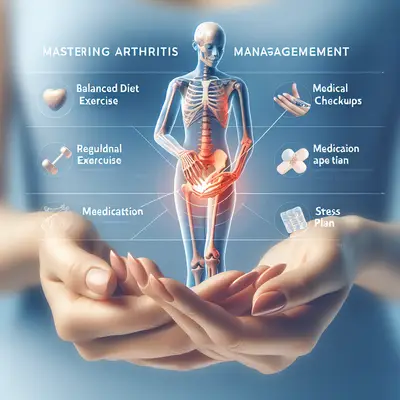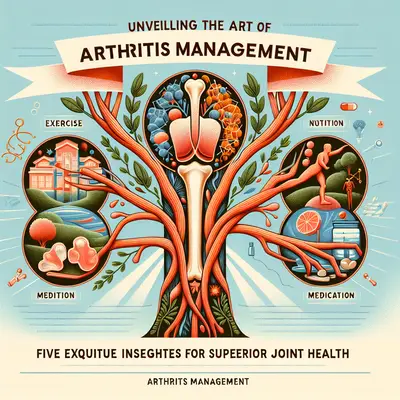
Arthritis management is rarely about grand gestures. It is about the quiet precision of daily decisions—the temperature of your morning shower, the way your foot meets the floor, the timing of your anti-inflammatory meal. For those who expect more from their health than simple “pain control,” arthritis becomes a design challenge: How do you craft a life that protects your joints while preserving elegance, autonomy, and ease? This is not about merely getting by. It is about curating a standard of living in which movement feels intentional, supported, and dignified.
Below are five exclusive, often overlooked insights that discerning individuals focused on joint health will appreciate—subtle upgrades that transform arthritis management from survival into a refined practice of self-stewardship.
Insight 1: Treat Your Day as a Joint-Protection Sequence, Not Isolated Choices
Most arthritis advice focuses on single actions—take this pill, do this exercise, avoid that food. What is often missing is the recognition that your joints experience your day as a seamless, cumulative sequence.
The way you sleep influences your morning stiffness; your hydration at breakfast affects how your cartilage behaves in the afternoon; the shoes you wear determine whether your evening walk feels liberating or punishing. When you think in terms of sequences rather than isolated choices, you begin to structure your day like a carefully orchestrated program.
For example, pairing a warm shower with gentle range-of-motion exercises in the first 20–30 minutes after waking can significantly reduce joint stiffness. Scheduling higher-impact tasks (carrying groceries, longer walks, housework) during your personal “mobility window”—typically late morning to early afternoon for many with inflammatory arthritis—can reduce strain and improve recovery. Finishing the day with a structured wind-down (heat or contrast therapy, stretching, and anti-inflammatory hydration such as water or unsweetened herbal tea) keeps inflammation from “spiking” overnight.
The question shifts from “What should I do?” to “In what order should I do it so my joints feel protected?” That is where refinement lives.
Insight 2: Precision Movement: Training Joint-Friendly Micro-Skills, Not Just Muscles
Traditional exercise guidance for arthritis emphasizes strengthening and flexibility. Useful, yes—but incomplete. For joints under chronic stress, it is not only how strong you are that matters, but how precisely you move.
Subtle joint-protective micro-skills can make the difference between stable comfort and a slow build of irritation over the day. These include:
- Controlled deceleration: Training your body to land softly—when walking downstairs, stepping off a curb, or lowering into a chair—reduces impact forces transmitted through hips, knees, and ankles. This can be cultivated through slow, eccentric movements (like slowly sitting down and standing up, using support as needed).
- Load distribution awareness: Learning to “spread” pressure across multiple joints and muscles—using both hands to lift, engaging the hips instead of the lower back, using your core to support standing—minimizes repetitive overloading of a single joint.
- Axis alignment: Maintaining knee-over-foot and hip-over-knee alignment during walking, squats, and daily bending reduces torque on vulnerable joints, particularly in osteoarthritis.
Working with a physical therapist or advanced movement specialist to refine these micro-skills can elevate your joint health dramatically. You are not only building capacity; you are training your body in joint-conscious elegance.
Insight 3: Inflammation Timing Matters as Much as Inflammation Level
We often talk about “lowering inflammation” as though it’s a static metric. In reality, arthritis symptoms are governed by rhythms—daily (circadian), weekly, even seasonal. The sophisticated approach is not only to decrease inflammation overall, but to reshape its timing.
For those with inflammatory arthritis (such as rheumatoid arthritis), morning stiffness often reflects the immune system’s natural nocturnal activity. Strategically timing medication, movement, and food can “smooth” these peaks:
- Medication timing: Some disease-modifying or steroid medications are more effective when taken at specific times to anticipate inflammatory surges. This should always be coordinated with your rheumatologist, but the principle is simple: support the body before the flare, not only after.
- Evening routines: Prioritizing anti-inflammatory behaviors in the evening—gentle stretching, stress reduction, adequate sleep, avoiding late heavy, high-sugar meals, and managing alcohol intake—prepares your body for a calmer night and a less punishing morning.
- Strategic movement windows: Many people with arthritis feel better after they “warm up.” Planning your key activities during your personal high-function window and using your low-function window for more static or supported tasks is not avoidance—it is intelligent allocation of joint resources.
Your aim is to choreograph your day around your inflammatory rhythm, so your joints are supported when they are most vulnerable, not simply when they are already in distress.
Insight 4: Curating an Anti-Inflammatory Environment, Not Just an Anti-Inflammatory Diet
Diet rightfully receives enormous attention in arthritis management—Mediterranean-style patterns, omega-3s, reduced ultra-processed foods, and balanced blood sugar are all well-supported strategies. But beyond what you eat, there is the environment you inhabit.
An anti-inflammatory life considers the following:
- Noise and stress load: Chronic stress amplifies pain perception and inflammatory signaling. A visually and acoustically calmer environment—less clutter, softer lighting, reduced background noise—can subtly shift your nervous system from fight-or-flight to rest-and-repair.
- Temperature and humidity: Many with arthritis are sensitive to cold, damp conditions. Maintaining a stable indoor temperature, avoiding drafts, using layered clothing and localized warmth (heated throw, paraffin baths, warm socks) can keep joints more supple and less reactive.
- Workstation and seating: Your desk chair, sofa, and car seat either invite proper joint alignment or encourage slouching and compressive stress. Choosing seating that supports neutral spine and hip position, and using footrests or cushions strategically, transforms “sedentary time” from a joint burden into a relative neutral.
This is environmental design as therapy—aligning your surroundings so that simply existing in your space contributes to joint preservation.
Insight 5: Elevating Flare Management to a High-Standard Protocol, Not a Panic Response
Most people treat arthritis flares as unwanted surprises—managed with frustration and improvisation. A more elevated approach treats flares as expected episodes that deserve a pre-planned, high-standard protocol.
A sophisticated flare protocol might include:
- Pre-defined action tiers: Distinguish between a mild, moderate, and severe flare—and pre-decide what you will do at each level: rest or modify activity, use heat or cold, short-term medication adjustments (as approved by your clinician), and when to contact your doctor.
- Activity reshaping instead of complete shutdown: Rather than stopping all movement, you might shift to gentler joint-friendly activities (like supported range-of-motion, water-based exercise, or chair yoga) to maintain circulation and prevent stiffness from compounding the flare.
- Communication templates: Having pre-written, simple messages to send to colleagues, family, or caregivers during a flare (“I’m in a flare and operating at reduced capacity today. I may need more time or to reschedule.”) reduces stress and preserves your boundaries and professionalism.
- Recovery phase strategy: Flares end—but what you do immediately afterward matters. A gradual re-entry protocol, where you step activity back up in levels instead of jumping straight to your highest load, can reduce the risk of rebound pain.
You transform flares from chaotic disruptions into managed events, handled with composure and foresight. That shift alone can make your relationship with arthritis feel more empowered and less reactive.
Conclusion
Refined arthritis management is less about dramatic interventions and more about intelligent, layered design: sequencing your day with intention, moving with precision, honoring your inflammatory rhythms, shaping an environment that quietly supports your joints, and responding to flares with elegance rather than panic.
For those who value autonomy, comfort, and a certain standard of living, arthritis does not have to define the limits of your life. It can, instead, become the reason you invest in better structure, better habits, and a more elevated way of moving through the world—one joint-conscious choice at a time.
Sources
- Centers for Disease Control and Prevention – Arthritis Basics - Overview of arthritis types, risk factors, and core management strategies
- Arthritis Foundation – Managing Arthritis - Practical guidance on pain management, movement, and lifestyle adaptations
- Mayo Clinic – Rheumatoid Arthritis: Treatment and Lifestyle - Evidence-based treatment options and lifestyle recommendations for inflammatory arthritis
- Harvard Health Publishing – Foods That Fight Inflammation - Research-backed overview of anti-inflammatory dietary patterns
- Johns Hopkins Medicine – Exercise and Arthritis - Detailed discussion of joint-safe exercise and movement strategies for arthritis
Key Takeaway
The most important thing to remember from this article is that this information can change how you think about Arthritis Management.