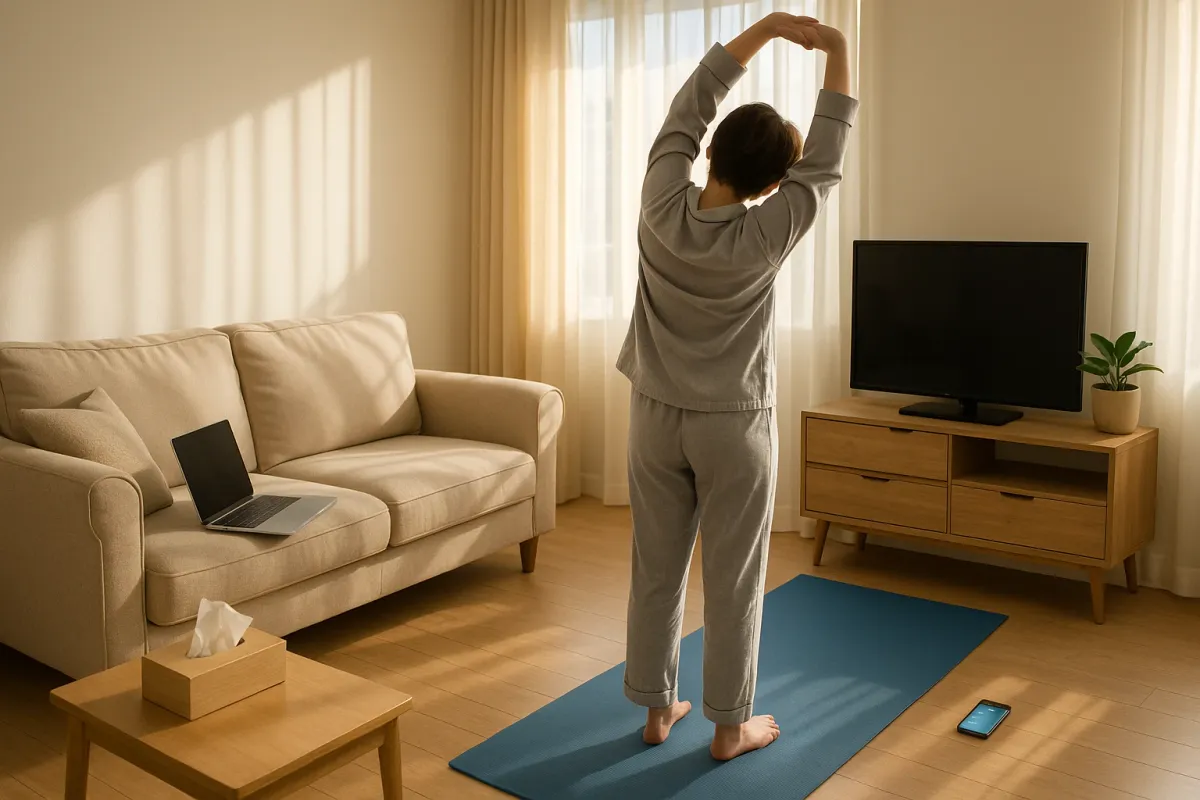
The headlines say it out loud, even when we don’t: people are exhausted. As stories circulate about “hilarious and strange reasons” people would call in sick, what sits beneath the humor is something more serious—bodies that feel overworked, under‑recovered, and increasingly stiff from screen‑locked days. In 2025, we are more connected than ever, yet our joints are paying the price for lives lived mostly seated, scrolling, and silently enduring discomfort until it feels like a valid reason to stay home.
At Joint Health Living, we see a different path—one where “not feeling it today” becomes an early, elegant signal to care for your joints, not a punchline. Mobility is no longer the domain of elite athletes; it’s a daily luxury, a subtle form of self‑respect. Below are five refined, deeply considered insights to help you build a mobility practice that feels as deliberate and elevated as a carefully chosen wardrobe—precise, personal, and built to last.
1. Treat Daily Mobility As A Micro‑Sabbatical, Not A Workout
In a culture where people fantasize about calling in sick simply to escape the grind, movement has been quietly mislabeled as “one more task.” The result? We delay it until our joints protest loudly. Instead, consider mobility work as a micro‑sabbatical for your nervous system—short, restorative breaks that are as non‑negotiable as a client meeting.
Twice a day, step away for five minutes of intentional movement that feels ceremonial rather than rushed. Think slow ankle circles while standing at a window, neck rotations synced with long exhalations, or gentle spinal waves in your chair. The objective is not to “burn calories” but to lubricate joints and down‑shift your stress response. When practiced this way, mobility becomes a luxurious interruption of overdrive, signaling to your body that it is not a disposable accessory to your productivity, but the main event. Over time, these quiet rituals often reduce the very fatigue that tempts you to fantasize about sick days in the first place.
2. Elevate “Desk Slump” Into A Precision Spinal Routine
Today’s work culture normalizes the kind of posture that eventually becomes a reason to call in sick: rounded shoulders, locked hips, and a neck craned toward a laptop. Instead of accepting desk‑bound stiffness as inevitable, redesign those moments into a precision routine for your spine—no yoga mat required.
Begin by grounding your feet flat and widening your sit bones slightly on the chair. Inhale as you lengthen the crown of your head upward, creating gentle traction along the spine. Exhale and glide your chin back an inch, as if aligning your ears over your shoulders. From here, slow, controlled thoracic rotations—turning your ribcage right and left while keeping your hips facing forward—wake up the mid‑back, an area that often becomes rigid and forces your lower back and neck to overwork. Finish with seated cat‑cow: round your spine on the exhale, arch gently on the inhale. This subtle yet sophisticated sequence, performed two to three times a day, restores suppleness to the spine and teaches your body that even in a chair, it is allowed to move like it was designed to.
3. Replace “Crash On The Couch” With A Three‑Move Evening Unwind
Behind many comedic “I’d totally call in sick for this” stories lies a predictable pattern: long days, heavy screens, and an evening collapse onto the sofa. The problem is that joints interpreted this as immobilization, not recovery. A refined approach is to insert a brief, structured mobility ritual between “day mode” and “evening mode”—a kind of physical palate cleanser.
Start with controlled hip CARs (Controlled Articular Rotations): standing with one hand on a wall, slowly lift your knee, rotate it outward, extend back, and return to neutral in a deliberate circle. Move slowly enough that your hip, not momentum, is doing the work. Follow with a deep calf and ankle mobility sequence: place your hands on a wall, step one foot back, and gently bend and straighten the back knee to glide the ankle through its range. Finish with a floor‑based 90/90 hip position, rotating your torso toward the front shin and breathing deeply. In 6–8 minutes, you will have re‑introduced elegant motion to your hips and ankles, signaling to your joints that the day is ending in nourishment, not neglect.
4. Use “I’m Too Tired” As A Diagnostic Tool, Not A Full Stop
Those tempting sick‑day fantasies—“I just can’t today”—often mask something biomechanical: low‑grade inflammation, compressed joints, and stiffness masquerading as global fatigue. Instead of taking “I’m too tired to move” at face value, treat it as diagnostic data. Ask: which parts of my body feel most reluctant to move, and where do I feel subtly locked?
Use that information to create highly specific mobility “tests.” If your knees feel heavy on the stairs, perform slow, controlled terminal knee extensions with a resistance band or simply standing, straightening the knee fully while tightening the quadriceps. If your shoulders feel slumped, test your overhead reach while standing against a wall—can you raise your arms without arching your lower back? These micro‑assessments transform vague tiredness into targeted action. Over a few weeks, you may notice that your “I can’t today” days shift toward “I’m tired, but I know exactly what will help”—and that clarity alone is profoundly energizing.
5. Curate A “Joint‑First Morning” Instead Of A “Phone‑First Morning”
Many of the humorous “reasons to call in sick” share a quiet antagonist: the first hour of the day is often surrendered to the phone—news, messages, social feeds—before the body has moved more than a few steps. That early digital immersion trains your nervous system for reactivity, not resilience, and your joints are left waiting in line for attention that never quite arrives.
A joint‑first morning does not require an hour; it requires intention. Before opening any screen, dedicate 7–10 minutes to a gentle, full‑body mobility sequence. Begin in standing with slow heel raises to greet the ankles and calves. Move into gentle hip hinges to wake the posterior chain, then add wide‑arm circles to mobilize shoulders and upper back. Finish on the floor with a controlled spinal twist and a few deep diaphragmatic breaths—one hand on your lower ribs, feeling them expand 360 degrees. This short ritual tells your body, in no uncertain terms, “You are my first priority today.” The surprising outcome: by aligning your day around motion rather than immediate digital input, you often reduce the very mental fatigue that later masquerades as a reason to stay home.
Conclusion
The current wave of “calling in sick” stories is amusing on the surface, but they reveal a deeper truth: modern life quietly erodes our capacity to move with ease, and our joints become silent witnesses to our over‑scheduled, under‑recovered days. Mobility, approached with elegance and intention, is not punishment for a sedentary lifestyle—it is the antidote.
By reframing movement as a micro‑sabbatical, upgrading desk posture into a spinal ritual, inserting a three‑move evening unwind, turning tiredness into data, and reclaiming the first minutes of your morning for your joints, you create a life where “I can’t today” appears less often—not because your responsibilities vanished, but because your body feels quietly, reliably prepared to meet them. In a world quick to joke about sick days, the true luxury is waking up and knowing your joints are ready for the day you actually want to live.
Key Takeaway
The most important thing to remember from this article is that this information can change how you think about Mobility Exercises.