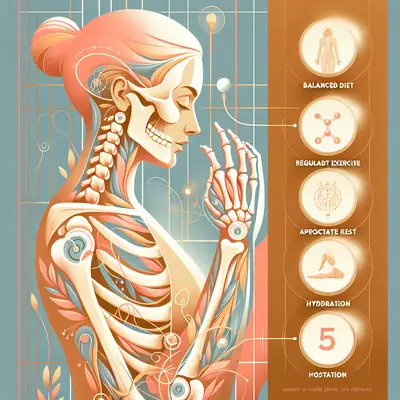
Joint health is not merely a medical concern; it is a design decision about how you intend to move through the world. The way you sit at your desk, lift your luggage, descend a staircase, or transition out of bed is quietly shaping the future of your mobility. Healthy living, when viewed through the lens of joint preservation, becomes less about restriction and more about thoughtful curation—of movement, environment, and daily choices. What follows is a refined blueprint for joint-centered living, with five exclusive insights for those who expect their bodies to age with grace, strength, and composure.
Redefining Healthy Living Through the Lens of Joint Elegance
For many, “healthy living” conjures images of diets, gym sessions, and step counts. For those invested in long-term joint function, the definition must be far more nuanced. Joints thrive on deliberate variability, balanced loading, and intelligent recovery. That means your lifestyle should be less about sporadic bursts of exercise and more about a sophisticated pattern of micro-movements and micro-recoveries woven throughout the day.
This perspective reframes movement as a form of craftsmanship. Just as a well-tailored garment respects the architecture of the body, a well-tailored routine respects the structure of your joints—the cartilage that requires nourishment through motion, the ligaments that crave stability, the muscles that must be trained to support without overstraining. Healthy living becomes an ongoing calibration: adjusting your surroundings, your calendar, and your rituals so that your joints are not an afterthought but the quiet beneficiaries of every good decision.
Insight 1: Think in Decades, Train in Moments
Those who enjoy resilient joints into later decades often share one trait: they make decisions today as though their future mobility were non-negotiable. That future-focused mindset need not be dramatic; in fact, it often expresses itself through tiny, disciplined choices.
Instead of viewing joint health as something to “fix” when pain appears, cultivate a long horizon:
- Choose movements you can sustain for years, not weeks—walking, cycling, controlled strength training, gentle mobility work.
- Honor your “movement minimums” on even the busiest days: a five-minute morning mobility routine, several posture resets during work hours, a short walk after dinner.
- Audit how you bend, twist, and lift in everyday life. Repeatedly picking up groceries or a laptop bag with poor mechanics can be more damaging over time than a single intense workout.
Decade-level thinking, matched with moment-level execution, creates a quiet compound effect. Your joints are constantly adapting to the loads you ask of them; well-chosen, consistent micro-demands applied over time can be the difference between stiffness and fluidity in your fifties, sixties, and beyond.
Insight 2: Curate Your Environment to Be Joint-Intelligent
Healthy living for joint health is not only about what you do—it is about what your surroundings nudge you to do. A joint-intelligent environment gently encourages better choices without requiring constant willpower.
Consider subtle but powerful shifts:
- Workspaces that invite movement: Adjustable desks, a chair that supports neutral spine alignment, a footrest to change leg position, and a reminder (digital or analog) to stand or walk briefly every 45–60 minutes.
- Thoughtful home design: Frequently used items stored at mid-height to avoid constant deep bending or overhead reaching; supportive seating instead of overly soft, low couches that make rising harder on hips and knees.
- Stair and flooring choices: Where possible, secure handrails, non-slip surfaces, and good lighting reduce joint-compromising slips and hesitation, especially on stairs or transitions between rooms.
- Shoe “wardrobe strategy”: Rotating between a small set of well-cushioned, supportive shoes with appropriate heel-to-toe drop and width helps distribute stress differently across joints and soft tissues.
By engineering default conditions that are kind to your joints, you turn joint preservation into the path of least resistance rather than a constant discipline challenge.
Insight 3: Treat Muscle as Your Most Luxurious Joint Accessory
When it comes to joint protection, well-trained muscle is not optional; it is your most elegant insurance policy. Muscle absorbs force before it reaches the joint, stabilizes movement, and preserves alignment under load. Inadequate strength often compels joints to compensate in ways they were never designed to.
A refined strength strategy for joints focuses on:
- Quality over spectacle: Controlled, joint-friendly patterns—such as Romanian deadlifts, hip hinges, step-ups, and rows—rather than high-impact or ballistic movements for the sake of intensity.
- Tempo and control: Slowing the lowering phase of exercises increases muscular demand while reducing joint stress. The result is more strength with less wear.
- Balanced development: Intentionally train opposing muscle groups (front and back of the thighs, glutes and hip flexors, pushing and pulling muscles of the upper body) to avoid imbalances that distort joint alignment.
- Strategic load progression: Gradually increasing weight or resistance allows connective tissues time to adapt, decreasing the risk of tendinopathies and joint irritation.
Think of strength training not as an aesthetic pursuit but as joint architecture—an investment in creating muscular scaffolding that keeps each joint elegantly centered and supported through every movement.
Insight 4: Nourish Joints from the Inside with Subtle Precision
Nutrition for joint health is often reduced to catchy supplement claims. A more elevated approach is both broader and more precise: it considers inflammation, body composition, and the microscopic environment of cartilage, bone, and connective tissue.
Key considerations include:
- Weight as a mechanical lever: Even modest weight loss can drastically reduce load through weight-bearing joints. Research suggests that for every pound of weight lost, the knee may experience roughly four pounds less pressure during activity—a remarkably efficient return on investment.
- Inflammation-aware eating: A pattern emphasizing vegetables, fruits, whole grains, legumes, nuts, olive oil, and fatty fish (such as salmon, sardines, or trout) has been consistently linked with lower systemic inflammation. Over time, this may soften the inflammatory backdrop that exacerbates joint pain.
- Protein and collagen support: Adequate protein intake helps maintain muscle mass, while foods rich in vitamin C and certain amino acids support collagen structure. Some people may benefit from specific supplements (such as omega-3 fatty acids), but these should complement—not replace—a sound dietary foundation.
- Hydration as tissue care: Cartilage and the synovial fluid that nourishes it rely on proper hydration. Subclinical dehydration can subtly reduce joint comfort and performance over time.
Rather than chasing miracle cures, the sophisticated strategy is to create a nutritional landscape that consistently favors joint longevity—stable weight, managed inflammation, and resilient connective tissue.
Insight 5: Upgrade Recovery into a Ritual, Not an Afterthought
Healthy living often glorifies the “work” of movement while relegating recovery to sleep and the occasional stretch. For high-value joint health, recovery deserves equal status—consider it the refinement phase where your tissues adapt and improve.
A joint-centric recovery ritual may include:
- Intentional sleep hygiene: Deep, consistent sleep supports tissue repair and modulates inflammatory pathways. A calm pre-sleep routine, consistent bedtime, and minimized blue light exposure are simple but high-yield interventions.
- Structured mobility sessions: Not random stretching, but deliberate, joint-specific mobility work—controlled articular rotations, gentle range-of-motion drills, and breath-led stretches focused on hips, ankles, thoracic spine, and shoulders.
- Responsive deloading: Periodically reducing intensity or volume in training (a “deload week”) allows joints and tendons to consolidate adaptation rather than gradually accumulate irritation.
- Restorative modalities with discernment: Tools such as heat, cold, massage, or gentle aquatic exercise can be helpful, but they should support, not replace, the fundamentals of sleep, movement quality, and load management.
By elevating recovery to a non-negotiable ritual, you give your joints the conditions they need to respond gracefully to the demands you place upon them.
Conclusion
To live well is to move well—and to move well is to treat your joints as quiet, indispensable partners in every experience you value. A sophisticated approach to healthy living does not chase extremes; it pursues consistency, precision, and thoughtful design. When you think in decades, curate your environment, build intelligent strength, nourish tissues from within, and honor recovery as a daily ritual, joint health stops being a fragile asset and becomes a durable, cultivated advantage.
This is the art of fluid movement: not loud, not performative, but deeply intentional. Your joints feel every decision you make. With a refined blueprint, they can repay your care with years of poised, confident motion.
Sources
- Centers for Disease Control and Prevention – Arthritis and Physical Activity - Overview of how regular physical activity supports joint function and reduces arthritis symptoms
- Harvard Health Publishing – Weight Loss and Knee Pain - Discusses the impact of body weight on knee joint load and osteoarthritis
- Johns Hopkins Medicine – Joint-Friendly Exercise - Practical guidance on choosing and performing exercise to protect joint health
- Mayo Clinic – Inflammation and Diet - Explains how dietary patterns influence inflammation and chronic conditions affecting joints
- Arthritis Foundation – Joint Protection Techniques - Provides evidence-informed strategies for everyday joint protection and load management
Key Takeaway
The most important thing to remember from this article is that this information can change how you think about Healthy Living.