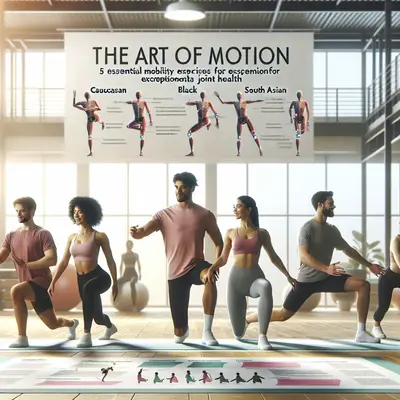
Mobility is not simply about “stretching more.” For joints that you expect to carry you through decades of confident movement, mobility is a cultivated art—part biomechanics, part nervous system refinement, part daily ritual. When approached with intention, mobility training becomes a quiet but powerful ally: it protects cartilage, refines posture, and restores the graceful ease that many assume is lost with age. This is mobility for those who value precision over exhaustion, and long-term joint elegance over quick fixes.
Rethinking Mobility: From Flexibility to Functional Elegance
Most people conflate mobility with flexibility, yet the two are fundamentally different. Flexibility is passive: how far a joint can be moved when external force is applied. Mobility is active: how far you can move a joint with strength and control. For joint longevity, it is the latter that truly matters.
When you raise your arm overhead, rotate your hip, or turn your neck while driving, your joints are not merely being “stretched”; they are moving within a complex interplay of muscles, tendons, ligaments, and nervous system control. High-quality mobility work ensures that these motions remain smooth and well-aligned, reducing the excessive shear and compressive forces that accelerate wear on joint surfaces.
There is also an aesthetic element to good mobility. A person with refined mobility does not simply move further; they move better. Transitions are fluid, balance is quiet and sure-footed, and joints feel supported rather than braced. This is the goal: not circus-level ranges of motion, but dignified, sustainable movement that feels resilient and composed.
Exclusive Insight 1: Train End-Range Strength, Not Just End-Range Stretch
Most mobility routines stop at the stretch. The joint is taken to its end range, held for 20–30 seconds, and then released. Helpful, but incomplete. The joints that age gracefully are those with strength at the edges of their range, not just length.
End-range strength means you can control the final portion of a movement without trembling, compensating, or holding your breath. For example:
- Shoulder capsule care: Instead of only hanging in a doorway stretch, you slowly raise your arm overhead while lightly holding a small weight, pausing at the top to gently “own” that position.
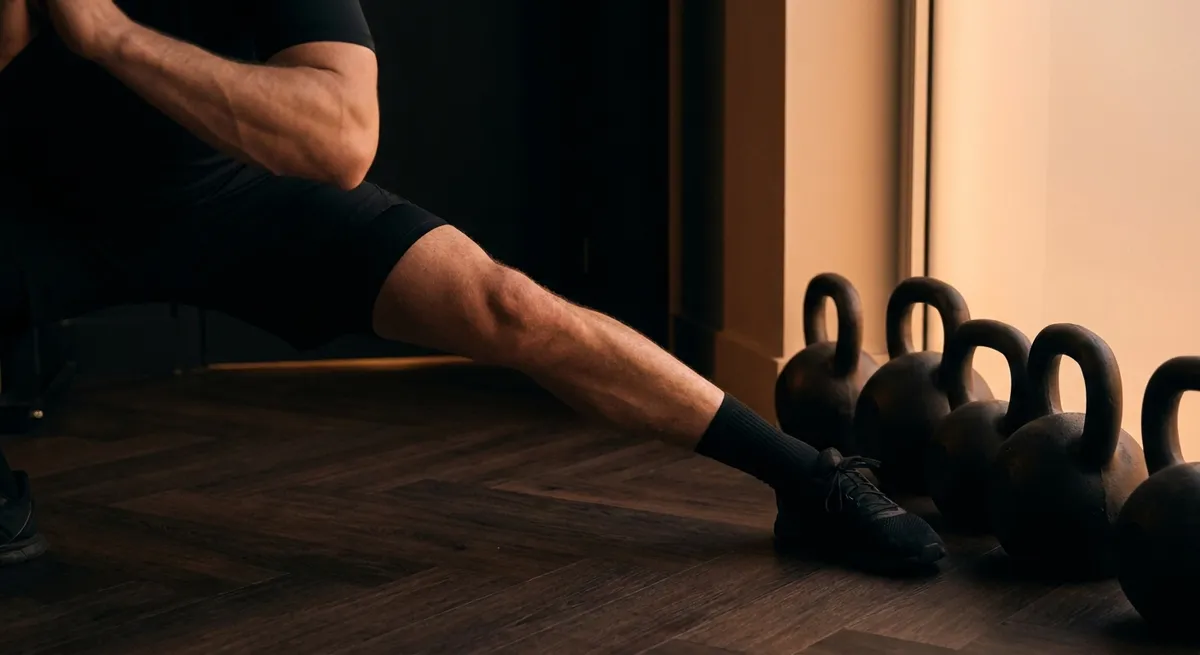
- Hip protection: Rather than simply sitting in a deep lunge, you gently press your front heel into the floor, then lightly lift it, awakening strength at the deepest, most vulnerable angle.
This active control does two critical things for joint health:
- Stabilizes the joint at its weakest angles, lowering the risk of strains and reducing stress on cartilage.
- Refines your nervous system’s confidence in those positions, which lessens the reflexive “guarding” that can otherwise present as stiffness or tightness.
Practically, this means every deep stretch becomes an opportunity: after you ease into a range, add 5–10 seconds of gentle, precise muscular engagement there. You are not merely stretching; you are teaching your joints to feel strong in places where most people feel fragile.
Exclusive Insight 2: Think in Terms of Joint “Neighborhoods,” Not Isolated Parts
Your joints never move alone. The hip influences the lumbar spine, which influences the thoracic spine, which shapes how your shoulders rest and move. When one area is stiff, another area often overworks. For sophisticated joint care, you must think in joint “neighborhoods,” not isolated structures.
Consider two examples:
- The hip–knee–ankle chain: Limited ankle dorsiflexion (the ability to bring your shin over your foot) forces the knee and hip to compensate when you squat, step off curbs, or descend stairs. Over time, this can translate into knee discomfort and altered hip loading, even if the knee itself is structurally sound.
- The ribcage–thoracic spine–shoulder complex: If the upper back and ribcage are rigid, the shoulder joint is forced to “borrow” extra motion. This can concentrate stress on the rotator cuff and front of the shoulder instead of distributing it through the torso as nature intended.
Mobility training that respects these neighborhoods includes:
- Multi-joint movements (like deep, supported lunges with a slight torso rotation) that encourage the hips, spine, and ankles to share the load evenly.
- Thoracic rotations that free the upper back so the neck and shoulders are not constantly overworking.
- Foot and ankle work paired with hip-focused drills, ensuring smooth force transfer from the ground upward.
When you address the neighborhood rather than only the symptom joint, you often notice a surprising effect: one well-chosen mobility sequence can ease tension in three or four regions simultaneously. This is not only efficient; it is deeply protective.
Exclusive Insight 3: The Micro-Sessions Strategy: Discreet Mobility for a Demanding Day
Elite joint health is rarely built in one long weekly session; it is crafted in subtle, frequent moments. Think of mobility as a luxury fragrance—lightly applied throughout the day rather than poured on once.
Micro-sessions—1–3 minutes, scattered gently across your schedule—can be profoundly effective. When done thoughtfully, they:
- Maintain synovial fluid circulation throughout the day, keeping joints “lubricated” and nourished.
- Interrupt static postures that compress or strain certain tissues.
- Train your body to associate movement with relief rather than effort or fatigue.
Examples of refined micro-sessions you can integrate seamlessly:
- Between calls: Stand and perform slow ankle circles, then gentle hip circles, focusing on smooth arcs rather than maximal range.
- After extended typing: Seated thoracic rotations—feet anchored, gently turning from the ribcage rather than wrenching the neck.
- Before bed: A quiet sequence of cat–camel spinal waves, performed slowly, to “decompress” the spine.
In aggregate, these small rituals often outperform a single long weekly routine. Your joints respond more to consistency than intensity. Micro-sessions are the equivalent of sending your joints a reassuring message every few hours: “You are supported. You are allowed to move.”
Exclusive Insight 4: Use Breath as a Precision Tool for Joint Decompression
Breath is the most underutilized tool in mobility work. Beyond simple “remember to breathe,” specific breathing patterns can transform how your joints experience load, particularly in the spine and ribcage.
Three refined ways to integrate breath into mobility:
Directed expansion for spinal relief:
When performing a thoracic rotation or side bend, inhale into the “compressed” side of your ribcage. Visualize the ribs subtly widening like an accordion. This creates an internal decompression that can relieve tension not just in the spine, but also in the shoulder girdle.
Long exhalations to unlock guarding muscles:
When you reach a gentle end range—say, in a hip flexor or hamstring stretch—exhale slowly for 6–8 seconds. Long exhalations stimulate the parasympathetic nervous system, calming the reflexive muscle guarding that can make joints feel locked or “blocked.” You are not forcing more range; you are inviting it.
Breath-led pacing:
Instead of counting seconds, use breaths to set tempo: two slow breaths to ease into a range, one breath at end range with light muscular engagement, two breaths to return. This introduces a measured, almost meditative rhythm that protects against jerky, rushed movement.
Using breath as an active component of mobility practice refines not only your range of motion but your sense of internal spaciousness. Joints that move within a well-breathed body are less braced, more adaptive, and far less prone to the chronic tension that accelerates wear.
Exclusive Insight 5: Prioritize Controlled Rotations—The Missing Dimension in Most Routines
Most people train their joints in straight lines: forward/backward squats, up/down lunges, in/out stretches. Yet life is rarely linear. You pivot, twist, and lean at unpredictable angles—motions that heavily rely on rotational control at the hips, thoracic spine, and shoulders.
Rotational mobility, when trained in a deliberate and controlled way, offers an elegant layer of protection:
- Hips: Gentle, standing hip CARs (controlled articular rotations), where you trace a slow circle with your knee or foot, help maintain the rotational integrity of the hip joint—vital for walking, turning, and even simply getting in and out of a car gracefully.
- Thoracic spine: Seated or half-kneeling rotations encourage the mid-back to share rotational duty, so the lower back does not twist beyond its design.
- Shoulders: Controlled arm circles performed slowly, with attention to keeping the ribcage quiet and stable, help the shoulder capsule maintain resilience across its wide range.
Rotational work should feel precise, never reckless. You are not flinging limbs; you are drawing clean arcs. The intention is to maintain the “3D health” of your joints—protecting cartilage, supporting ligaments, and keeping your nervous system familiar with the very movements that most often lead to sudden strains when neglected.
Designing a Refined Mobility Ritual: A Sample Framework
For those who prefer structure, consider a brief but sophisticated daily sequence:
- Morning (5–7 minutes):
- Gentle spinal waves (cat–camel)
- Standing hip circles (small, controlled)
- Light shoulder circles with coordinated breathing
- Midday Micro-Sessions (3–4 times, 1–2 minutes each):
- Ankle circles + calf “rocking” (shifting weight forward/back)
- Seated or standing thoracic rotations
- Neck glide and rotation sequence, performed slowly and within comfort
- Evening (5–10 minutes):
- Supported hip flexor and hamstring mobility, with long exhalations
- Thoracic side-bending with breath-directed rib expansion
- Gentle, floor-based rotations (such as lying knees side-to-side)
This is not a workout; it is a daily refinement practice. Within weeks, many people notice that everyday tasks—climbing stairs, reaching into the back seat of a car, turning to look over the shoulder—feel smoother, lighter, and inexplicably more graceful.
Conclusion
Mobility training, when approached at a higher standard, becomes more than a checklist of stretches. It is a thoughtful dialogue with your joints—a commitment to end-range strength, to neighborhood-based care, to rotational control, to breath-led decompression, and to subtle but consistent micro-sessions woven into your day.
In an era obsessed with intensity, choosing to cultivate refined, resilient mobility is a quietly radical act. It signals that you are not merely trying to “get through” the next month of training or the next year of demands, but to move exquisitely well across decades. Your joints are listening to how you move, every day. Give them a language of precision, calm strength, and thoughtful range—and they will respond with lasting, dignified ease.
Sources
- Harvard Health Publishing – The importance of stretching – Explores the role of flexibility and mobility in healthy movement and injury prevention
- Mayo Clinic – Exercise and arthritis – Discusses safe movement, joint-friendly exercise, and long-term joint protection strategies
- Hospital for Special Surgery – Range of Motion and Flexibility – Explains how joint range of motion relates to function and why maintaining it is essential
- Cleveland Clinic – Mobility Exercises: What They Are and Why They Matter – Provides an overview of mobility training and its benefits for daily life and joint health
- NIH – Physical Activity and Your Heart – Outlines general physical activity principles, including the importance of regular movement for overall musculoskeletal health
Key Takeaway
The most important thing to remember from this article is that this information can change how you think about Mobility Exercises.