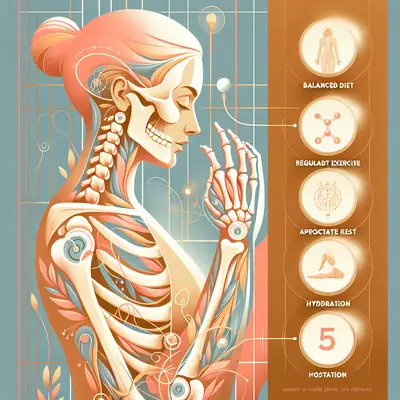
For those who take their well-being seriously, joint health is not an afterthought—it is the quiet foundation beneath every elegant gesture, every confident stride, and every purposeful day. Healthy living, when viewed through the lens of joint vitality, becomes less about restriction and more about refinement: deliberate choices, subtle upgrades, and thoughtful rituals that protect the body’s architecture for years to come.
This is not about extremes or quick fixes. It is about cultivating a lifestyle in which your joints are quietly supported by the way you eat, move, rest, and recover. Below are five exclusive, often overlooked insights that help elevate joint care from routine maintenance to a more discerning, long-term investment in how you live.
1. Treat Cartilage Like a Luxury Fabric, Not a Disposable Material
Cartilage is the haute couture of your musculoskeletal system: meticulously crafted, difficult to replace, and easily ruined by neglect. Yet many people treat it as if it were endlessly renewable. Each joint surface is lined with cartilage that thrives under the right amount of load—too little and it weakens, too much and it frays. The key is to curate your daily movement so that your cartilage is “worn in,” not worn out. That means favoring low-impact, rhythmical activities (such as walking on even surfaces, cycling with appropriate resistance, or swimming with controlled form) that deliver nourishment to cartilage through repeated compression and release.
Equally critical is understanding that abrupt spikes in activity—weekend marathons after sedentary weeks, or sudden jumps in high-impact training—act like harsh detergents on a delicate fabric. Strategic progressions in distance, intensity, and duration protect the joint surface while still building strength and endurance. If you think of every step, every squat, every lunge as an interaction with a luxury material you intend to keep for life, your choices around movement naturally become more intentional and joint-preserving.
2. Curate a “Joint-Intelligent” Strength Routine, Not Just a Fitness Habit
Most fitness programs are designed around muscles or aesthetics; very few are curated with the joints as the primary client. A joint-intelligent routine questions each exercise: How does this load the joint? In what angle? Under what control? Rather than chasing exhaustion, it pursues precision. Movements such as controlled step-downs, hip hinge patterns, and slow, well-aligned squats or lunges can strengthen the muscles that shield joints from excessive force. Emphasis on eccentric training—slowly lowering rather than just lifting—can be particularly powerful for tendons and joint stability.
Equally important is honoring alignment as a form of joint hygiene. Knees tracking over the second toe, shoulders stacked over ribs, wrists in neutral during load-bearing exercises: these are details that compound over time into greater resilience. A thoughtfully designed strength routine will also respect rest and variation, cycling through different angles and planes of movement to distribute stress more evenly across the joint surfaces. This approach transforms exercise from a generic habit into a carefully architected support system for your joints.
3. Elevate Your Anti-Inflammatory Strategy Beyond “Eat Healthy”
Refined joint care looks beyond vague instructions to “eat clean” and instead builds a deliberate anti-inflammatory environment. Chronic, low-grade inflammation acts like a slow, invisible tarnish on joint structures. While no single food will cure arthritis or joint pain, the cumulative effect of consistent dietary choices can markedly influence symptoms, recovery, and long-term joint integrity. A joint-conscious pantry emphasizes omega-3 rich foods (such as wild-caught salmon, sardines, and ground flaxseed), vibrantly colored vegetables and fruits, and spices like turmeric and ginger that are known to support a healthier inflammatory response.
But it is not just about what you add—it is equally about what you quietly phase out. Ultra-processed snacks, frequent sugary beverages, and regular heavy alcohol intake create an internal environment that is less hospitable to joint comfort. Attention to blood sugar control—favoring balanced meals with quality protein, fiber, and healthy fats—also matters, as glucose fluctuations can amplify inflammatory cascades. Consider your plate a daily opportunity to either support or sabotage the subtle chemistry of your joints; a refined approach honors that every meal is a quiet vote for how you want to move in the years ahead.
4. Use Recovery as a Precision Tool, Not a Casual Afterthought
Those who protect their joints for the long term treat recovery with as much intention as they treat training. Rest is not simply “doing nothing”; it is a curated practice of giving tissues time and conditions to repair. High-quality sleep is the centerpiece—deep, consistent rest supports hormone balance, tissue regeneration, and pain modulation. But there is a second layer of recovery tools that can be applied with precision rather than trend-following. Thoughtful use of heat or cold, for example, can be tailored: warmth to ease stiffness and promote blood flow before gentle movement, or targeted cold for short periods after acute overuse or flare-ups.
Equally valuable is intelligent scheduling: alternating “heavy” joint days (such as long walks, strength sessions, or more demanding activities) with lighter, mobility-focused or restorative days. Short, strategic movement breaks throughout the workday—standing, gentle joint circles, posture resets—help prevent stiffness without overtaxing tissues. Recovery, when curated skillfully, becomes less about indulgence and more about calibrated maintenance, keeping your joints in an optimal state for the demands you place upon them.
5. Design Your Environment to Quietly Favor Joint-Friendly Choices
Healthy living for joint health is far easier when your environment gently nudges you in the right direction. Instead of relying on willpower, consider how your home, workspace, and daily routes can be edited to protect joint comfort and alignment. An ergonomically arranged desk setup that encourages neutral wrists, supported lumbar positioning, and appropriate screen height may prevent thousands of microstrains over a year. Likewise, placing frequently used items at waist or chest height reduces repetitive deep squats or overhead reaches that can irritate sensitive joints.
Flooring choices, supportive yet elegant footwear, and even the texture and height of seating can influence how joints feel at the end of the day. Small design decisions—such as a strategically placed handrail on a frequently used staircase or a non-slip mat in a shower—protect not just from acute injury but from the compensatory joint stress that often follows a slip or fall. When your environment is thoughtfully arranged, joint-friendly behavior becomes the default, not the exception, and your joints benefit from an ongoing, quiet layer of protection that requires minimal daily effort.
Conclusion
Healthy living, when elevated with a discerning focus on joint health, becomes a sophisticated practice in long-term self-preservation. It is not about perfection or rigid rules; it is about consistently aligning your choices—movement, strength work, nourishment, recovery, and environment—with the future you want for your body. When you treat your joints as assets to be curated rather than problems to be managed, even the simplest habits acquire a new level of intention.
The art of joint vitality lies in these subtle shifts: the deliberate way you train, the ingredients you select, the rest you protect, and the spaces you design. Over time, these refined decisions accumulate into something profound: a body that moves with greater ease, stability, and confidence well into the later chapters of life.
Key Takeaway
The most important thing to remember from this article is that this information can change how you think about Healthy Living.