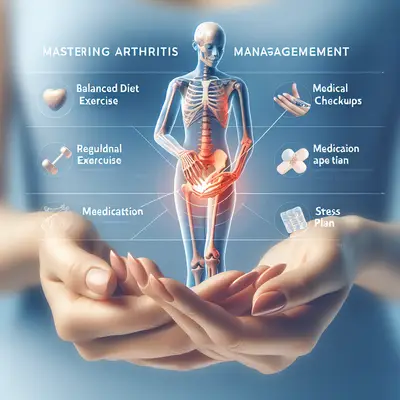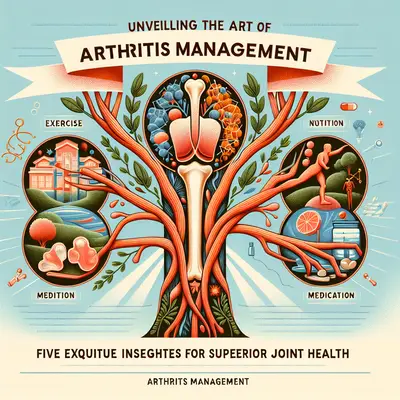
Arthritis may be common, but the way you manage it does not have to be. Beyond basic advice about rest, ice, and over-the-counter relief lies a more discerning, strategic approach—one that treats joint health as a long-term asset to be preserved with care. This is arthritis management for those who value precision, subtlety, and results that compound quietly over years, not weeks.
Below are five exclusive insights that move beyond surface-level tips and into the realm of refined, evidence-informed joint stewardship.
Insight 1: Train the Nervous System, Not Just the Joint
Most arthritis advice stops at muscles and cartilage. Yet the nervous system silently orchestrates how joints move, brace, and experience pain. When the nervous system is perpetually “on guard,” muscles tense, movements become guarded, and joints endure more compressive load with every step.
Neurocentric strategies can soften this overload. Gentle, slow, pain-free range-of-motion drills performed daily—especially in the morning—send a powerful signal of safety to your brain. Breath-led mobility (slow nasal breathing while moving a joint through a comfortable arc) can decrease perceived stiffness and improve coordination without provoking inflammation. Practices such as tai chi, mindful walking, or light balance work further refine neuromuscular control, reducing abrupt, jarring forces on arthritic joints. This is not simply “gentle exercise”; it is deliberate nervous-system training that reframes pain from a constant alarm to a modulated, manageable signal.
Insight 2: Micro-Loading as a Luxury: Protecting Joints from Extremes
Joints with arthritis often fail not under routine load, but under extremes—long flights without movement, weekend-warrior workouts, or sudden changes in activity. A more cultivated strategy is micro-loading: distributing joint stress in small, frequent doses and avoiding sharp spikes in intensity.
Instead of a single, exhausting session, imagine your week as a sequence of elegant, measured exposures to load: brief walks after meals, short strength sessions with meticulous form, and regular posture resets throughout the day. For example, a 10-minute, precision-focused strength routine—twice daily—can offer more joint protection than one vigorous 60-minute workout that leaves your joints inflamed. Mechanical consistency matters more than spectacle. Over time, these micro-loads nudge cartilage, bone, ligaments, and muscles to adapt in a sustainable way, fortifying rather than overwhelming your joints.
Insight 3: Precision Strength: Targeting the “Silent Support Team”
Arthritis management is often framed as “stay active,” but that advice is incomplete without strength specificity. Joints are only as elegant as the muscles that stabilize them. Around every arthritic joint is a “silent support team” of small, often ignored muscles that dictate how force travels through cartilage.
For knees, this includes the hip abductors and external rotators that control thigh alignment; for hips, the deep stabilizers that guide the ball-and-socket; for hands, the intrinsic finger and thumb muscles that refine grip. Precision strength work means training these muscles with controlled tempo, light-to-moderate resistance, and perfect alignment—less about sweat, more about accuracy. One or two degrees of improved alignment with each step can translate into thousands of less abrasive contacts per day. Over months and years, that is the difference between escalation and preservation.
Insight 4: The Inflammation “Signature”: Personalizing Your Lifestyle
Inflammation is not a generic state; each individual has an “inflammation signature”—a unique pattern of triggers, timing, and symptoms. Two people with the same diagnosis can respond very differently to identical foods, stress levels, and sleep patterns. Sophisticated arthritis management requires mapping your own pattern with curiosity and structure.
This might begin with a 4–6 week personal log that notes sleep duration, stress events, food choices, alcohol intake, movement, and joint symptoms. Over time, patterns emerge: perhaps your joints are markedly stiffer after late-night work, red wine, or consecutive days of sedentary behavior. With this map, you can implement targeted adjustments: earlier, more consistent sleep; limiting specific trigger foods; scheduling demanding workouts on low-stress days. Rather than adopting every anti-inflammatory trend, you curate a tailored lifestyle that respects your biology. Precision, not perfection, is the standard.
Insight 5: Future-Proofing Joints with Strategic Recovery
Most people treat recovery as a reaction to pain—something to be done once the flare appears. A more refined strategy treats recovery as a standing appointment, not an emergency measure. This means scheduling recovery—just as you would a business meeting or flight—so your joints are replenished before they reach a tipping point.
Structured recovery may include one or more “de-load” days each week: shorter walks, gentler strength work, extra mobility, and deliberate relaxation. It can also involve temperature-based rituals, such as brief warm soaks for stiffness-prone joints or contrast hydrotherapy under professional guidance. Just as crucial is cognitive recovery—protecting sleep quality, unwinding screen time before bed, and practicing low-intensity breathing exercises to quiet the stress response that amplifies pain perception. Over time, joints exposed to this cycle of intentional load followed by intentional restoration become more predictable, less volatile, and better able to absorb the demands of an engaged life.
Conclusion
Arthritis does not demand that you retreat from a life of movement; it asks that you become more deliberate about how you move, load, and restore your joints. By training your nervous system, embracing micro-loading, targeting silent stabilizers, mapping your personal inflammation signature, and prioritizing strategic recovery, you transform arthritis management from a set of restrictions into a curated practice of long-term joint preservation.
This is not about doing more—it is about doing what matters, with elegance and precision, so that your joints remain capable companions for the life you intend to lead.
Sources
- [Centers for Disease Control and Prevention – Osteoarthritis](https://www.cdc.gov/arthritis/basics/osteoarthritis.htm) - Overview of osteoarthritis, risk factors, and evidence-based management strategies
- [Arthritis Foundation – Managing Arthritis Pain](https://www.arthritis.org/health-wellness/healthy-living/managing-pain) - Practical guidance on pain control, activity, and self-management for various forms of arthritis
- [Johns Hopkins Medicine – The Role of Exercise in Osteoarthritis Management](https://www.hopkinsmedicine.org/health/conditions-and-diseases/arthritis/osteoarthritis-and-exercise) - Explains how targeted movement and strength training support joint health
- [Harvard Health Publishing – Fighting Inflammation](https://www.health.harvard.edu/staying-healthy/fighting-inflammation) - Discusses lifestyle approaches to moderating chronic inflammation, including diet, sleep, and stress
- [Mayo Clinic – Rheumatoid Arthritis: Self-Management](https://www.mayoclinic.org/diseases-conditions/rheumatoid-arthritis/in-depth/rheumatoid-arthritis/art-20047976) - Covers comprehensive self-care strategies that complement medical treatment for inflammatory arthritis
Key Takeaway
The most important thing to remember from this article is that this information can change how you think about Arthritis Management.