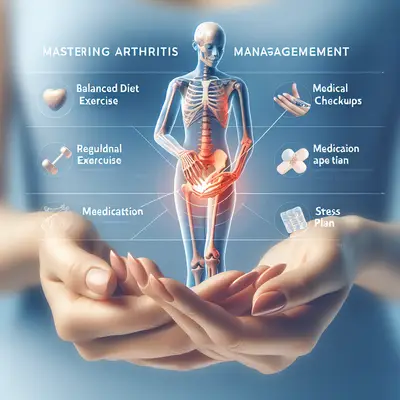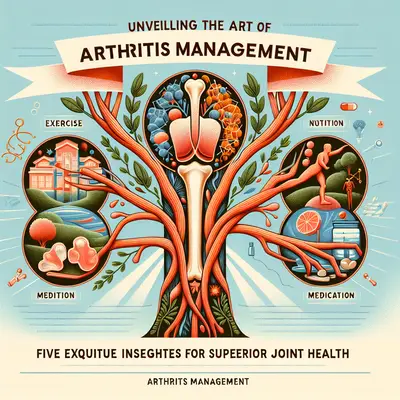
Living well with arthritis is less about dramatic overhauls and more about consistently elegant choices—quiet upgrades that compound into lasting comfort. When you treat your joints as a lifetime investment rather than a short‑term crisis, the entire approach to arthritis management shifts. It becomes less about chasing relief and more about curating an environment in which pain has fewer opportunities to thrive.
Below are five exclusive, under‑discussed insights for those who expect a higher standard of joint care—refinements that go beyond generic advice and honor both your time and your biology.
Precision Recovery: Treating Rest as a Therapeutic Tool, Not an Afterthought
Most arthritis advice emphasizes movement, and rightly so—but intentional recovery is often under‑engineered. Rest is not simply “doing nothing”; it is a targeted intervention that determines how well your joints respond to everything else you do.
High‑quality rest for arthritis means planning recovery with the same precision you might bring to an important meeting. This includes structuring your day to avoid long, joint‑stiffening immobility (for example, standing to take calls every 30–45 minutes, or doing a 2‑minute mobility circuit between tasks). It may involve creating a “recovery window” at the end of your day—10 to 20 minutes devoted purely to joint decompression: gentle range‑of‑motion work, heat or cold therapy as recommended by your clinician, and deliberate breathing to downshift your nervous system.
Equally important is sleep architecture. Arthritis discomfort can subtly erode sleep quality, which in turn heightens pain sensitivity the next day. Investing in your sleep environment—supportive mattress and pillow alignment, stable room temperature, and a consistent pre‑sleep routine—can meaningfully reduce inflammatory flares and morning stiffness. When rest is treated as a structured therapy rather than a vague ideal, your joints become more forgiving, your flare‑ups less loud, and your tolerance for daily life far more generous.
Micro‑Loading: The Art of Strength Without Punishment
“Exercise helps arthritis” is conventional wisdom; “how you apply load” is the sophisticated version. Micro‑loading is the principle of strengthening your joints’ supporting structures through frequent, modest doses of resistance—never enough to provoke a flare, but sufficient to remind your tissues to adapt.
Instead of occasional, exhausting workouts, think in terms of controlled, joint‑respectful effort woven into your week: brief strength sessions two to four times weekly, focused on precision rather than intensity. This might mean slow, supported squats to a chair, resistance‑band work for hip and shoulder stability, or isometric holds (contracting muscles without moving the joint through a large range) on days when pain is elevated. The goal is to build a protective “muscular armor” around painful joints, improving shock absorption and alignment.
Micro‑loading also respects the reality that arthritis is dynamic; some days your joints are negotiable, others they are not. On lower‑symptom days, you gently extend your capacity. On higher‑symptom days, you maintain, but do not vanish into inactivity. Over time, this nuanced progression can improve function, reduce average pain levels, and increase the margin of safety between what your joints can handle and what daily life demands.
Inflammation Literacy: Designing a Personal Trigger Map
For many people with arthritis, “inflammation” is an abstract villain. The more refined approach is to turn it into data—highly individual, trackable, and actionable. Instead of broad rules (“avoid all sugar” or “never eat nightshades”), build a personal inflammation profile that respects your specific biology.
Begin by tracking three elements together for four to six weeks: daily pain/stiffness levels, sleep quality, and key lifestyle variables (meals, alcohol intake, stress peaks, prolonged sitting, intense workouts, weather changes). Over time, patterns emerge: perhaps a certain category of food reliably amplifies next‑day stiffness, or late‑evening emails correlate with poorer sleep and flares. Rather than adopting restrictive, joyless regimens, you can then make targeted edits—for example, moderating known food triggers just before important events, or prioritizing earlier wind‑down on days with heavy joint use.
Nutrition remains a powerful lever here. An eating pattern rich in colorful vegetables, high‑quality fats (such as extra‑virgin olive oil, nuts, and fatty fish), and minimally processed foods has been associated with reduced systemic inflammation. But the refinement lies in personal calibration: some people flourish with Mediterranean‑style eating; others benefit from careful moderation of specific categories like refined carbohydrates or alcohol. The aim is not dietary perfection, but an inflammation profile that is predictably calmer, giving your joints a more stable baseline.
Clinical Partnership, Upgraded: Running Your Arthritis Like a Long‑Term Project
Arthritis management often stalls at the level of sporadic appointments and reactive adjustments. A more elevated approach treats your medical care like an ongoing, high‑value project with you as the informed strategist, not a passive recipient.
This begins with assembling a small, coordinated circle of expertise: a rheumatologist or primary physician with arthritis experience, possibly a physical therapist focused on joint protection, and, when appropriate, a pharmacist or nutrition professional. Instead of arriving at appointments hoping for general reassurance, you come equipped with data—symptom logs, questions about specific medications or interventions, and observations from your daily life.
A premium strategy also includes understanding your full therapeutic menu: pharmacologic options (from topical NSAIDs and oral medications to biologic therapies where indicated), non‑drug modalities (structured exercise, CBT for pain coping, occupational therapy), and adjunctive supports (bracing, orthotics, or assistive tools for high‑demand tasks). The goal is a layered plan where no single element carries the entire burden. Over time, this allows for thoughtful adjustments—tapering, intensifying, or swapping strategies—not in crisis, but with foresight.
This level of partnership can feel like running an elegant, long‑range health portfolio: regular reviews, clear metrics of success (pain levels, function, sleep, emotional resilience), and an understanding that stability—not perpetual experimentation—is the luxury you are ultimately curating.
Environmental Choreography: Styling Your Space for Joint Intelligence
The spaces you inhabit—home, office, even your car—quietly determine how often your joints are asked to perform awkward, high‑friction tasks. Thoughtful environmental choreography means editing your surroundings so that comfort is built in, not something you must fight for repeatedly.
At home, this may look like raising frequently used items to waist or chest height to avoid repeated deep bending, choosing handles and tools that do not require forceful gripping, and using seating that allows you to stand up without strain. In the kitchen, heavier cookware can be replaced or paired with assistive tools; in the bathroom, grab bars and non‑slip mats can transform a risky environment into a supportive one without sacrificing aesthetic refinement.
Workspaces can be similarly optimized: a chair with proper lumbar and hip support, keyboard and mouse placement that minimizes wrist extension, and options to alternate between sitting and standing. These adjustments are often categorized as “ergonomics,” but in the context of arthritis, they are closer to quiet joint insurance. By removing dozens of small, friction‑heavy movements from your day, you conserve finite joint tolerance for the activities you genuinely value—time with loved ones, travel, creative pursuits, or work that matters to you.
Conclusion
Arthritis does not require a life of compromise so much as a life of discernment. When you approach your joints with the same intentionality you might bring to curating a wardrobe, a home, or a career, the entire landscape of daily living shifts. Precision rest, micro‑loading, personalized inflammation mapping, elevated clinical partnership, and intelligently choreographed spaces are not dramatic interventions; they are subtle, repeatable choices that accumulate into a life with more ease and less fear of the next flare.
The true luxury is not the absence of arthritis, but the presence of control—knowing you have constructed a framework in which your joints are protected, your options remain open, and your days are designed to support the best possible version of how you want to live.
Sources
- [Centers for Disease Control and Prevention – Arthritis Management](https://www.cdc.gov/arthritis/managing-arthritis/index.html) - Overview of evidence-based strategies for managing arthritis, including physical activity and self-management.
- [Arthritis Foundation – Exercise and Arthritis](https://www.arthritis.org/health-wellness/healthy-living/physical-activity/getting-started/exercise-and-arthritis) - Detailed guidance on safe, joint-friendly activity and strengthening for people with arthritis.
- [Mayo Clinic – Rheumatoid Arthritis: Lifestyle and Home Remedies](https://www.mayoclinic.org/diseases-conditions/rheumatoid-arthritis/in-depth/arthritis/art-20047971) - Discusses practical lifestyle adjustments, rest, and self-care approaches to support arthritis treatment.
- [Harvard Health Publishing – Foods that Fight Inflammation](https://www.health.harvard.edu/staying-healthy/foods-that-fight-inflammation) - Explores dietary patterns and specific foods associated with reduced inflammation.
- [National Institute of Arthritis and Musculoskeletal and Skin Diseases (NIH)](https://www.niams.nih.gov/health-topics/arthritis) - Authoritative information on different forms of arthritis, treatment options, and ongoing research.
Key Takeaway
The most important thing to remember from this article is that this information can change how you think about Arthritis Management.