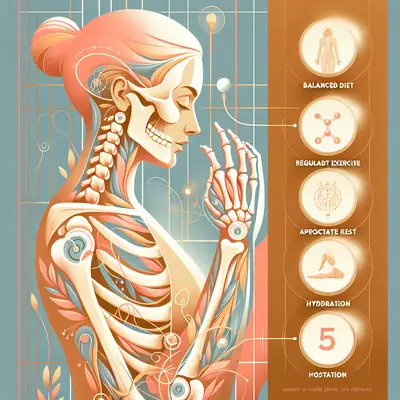
Healthy living is often framed as a vague aspiration—better choices, more movement, less stress. For those who care deeply about joint integrity, it is something much more precise: a curated environment in which your cartilage, ligaments, and connective tissues are quietly protected every day. This is not about chasing athletic extremes or rigid perfection. It is about designing a life where each decision—what you eat, how you move, how you rest—subtly favors joint longevity.
In a world that celebrates intensity, there is something quietly powerful about prioritizing sustainable, graceful movement over spectacle. Healthy living, approached with intention, becomes a long-term strategy: preserving range of motion, delaying degeneration, and safeguarding your ability to move beautifully well into later decades. Below are five exclusive, elevated insights for those who want their lifestyle to be not merely “healthy,” but strategically protective of their joints.
The Micro-Inflammation Lens: Rethinking “Healthy” Food for Joint Preservation
Many people now understand that chronic inflammation is linked to joint damage—but most conversations stop at “eat anti-inflammatory foods.” For someone serious about joint health, that advice is incomplete.
The more refined approach is to view every meal through the lens of micro-inflammation—the small, repeated inflammatory responses that quietly accumulate over years. A plate can be calorically appropriate and even nutrient-dense yet still provoke subtle inflammatory shifts that burden joints over time.
This is where quality and preparation matter:
- Favor monounsaturated and omega-3-rich fats (extra-virgin olive oil, walnuts, chia, flaxseed, cold-water fish) over seed oils high in omega-6 fats that can tilt the immune system toward pro-inflammatory pathways when consumed in excess.
- Elevate your carbohydrate choices: slow-digesting sources like lentils, steel-cut oats, farro, and intact grains blunt blood sugar spikes that can promote low-grade inflammation and cartilage stress.
- Refine your protein strategy: prioritize lean, minimally processed proteins and consider collagen-supportive nutrients—vitamin C–rich produce (citrus, berries, peppers) alongside protein to support collagen synthesis.
- Be intentional with alcohol and ultra-processed foods; they may not cause immediate pain, but frequent use can contribute to the systemic inflammation that accelerates joint wear.
This is not about rigid exclusion, but about making “neutral or anti-inflammatory” your default. The more often your meals calm the system rather than provoke it, the more quietly you protect your joints in the background.
Load Intelligence: Training Your Joints, Not Just Your Muscles
Most fitness advice is framed around muscles—strength, hypertrophy, conditioning. A joint-focused lifestyle looks instead at load intelligence: how force travels through your body with each step, squat, and reach.
Two people can do the same exercise with vastly different effects on their joints. The difference is often in tempo, alignment, and intent:
- Slow the lowering phase. Controlled eccentrics (the “down” portion of a squat or lunge) condition tendons and ligaments to handle force more gracefully, reducing joint irritation from abrupt impacts.
- Prioritize joint alignment over range of motion. Your knee tracking in line with your second toe during a lunge often matters more than how deep you go. Refined form preserves cartilage; ego lifting erodes it.
- Build strength around joint end-ranges rather than only in comfortable mid-range positions. Gentle, loaded mobility (for example, light split squats or Romanian deadlifts with focus on hip hinge mechanics) develops resilience where joints are most vulnerable.
- Alternate “joint-light” and “joint-demanding” days instead of relying only on total-body fatigue as your guide. Your cardiovascular system may recover faster than your cartilage and connective tissue.
A premium, joint-first training philosophy is not softer; it is more discerning. You are not avoiding load—you are curating it so that every session builds joint durability instead of slowly withdrawing from your structural “savings account.”
The Joint-Centric Sleep Standard: Nighttime as Your Primary Recovery Tool
Healthy living advice often reduces sleep to a number: seven to nine hours. For someone concerned with joint longevity, sleep is less a metric and more a recovery ecosystem.
During deep sleep, your body engages in critical tissue repair processes: hormone regulation, collagen maintenance, and modulation of inflammatory responses. Poor or fragmented sleep is consistently associated with higher pain perception and increased inflammatory markers—subtle but meaningful influences on joint comfort and long-term health.
To elevate sleep from “important” to “non-negotiable joint therapy”:
- Design a cooling environment. Lower temperatures (around 60–67°F / 15–19°C) support deeper sleep and may reduce nighttime joint discomfort or swelling.
- Respect circadian rhythm: consistent bed and wake times help regulate cortisol and nighttime melatonin—key players in inflammation and tissue repair.
- Treat pre-sleep habits as part of your joint care routine. Gentle stretching, a short mobility sequence, or light breathwork can reduce muscular tension that pulls on joints and contributes to morning stiffness.
- Be mindful with late-evening heavy meals, alcohol, or screens; each can impair deep sleep stages where much of your nightly repair takes place.
Healthy living framed through joint health recognizes that your most effective “treatment” may be silent, unglamorous, and happening while you are asleep.
Joint-Smart Environments: Curating the Spaces That Shape Your Movement
We often think of movement only in terms of workouts, but most joint stress accumulates in the hours in between—at the desk, in the car, on the sofa. A sophisticated approach to healthy living includes environmental ergonomics: discreetly redesigning your spaces so they invite joint-friendly behavior.
Consider how your day is shaped by default settings:
- At your desk, prioritize neutral joint positions: wrists straight, elbows around 90 degrees, feet grounded, hips slightly above knees. Even small misalignments, repeated daily, compound into neck, shoulder, and lumbar irritation that changes how load travels into your hips and knees.
- Use vertical variety: alternate between sitting and standing, and include brief walk or stretch interruptions. Joints prefer movement over static “perfect” posture.
- In your home, store frequently used items at mid-height to avoid repeated awkward reaching, twisting, or stooping that stresses shoulders, hips, and knees.
- Curate your footwear as you would a wardrobe: favor structurally supportive, well-fitted shoes for everyday wear and keep truly minimal or high-heeled styles for short, intentional occasions.
In an environment designed with joint integrity in mind, healthy choices become automatic. You are not constantly “trying” to protect your joints; the space is doing part of the work for you.
Precision Recovery: The Underestimated Art of Non-Exercise Movement
Healthy living is often reduced to workouts, but the hours outside of formal exercise quietly define how your joints age. Non-exercise activity—short walks, gentle stretching, light chores—is where circulation, lubrication, and tissue health are maintained.
For joint-focused individuals, recovery is not just doing less; it is doing differently:
- Use low-intensity walking as your default reset. Even five to ten minutes after long sitting periods can restore synovial fluid distribution in major joints and reduce stiffness.
- Introduce “friction-free” movement days: lower-impact cycling, water walking, or aquatic exercise that allows joints to move through range without heavy compressive loads.
- Alternate localized recovery strategies—contrast showers, gentle heat for tight muscles, or cold packs for irritated joints—based on how your body feels, not a generic protocol.
- Treat off-days as alignment days. Short sessions focusing on posture drills, gentle hip and thoracic spine mobility, and foot strength work can significantly improve how forces travel through your joints when you return to heavier activity.
This is recovery as a refined practice, not passivity. You are continually sending your joints the message that they are supported, nourished, and given room to restore.
Conclusion
Healthy living, when viewed through the lens of joint health, becomes something more deliberate than “eat well and exercise.” It is a curated system: meals that minimize micro-inflammation, training that respects load intelligence, sleep that functions as nightly joint therapy, environments that silently protect your alignment, and recovery rituals that keep your tissues supple and prepared.
The goal is not just the absence of pain, but the presence of confidence—knowing that your habits are quietly compounding in favor of long-term mobility. In that sense, a joint-focused lifestyle is a form of understated luxury: the ability to move with ease, gracefully and reliably, year after year.
Sources
- National Institute of Arthritis and Musculoskeletal and Skin Diseases (NIAMS) – Handout on Joint Health - Overview of joint structure, function, and factors that influence joint health over time
- Harvard T.H. Chan School of Public Health – The Nutrition Source: Inflammation and Diet - Evidence-based explanation of how specific dietary patterns affect systemic inflammation
- Arthritis Foundation – The Connection Between Sleep and Arthritis - Discussion of how sleep quality influences joint pain and inflammation
- Mayo Clinic – Exercise and Arthritis - Guidance on safe movement, loading, and exercise strategies for people concerned about joint health
- Centers for Disease Control and Prevention (CDC) – Workstation Ergonomics - Practical principles of ergonomics that help reduce joint and musculoskeletal strain in daily environments
Key Takeaway
The most important thing to remember from this article is that this information can change how you think about Healthy Living.