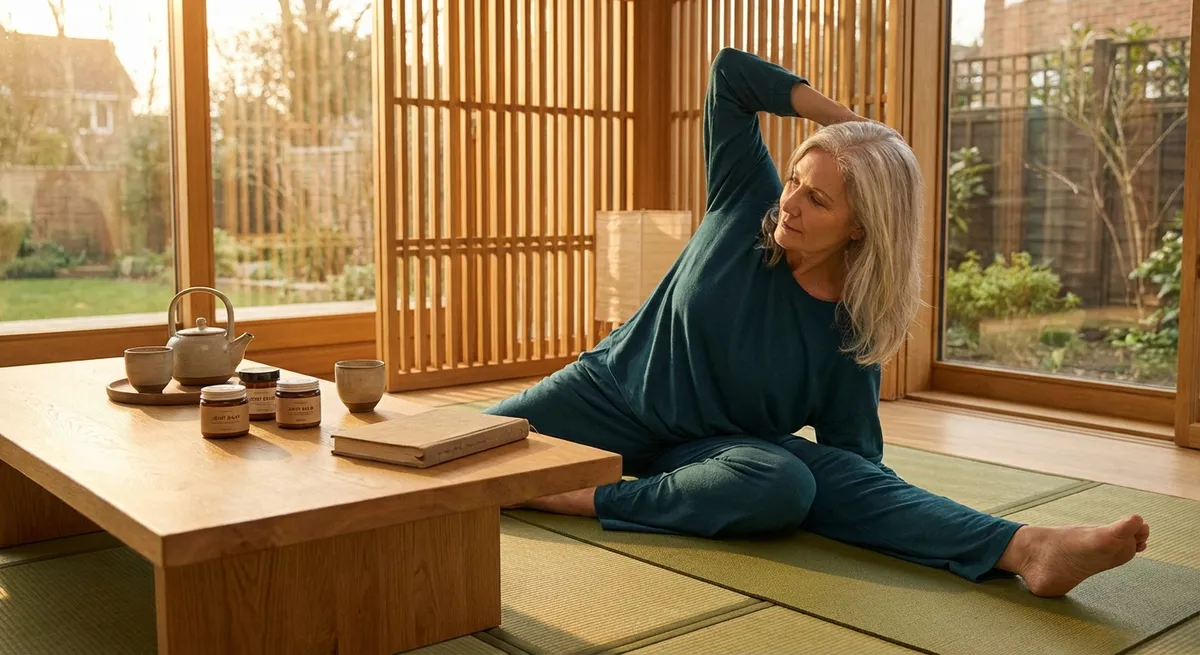
Joint care, at its most refined, is less about dramatic interventions and more about a series of quiet, deliberate choices. The way you stand in a meeting, the chair you choose at home, the shoes you wear to dinner, even how you breathe under stress—each exerts a subtle but cumulative influence on the architecture of your joints. For those who value longevity, poise, and understated wellness, joint health becomes not a crisis response, but a cultivated standard.
Below are five exclusive, often overlooked dimensions of joint care—less obvious than “exercise more” or “take supplements,” yet profoundly influential over time.
Insight 1: Treat Cartilage as a Luxury Fabric, Not a Disposable Material
Cartilage is not easily replaced; it behaves more like fine cashmere than basic cotton. Once significantly worn, it does not regenerate in a meaningful way for most adults. Every repetitive impact, every poorly aligned step, is a tiny abrasion to this high‑value fabric.
High‑quality joint care, therefore, focuses on load precision, not just “staying active.” That means favoring movement patterns that distribute force elegantly through the kinetic chain. Think: a controlled step-down instead of a jarring jump, a smooth hip hinge instead of collapsing into a chair, a well‑aligned lunge rather than a sloppy squat.
This refined approach also informs exercise choice: low‑impact activities (such as swimming, controlled cycling, elliptical work, and well-structured Pilates or yoga) are not “lesser” workouts; they are strategically cartilage‑conserving. Strategic strength training—particularly around the hips, glutes, and core—turns your muscles into the “tailors” that support and protect this luxury fabric, ensuring each joint movement is guided rather than left to collapse.
When you start viewing cartilage as a precious, finite material rather than a replaceable part, everyday decisions—stair choice, bag weight, footwear, and even how quickly you stand up—quietly shift in its favor.
Insight 2: Precision Strength: Training the Muscles That Quietly Protect Your Joints
To the untrained eye, strength training looks like big muscles and heavier weights. To someone serious about joint preservation, it is more about which muscles are working, in what sequence, and under what load.
Healthy joints depend on muscular precision, not just muscular power. Underactive glutes and deep hip stabilizers often leave the knees absorbing more stress than they were designed for. A weak core allows the spine and hips to compensate; tight calves and hamstrings may pull joints out of their optimal alignment with every step you take.
A sophisticated joint program prioritizes:
- Gluteal strength and control (bridges, hip thrusts, side-steps with bands, single-leg variations)
- Hip rotator stability (clamshells, controlled external rotation, single-leg balance work)
- Deep core endurance (planks, dead bug variations, bird dog, Pallof presses)
- Scapular and shoulder girdle strength (rows, Y/T/W patterns, external rotation work)
Load should be progressed gradually with an emphasis on perfect form and joint alignment rather than ego‑driven weight increases. The goal is to arrive at movements that feel supported and precise, not just difficult. When done correctly, your joints feel quieter afterward—not irritated, not stiff, but subtly more “held” and secure.
Over time, this kind of precision strength work becomes an invisible exoskeleton: you look the same on the outside, but your joints are experiencing far less friction with every daily task.
Insight 3: Micro‑Posture: The Millimeter Adjustments That Change Joint Futures
Posture is too often reduced to “stand up straight,” which is both simplistic and unrealistic in a modern, screen‑centric world. A more refined concept is micro‑posture: the small, repeatable patterns you hold for hours—often unconsciously—that influence joint loading far more than a single gym session.
Repeated head‑forward posture subtly compresses cervical discs and strains upper back joints. Perching at the front of a chair transfers more load to the knees and hips. Crossed legs, particularly the same configuration day after day, can alter pelvic and hip alignment over time.
Elegant joint care is less about rigidly “perfect” posture and more about postural variability and small upgrades that are sustainable:
- Adjust screen height so your gaze is level, reducing neck and upper back strain.
- Use the backrest fully, letting it share the load so your spine and hips are not constantly bracing.
- Arrange your feet flat on the floor, hips slightly above knees, to ease knee and hip compression.
- Shift positions every 20–30 minutes: stand, lean, adjust foot placement, or briefly walk.
These changes are subtle, but their cumulative effect over years is substantial. Your joints experience less continuous, unrelieved pressure, which may reduce the micro-inflammation that quietly erodes comfort and function. The long game of joint care is rarely dramatic; it is the art of removing friction, millimeter by millimeter.
Insight 4: Inflammation as a Lifestyle Metric, Not Just a Lab Value
Inflammation is often discussed abstractly, but for joints, it is a direct, physical experience: swelling, warmth, stiffness, and that heavy, reluctant first movement in the morning. While medications have a role, a high-end approach to joint preservation treats systemic inflammation as a daily management metric, not just something your lab report reveals.
Key levers are surprisingly accessible yet powerful:
- Dietary pattern: Favor an anti‑inflammatory pattern rich in colorful vegetables, leafy greens, berries, olive oil, nuts, seeds, and fatty fish (such as salmon, mackerel, sardines). This is less about trendy restriction and more about consistently feeding your joints what they need to modulate inflammation.
- Glycemic control: Highly refined carbohydrates and frequent blood sugar spikes are linked to higher systemic inflammation and can accelerate tissue damage, including in the joints. Choosing intact grains, legumes, and balanced meals becomes an indirect form of joint stewardship.
- Sleep quality: Sleep is when tissues repair and inflammatory processes recalibrate. Chronic sleep debt or fragmented sleep is increasingly associated with worsened pain perception and inflammatory profiles.
- Stress regulation: Repeated surges of stress hormones subtly intensify pain sensitivity and inflammatory signaling. Simple, consistent practices—slow breathing, brief meditation, restorative stretching—are not indulgences; they are physiologic joint-care tools.
Thinking of your joints as barometers of your inflammatory lifestyle changes the framing. Morning stiffness, a slight increase in joint warmth after certain meals, or more reactive pain after sleepless nights become meaningful data—not annoyances to push through, but early signals guiding adjustment.
Insight 5: Recovery as a Ritual: Curating the Days Between Demands
What happens between your workouts, long walks, or demanding days is as important as the activity itself. Joints thrive on a cycle of respectful loading followed by deliberate recovery; ignoring the second half of that equation is where many otherwise healthy routines become subtly damaging.
Elevated joint care introduces structured, almost ceremonial recovery practices:
- Deliberate “deload” periods: Intentionally lighter training weeks give cartilage, tendons, and ligaments time to adapt rather than accumulate irritation.
- Thermal therapies: Thoughtful use of heat (for stiffness) and cold (for acute flare‑ups) can modulate joint comfort without over-reliance on medication—provided they are used in line with medical guidance.
- Gentle mobility sessions: Short, focused sessions of joint circles, controlled articular rotations, and light stretching keep synovial fluid moving and prevent the sense of “rust” that follows sedentary days.
- Footwear and ground strategy: Rotating between supportive shoes, cushioned surfaces, and, where appropriate, short periods of barefoot time on forgiving terrain can nourish foot and ankle mechanics that influence every joint above.
This is not asceticism; it is curation. Your joints are not punished by activity but prepared for it, and then restored afterward. Over time, you experience less boom‑and‑bust pain, and more of a stable, predictable baseline—one of the hallmarks of genuinely resilient joints.
Conclusion
Sophisticated joint care is not defined by a single supplement, a fashionable device, or an occasional burst of motivation. It is the quiet, consistent orchestration of load, alignment, strength, inflammation, and recovery—each tending to cartilage, ligaments, and synovial spaces with the respect usually reserved for rare materials.
When approached with this level of intentionality, joint health ceases to be a story of restriction and pain avoidance. Instead, it becomes a foundation for the kind of life where movement feels composed, travel is approached with confidence, and aging does not equate to surrendering the activities that define your sense of self.
Cultivated joints are not an accident. They are the outcome of hundreds of small, elegant decisions, repeated over years, in favor of lasting ease.
Sources
- [National Institute of Arthritis and Musculoskeletal and Skin Diseases (NIAMS) – Handout on Osteoarthritis](https://www.niams.nih.gov/health-topics/osteoarthritis) - Overview of how cartilage wears, risk factors, and the role of joint load and activity
- [Arthritis Foundation – Exercise and Arthritis](https://www.arthritis.org/health-wellness/healthy-living/physical-activity) - Evidence-based guidance on low-impact exercise, strength training, and joint-friendly movement
- [Harvard T.H. Chan School of Public Health – Anti-inflammatory Diet](https://www.hsph.harvard.edu/nutritionsource/anti-inflammatory-diet) - Explains the relationship between dietary patterns, systemic inflammation, and chronic disease
- [Mayo Clinic – Rheumatoid Arthritis and Inflammation](https://www.mayoclinic.org/diseases-conditions/rheumatoid-arthritis/in-depth/rheumatoid-arthritis/art-20047920) - Discusses inflammatory mechanisms and lifestyle considerations for joint health
- [Cleveland Clinic – Posture and Musculoskeletal Health](https://health.clevelandclinic.org/how-to-improve-your-posture) - Details how everyday posture and positioning affect joints, muscles, and long-term comfort
Key Takeaway
The most important thing to remember from this article is that this information can change how you think about Joint Care.