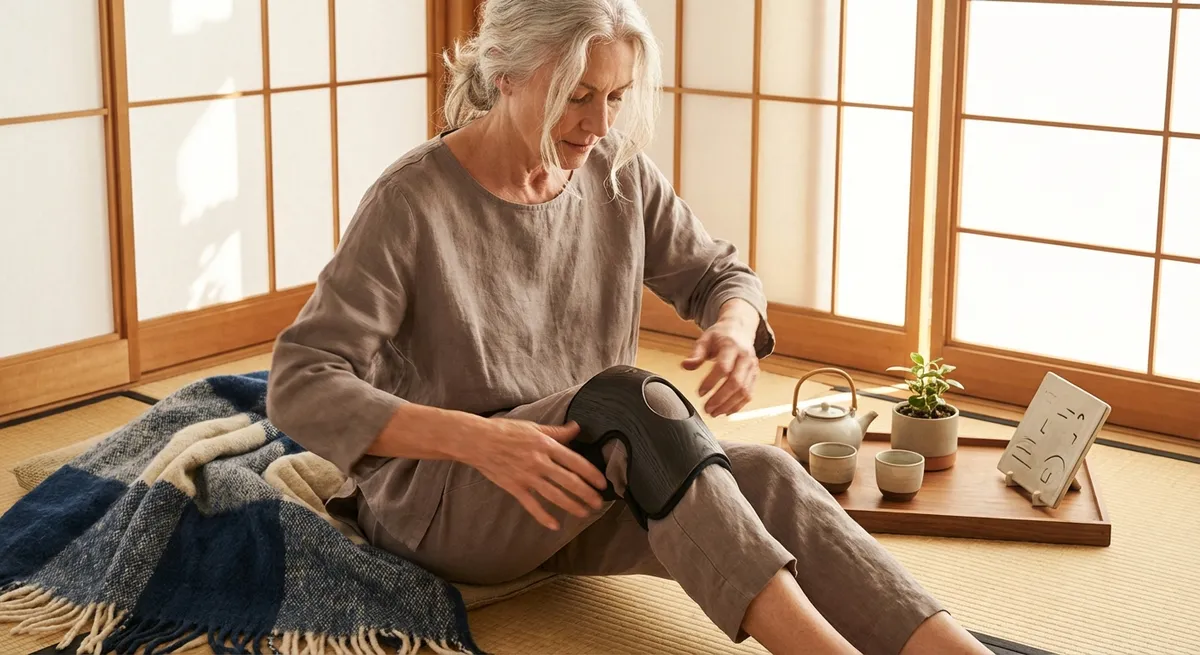
Joint care at its highest level feels less like “management” and more like curation—a deliberate, intelligent shaping of the conditions in which your joints live every day. Beyond the predictable advice about stretching and supplements lies a more nuanced world: subtle environmental choices, timing strategies, and micro-habits that quietly elevate how your joints feel and perform. This is joint health for those who value refinement over quick fixes and are willing to engage with the details.
Below are five exclusive, under-discussed insights designed for those who expect more from their bodies—and from their health guidance.
Insight 1: Temperature as a Precision Tool, Not a Blunt Instrument
Most people treat heat and cold as generic remedies: ice when it hurts, heat when it’s stiff. A more sophisticated approach recognizes temperature as a precision tool, tailored to time of day, type of discomfort, and planned activity.
Cold is best viewed as a short-term, targeted intervention for acute flare-ups or post-activity irritation—especially where swelling, sharp pain, or warmth are present. Ten to fifteen minutes of localized cooling can help quiet inflammatory signals and reduce fluid accumulation. But beyond that window, prolonged icing may begin to blunt circulation and slow the joint’s subtle healing work.
Heat, in contrast, shines when stiffness and restriction overshadow sharp pain. Gentle, consistent warmth—such as a warm shower in the morning or a low-level heat wrap before movement—primes the synovial fluid, eases surrounding muscles, and can make the first steps of the day far more graceful. A warm environment before exercise can also subtly expand your safe range of motion, reducing reliance on aggressive stretching.
The refinement lies in sequencing: light heat before motion, strategic cooling after unusual or intense load, and a preference for mild, controlled temperature shifts over extremes. Think of temperature not as a remedy of last resort, but as a daily tuning mechanism for your joints’ comfort and readiness.
Insight 2: Micro-Loading: The Art of “Teaching” Your Joints to Be Stronger
Most conversations about joint health focus on avoiding load. In reality, joints thrive on the right load—applied gradually, consistently, and in digestible amounts. This is the essence of micro-loading: intentionally dosing your joints with small, controlled challenges to nudge them toward resilience instead of fragility.
Cartilage, ligaments, and tendons respond to regular, moderate mechanical stress by subtly reinforcing their structure. Walking on varied but reasonable terrain, gentle resistance training, or controlled step-ups can help joints “understand” the loads they’re meant to manage. The mistake is either overloading sporadically (weekend warrior behavior) or underloading chronically (excessive rest, over-protection, and fear of movement).
A refined micro-loading strategy might look like this: a modest number of high-quality repetitions with impeccable form, spread throughout the day instead of crammed into a single workout. For knees, this could be six to eight carefully executed sit-to-stands every few hours; for hips, slow, controlled side steps with a light band; for shoulders, low-weight, high-control rotations.
The principle is elegant: your joints should never feel surprised. When load is introduced thoughtfully and repeatedly rather than dramatically and occasionally, the tissues gain quiet confidence—and pain often retreats as capacity improves.
Insight 3: The Underrated Geometry of Joint-Friendly Spaces
Most joint advice focuses on the body and ignores the architecture surrounding it. Yet the angles of your environment—the height of your chair, the depth of your sofa, the slope of your staircase—are constantly negotiating with your joints, often without your awareness.
For knees and hips, the angle at which you begin and end a movement is critical. Deep, low seating traps joints in a compressed, mechanically awkward range, forcing them to work harder just to stand. A slightly higher chair, a firm cushion that prevents sinking, or an armrest that offers a subtle push can dramatically reduce strain while maintaining independence and strength.
Similarly, optimizing frequently used spaces—your kitchen, workspace, and bathroom—can spare your joints hundreds of unnecessary micro-strains every week. Positioning frequently used items between mid-thigh and shoulder height minimizes repetitive deep bending or reaching. Thoughtfully placed grab bars or railings can convert a precarious motion into a controlled, effortless transition.
This is joint ergonomics as quiet luxury: an environment that cooperates with your body’s mechanics instead of fighting them. The goal is not to eliminate effort, but to reserve effort for intentional strengthening, not wasteful friction.
Insight 4: Synovial Rhythm: Timing Movement to Your Joint’s Natural Day
Joints, like the rest of the body, operate on rhythms. Synovial fluid, which lubricates and nourishes cartilage, redistributes itself with movement and rest. Understanding this rhythm allows you to time your activities to when your joints are most prepared.
Many people notice increased stiffness in the morning or after prolonged sitting—this is not merely “aging,” but a reflection of fluid and tissue behavior after immobility. The solution is not to force sudden, intense activity, but to respect a gentle “warm-up window” of five to ten minutes where circulation, tissue temperature, and joint lubrication normalize.
Instead of launching straight into demanding tasks, consider a brief morning ritual of flowing, low-impact movement: ankle circles before you stand, slow hip rotations while brushing your teeth, a few deliberate, supported squats to remind your knees of their range. Midday, especially if you sit for long stretches, brief movement breaks act as a reset, redistributing synovial fluid, easing capsule tightness, and preventing the kind of stiffness that accumulates quietly.
For more demanding activities—long walks, strength training, gardening—position them at times when your body feels naturally more supple, often late morning or early afternoon. Aligning your schedule with your joints’ “awake” periods is a subtle but powerful upgrade from the one-size-fits-all advice to “just move more.”
Insight 5: The Quiet Inflammation You Don’t Feel—But Your Joints Do
When people hear “inflammation,” they picture swelling, redness, and obvious pain. Yet for joint longevity, the more pressing threat is low-grade, systemic inflammation—subtle, often invisible, but constantly whispering into the tissues that line your joints.
Diet, sleep quality, chronic stress, and blood sugar regulation all influence this baseline inflammatory tone. A body under continuous metabolic and emotional strain will often express its distress through the joints long before lab tests show dramatic changes. The cartilage and synovium are particularly sensitive to these biochemical “background conditions.”
Elevated refined sugars, ultra-processed foods, and frequent blood sugar spikes can contribute to an inflammatory environment that erodes joint comfort over time. Conversely, a pattern of eating that emphasizes colorful vegetables, omega-3–rich fats (such as fatty fish, walnuts, and flax), olive oil, and minimally processed foods supports a quieter inflammatory profile. Adequate sleep and genuine stress reduction (not just distraction) further lower the internal “noise” that joints have to manage.
This is where joint care transcends local remedies and becomes systemic stewardship. Your knees, hips, and spine are not isolated structures to be soothed from the outside; they are participants in the whole-body conversation of hormones, cytokines, and metabolism. When that conversation becomes calmer and more coherent, your joints often become more forgiving—even without dramatic external interventions.
Conclusion
True joint care has less to do with chasing pain and more to do with crafting conditions: thoughtful temperature use, intelligent micro-loading, supportive spatial design, respect for daily rhythms, and a quieter inflammatory background. Each of these insights operates on a subtle level, but their combined effect can be profound—replacing the constant negotiation with your joints with something closer to partnership.
For those who value a refined, intentional approach to health, this is the invitation: to treat your joints not as problems to solve, but as assets to cultivate—quietly, consistently, and with a level of attention that matches the life you intend to live in them.
Sources
- [Arthritis Foundation – Heat and Cold Therapy for Arthritis Pain](https://www.arthritis.org/health-wellness/healthy-living/managing-pain/pain-relief-solutions/heat-and-cold-therapy) – Overview of when and how to use heat and cold for joint pain and stiffness.
- [Harvard Health Publishing – Exercise for Arthritis](https://www.health.harvard.edu/pain/exercising_with_arthritis) – Discusses how appropriate loading and exercise can protect joints and ease arthritis symptoms.
- [National Institute of Arthritis and Musculoskeletal and Skin Diseases (NIAMS) – Handout on Joint Health](https://www.niams.nih.gov/health-topics/joint-health) – Explains how joints work and factors that influence joint longevity.
- [Mayo Clinic – Inflammation: A Unifying Theory of Disease](https://www.mayoclinic.org/diseases-conditions/chronic-inflammation/in-depth/inflammation/art-20045647) – Describes chronic, low-grade inflammation and its role in long-term health, including musculoskeletal impact.
- [Harvard T.H. Chan School of Public Health – The Anti-Inflammatory Diet](https://www.hsph.harvard.edu/nutritionsource/anti-inflammatory-diet/) – Details how dietary patterns influence systemic inflammation, relevant to joint comfort and disease risk.
Key Takeaway
The most important thing to remember from this article is that this information can change how you think about Joint Care.