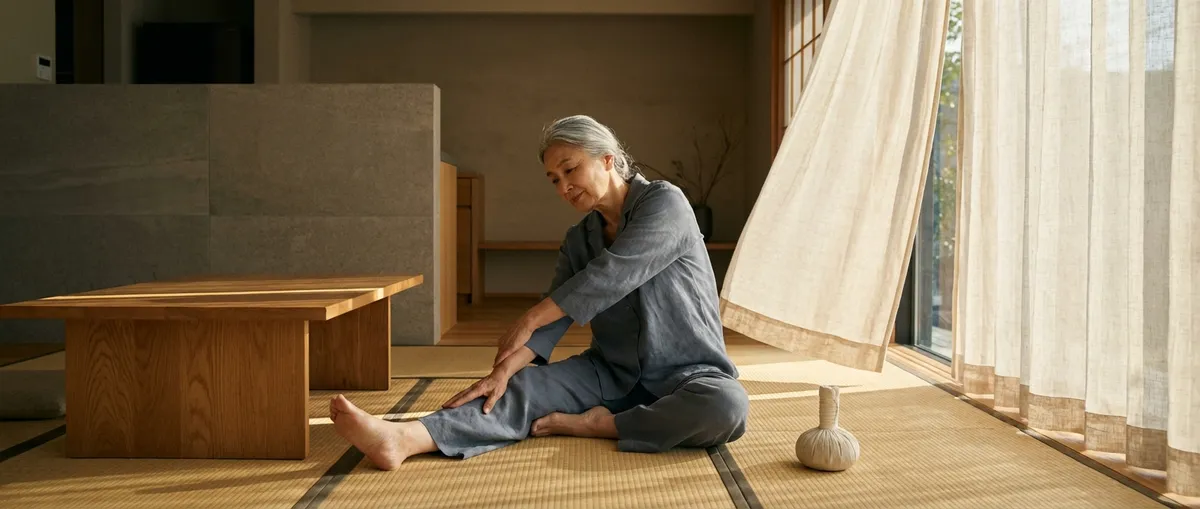
The most discerning approach to joint care is not loud or extreme. It is quiet, intentional, and deeply strategic. Instead of chasing quick fixes or dramatic transformations, it treats the joints as long-term assets—worthy of meticulous care, intelligent movement, and thoughtful rest. In a world of high-intensity everything, an elevated joint-care routine is about precision, not punishment.
Below are five exclusive, underappreciated insights for those who view joint health as a lifelong investment, not an afterthought.
1. Micro-Loading: Training Your Joints to Tolerate More, with Less Drama
Most people think only in terms of “exercise” or “no exercise.” Joints respond better to nuance: micro-loading—small, controlled, repeatable doses of load across the day—is often more joint-friendly than a single heroic workout.
Instead of compressing all movement into one demanding session, imagine distributing loading in elegant fragments: a set of slow chair stands between meetings, a 10-minute walk after lunch, a brief mobility sequence before bed. This keeps cartilage nourished through repeated cycles of compression and decompression, without overwhelming already sensitized structures.
Micro-loading also helps refine your movement quality under low fatigue, training coordination and joint alignment when your body is not exhausted. Over time, this builds capacity: your joints become more tolerant to both daily life and formal exercise. For many with early osteoarthritis or joint sensitivity, the pivot from “big workouts” to “micro-loading” can quietly transform comfort, stamina, and confidence.
2. The Cartilage Clock: Timing Movement and Stillness with Precision
Cartilage has no direct blood supply; it relies on movement to receive nutrients via joint fluid. Ironically, both constant stillness and constant intense activity can be unkind to your joints. Elegant joint care respects the “cartilage clock”—the way your tissues respond differently at different times of day and after periods of rest.
After prolonged sitting, synovial fluid distribution is uneven and tissues may feel “sticky.” Launching straight into explosive movements in this state is like revving a cold engine. A gentler ramp—the first 3–5 minutes of slow, deliberate motion—can dramatically reduce stiffness and perceived pain.
Similarly, late-night heavy training, especially high-impact work, can clash with the body’s natural repair rhythms, which intensify during sleep. Many people with joint sensitivity find they do better when they schedule their more demanding activity earlier in the day, leaving evenings for lower-intensity mobility, stretching, or restorative walking. Precision in timing may not seem glamorous, but for the joints, it feels luxurious.
3. Joint Literacy: Reading Sensations with a More Sophisticated Vocabulary
Most people categorize sensations as “fine” or “pain.” This blunt vocabulary leads to confusion, fear, or avoidance. A more refined joint-care practice involves cultivating “joint literacy”—the ability to distinguish between different types of signals and respond appropriately.
There is the mild, diffuse ache of deconditioned tissue waking up; the short-lived “start-up” stiffness that eases with movement; the sharper, localized pain that escalates with each repetition; the delayed soreness that peaks 24–48 hours later. These are not interchangeable, and they should not all elicit the same reaction.
High-level joint literacy means you can say, “This is safe discomfort from underused muscles,” versus, “This feels sharp, mechanical, and escalating—I should modify.” That distinction allows you to keep moving, building strength and resilience, without swinging between overprotection and overexertion. It also makes clinical conversations more productive: you can describe your experience with precision, leading to more tailored care.
4. Precision Strength: Training Surrounding Muscles as Joint Bodyguards
Luxury in joint care is not about elaborate gadgets; it is about precision in how you strengthen the muscles that act as your joints’ bodyguards. Muscles that are strong, well-coordinated, and responsive decrease the load borne by cartilage, ligaments, and tendons.
For example, in knee health, targeted quadriceps and hip strengthening—such as controlled step-downs, sit-to-stands, and hip abduction work—has been shown to reduce pain and improve function in people with osteoarthritis. For the spine, cultivating powerful yet supple gluteal and deep core muscles can dramatically reduce stress on lumbar joints.
The key is intelligent progression: beginning with slow, stable movements, then gradually adding load, range of motion, or complexity. Rather than chasing the heaviest weight or the deepest stretch, you prioritize impeccable control and alignment. Every rep is a quiet rehearsal of joint protection. Over months and years, these bodyguard muscles earn their status—and your joints reap the reward.
5. Recovery as a Discipline: Ritualizing Sleep, Heat, and Strategic Stillness
Those who age most gracefully, joint-wise, often distinguish themselves not by how hard they train, but by how deliberately they recover. Recovery is not passive; it is a discipline with structure and intention.
Consistent, high-quality sleep is arguably the most underrated joint therapy available. During deep sleep, tissues repair, inflammation is regulated, and pain perception can recalibrate. Pairing this with simple, targeted rituals—such as heat before movement to ease stiffness, or brief cold exposure after heavier activity to help manage swelling—adds sophistication to your routine without overcomplication.
Strategic stillness also matters. This is not collapsing into a chair for hours, but choosing positions that reduce joint stress, using supportive pillows, ergonomic seating, and gentle positional changes. Think of recovery as the “styling” that completes your joint-care wardrobe: subtle, considered, and quietly transformative.
Conclusion
Refined joint care is less about dramatic interventions and more about cultivated consistency. Micro-loading instead of punishing workouts, respecting the cartilage clock, developing joint literacy, strengthening with surgical precision, and elevating recovery from afterthought to ritual—these are the quiet upgrades that define a truly premium approach to joint health.
When movement becomes intentional, rest becomes strategic, and sensations become readable data rather than threats, your joints stop feeling like fragile liabilities and start behaving like well-maintained assets. The result is not just less pain, but a more unhurried, pain-smart life—one where your joints are not the limiting factor in how fully you choose to live.
Sources
- Osteoarthritis: In-Depth Overview – Johns Hopkins Medicine – Explains how cartilage is nourished, the role of movement, and key principles of osteoarthritis management
- Knee Osteoarthritis: Exercise and Physical Activity – Arthritis Foundation – Details the benefits of strengthening and low-impact activity for joint health
- Physical Activity Guidelines for Americans – U.S. Department of Health & Human Services – Provides evidence-based recommendations on activity dosing and distribution across the day
- Exercise Therapy for Knee Osteoarthritis – Cochrane Review – Summarizes research on the impact of exercise and strength training on joint pain and function
- Sleep and Pain – National Institutes of Health (NIH) – Reviews the relationship between sleep quality, pain perception, and inflammation
Key Takeaway
The most important thing to remember from this article is that this information can change how you think about Joint Care.