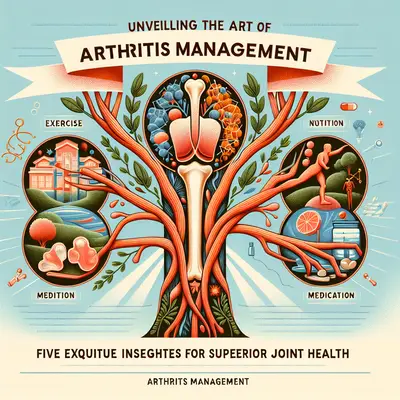
Arthritis rarely arrives with fanfare; it arrives in whispers—an ache on the stairs, a stiffness after long dinners, a hesitation before you stand. For those who care about living well, not merely living longer, arthritis management is less about fighting disease and more about curating a lifetime of composed, confident movement. This is arthritis care as a refined discipline: informed, intentional, and quietly effective.
Below are five exclusive, often-overlooked insights for those who expect more from their joint health—more nuance, more precision, and more longevity in the pursuits they love.
Reframing Arthritis as a Long-Term Design Project
Most advice treats arthritis as a series of flare-ups to extinguish. A more elevated view is to treat it as a long-term design project: you are architecting how your joints will feel five, ten, and twenty years from now.
This means moving beyond “pain relief” as the sole metric. Instead, you begin to evaluate your choices by their cumulative effect on cartilage load, synovial fluid health, muscle balance, and inflammation over decades. You notice not only whether you can get through today’s meeting or workout, but whether the way you did it preserved, strained, or enhanced your joints’ future capacity.
This design mindset changes daily decisions. You consider whether your preferred exercise style is joint-preserving or joint-exhausting. You weigh your footwear like you would a watch or a car—an investment in craft and longevity rather than a disposable accessory. You ask your physician not just, “Will this help my pain?” but, “What does this do to my long-term joint structure?” Arthritis becomes less of an adversary and more of a design constraint—one that, with intelligence, can still yield a remarkably elegant life.
Precision Movement: Training the Micro-Details Others Ignore
Standard exercise advice for arthritis is often broad: “Stay active,” “Do low-impact exercise,” “Strengthen your muscles.” Those directives are directionally correct but lack the precision that discerning joints require. A more sophisticated approach honors the micro-details of movement—the small alignments that determine whether a motion is subtly healing or quietly harmful.
This begins with a highly intentional foundation: how your foot meets the floor, how your knee tracks over your toes, how your hips stabilize during simple tasks like rising from a chair. Micro-adjustments—such as softening a hyperextended knee, aligning the big toe, or lengthening through the crown of your head during a squat—can significantly reduce joint stress.
Consider working with a physical therapist, Pilates instructor, or strength coach who has documented experience with arthritis and is comfortable with slow, exacting work. Video analysis, mirrors, and mindful repetition can help you refine your “movement signature.” Over time, you are not merely avoiding pain; you are practicing a more refined, joint-respecting way of inhabiting your body, step by deliberate step.
Curating an Anti-Inflammatory Lifestyle, Not Just an Anti-Inflammatory Diet
The conversation around arthritis and inflammation is often limited to food: turmeric, omega-3s, and “anti-inflammatory diets.” Nutrition is crucial, but a truly premium approach expands that lens to an entire anti-inflammatory lifestyle—one in which your schedule, sleep, stress, and environment are all curated in service of calmer joints.
Chronic low-grade inflammation is influenced by more than what is on your plate. Sleep deprivation, chronic stress, inconsistent routines, and even indoor air quality can all subtly fuel inflammatory pathways. Imagine designing your life so that, for at least several hours of each day, your body is in a genuinely restorative state—deep sleep, relaxed breathing, gentle movement, or focused stillness rather than constant tension.
This may look like protecting a non-negotiable sleep window, treating wind-down time as seriously as an important meeting, and favoring slow, deliberate morning routines over frantic starts. It might include a curated approach to alcohol and ultra-processed foods—not moralized, but consciously moderated for the sake of joint clarity. The question becomes: “Is this choice quieting inflammation or amplifying it?” Over time, small, consistent answers in the right direction have an outsized effect on how your joints feel.
Medication as a Crafted Tool, Not a Last Resort
There is a quiet stigma around arthritis medications: many people delay them out of fear, pride, or a desire to be “natural.” A refined approach to joint health treats medication not as a failure but as a crafted tool in a broader strategy—a way to decrease inflammation, protect joint structure, and preserve function when used wisely and early enough.
In conditions like rheumatoid arthritis or psoriatic arthritis, timely use of disease-modifying antirheumatic drugs (DMARDs) or biologics can prevent irreversible damage. The goal is not simply symptom relief, but structural preservation. Even in osteoarthritis, appropriate use of NSAIDs, topical treatments, or injections—under medical guidance—can create the pain relief necessary to engage fully in the therapeutic movement and strength work that truly changes your trajectory.
A sophisticated plan might include periodic reviews with a rheumatologist to reassess disease activity, adjust medications, and revisit risk–benefit conversations as your life evolves. Rather than passively “taking pills,” you are actively shaping a medication strategy that fits your values: minimal yet effective, preventive rather than reactive, and in harmony with your other practices rather than in competition with them.
The Personal Environment Audit: Editing Your World for Joint Ease
Most arthritis guidance focuses on what you can do with your body, not what you can change in the world around you. Yet one of the most elegant, often underused strategies is the personal environment audit: systematically editing your physical surroundings to reduce joint strain and friction in daily life without sacrificing aesthetics.
This isn’t about clinical-looking grab bars or bulky orthotics—unless they are genuinely required. It’s about clever, discreet upgrades: handles that are easier on arthritic fingers but still beautifully designed; door levers instead of knobs; kitchen tools with ergonomic grips that feel as considered as the rest of your home; step stools, high-quality desk chairs, or thoughtfully placed seating that make movement transitions smoother and less taxing.
In your wardrobe, this may look like favoring refined sneakers or flats with genuine support over narrow, rigid shoes that compress the forefoot and challenge the knees. For travel, it might mean wheeled luggage that glides rather than jars your wrists, or seat selections that allow you to stretch and reposition your joints on longer journeys. The thread is intention: every environmental choice is an opportunity to lower the daily mechanical burden on your joints in a way that feels seamless, not medicalized.
Conclusion
Arthritis management, at its most sophisticated, is not a list of restrictions—it is a long-term craft. By treating your joints as assets to be preserved, not simply problems to be solved, you create a life in which movement remains a quiet luxury rather than a constant negotiation.
Through precise movement, an anti-inflammatory lifestyle, thoughtfully used medications, and a curated environment, you are not simply coping with arthritis. You are designing a future in which your joints remain capable companions to the life you intend to live: considered, expressive, and remarkably resilient.
Sources
- Centers for Disease Control and Prevention – Arthritis Basics - Overview of arthritis types, risk factors, and evidence-based management strategies
- Arthritis Foundation – Disease-Modifying Antirheumatic Drugs (DMARDs) - Detailed information on DMARDs and their role in slowing inflammatory arthritis progression
- National Institute of Arthritis and Musculoskeletal and Skin Diseases (NIAMS) – Handout on Arthritis and Lifestyle - Discusses the impact of exercise, diet, and daily habits on arthritis management
- Mayo Clinic – Osteoarthritis: Diagnosis and Treatment - Evidence-based overview of pharmacologic and non-pharmacologic treatment options for osteoarthritis
- Harvard Health Publishing – Foods that fight inflammation - Explores the relationship between diet, chronic inflammation, and conditions like arthritis
Key Takeaway
The most important thing to remember from this article is that this information can change how you think about Arthritis Management.