The latest viral round‑up of “20 toys under $20 that look way more expensive than they are” isn’t just a gift guide—it’s a quiet cultural signal. Parents everywhere are rediscovering the power of simple, movement‑driven play over screen time and hyper‑tech gadgets. While the headline is focused on bargains and aesthetics, there’s a deeper story here for anyone who cares about their joints: how we move—and invite others to move—shapes joint health for decades.
On the surface, these toys are about delight and clever design. Beneath that, they’re about crawling, climbing, kneeling, reaching, rolling, tossing, balancing—the very micro‑movements that keep cartilage nourished and joint capsules awake. If you live with arthritis, worry about future mobility, or simply want to age with elegance, there are valuable lessons hiding in today’s “luxury for less” toy craze.
Below are five refined, often overlooked insights for joint‑conscious adults, inspired by this timely shift back to physically engaging play.
1. Movement, Not Muscle: Why Joints Prefer “Playful” Loads
The popularity of affordable, movement‑rich toys—balance boards, mini trampolines, soft obstacle sets—highlights a truth your joints quietly prefer: they respond far better to varied, playful loading than to sporadic, punishing workouts.
Joints are nourished not by blood vessels, but by the gentle compression and decompression that occurs when we move. Think of it as a slow, luxurious “press and release” that circulates nutrients through cartilage. That’s exactly what happens when a child squats to pick up blocks, crawls through a tunnel, or rocks on a wobble toy—small, multi‑directional forces instead of a single, maximal effort. For joint‑smart adults, the parallel is clear: weaving in frequent, low‑to‑moderate “play movements” (floor work, gentle lunges while tidying, a few calf raises while brewing coffee) can be more protective than one heroic weekly workout. Your routine does not need to look athletic to be profoundly therapeutic; it needs to look varied, curious, and repeatable.
2. The Quiet Luxury of the Floor: Reclaiming Ground‑Level Mobility
Many of the toys trending today live on the floor: play mats, foam climbers, tunnels. Children naturally drop to their knees, sit cross‑legged, crawl, and roll. Adults, by contrast, often avoid the floor entirely for years—then feel abruptly “old” the day getting up becomes an ordeal.
From a joint‑health perspective, the floor is not childish; it is elite training. Moving to and from the ground asks your hips, knees, ankles, wrists, and spine to collaborate through their full, functional ranges. Research on fall resilience and healthy aging consistently highlights this ground‑to‑standing capacity as a quiet predictor of independence. You do not need to imitate playground acrobatics to benefit. Simply:
- Sit on a firm mat or rug for a few minutes daily instead of always on the sofa.
- Practice one elegant, controlled way to get down and up (using a chair or wall for support if needed).
- Spend 60–90 seconds in a supported kneel or half‑kneel while you stretch or read.
Consider this your “adult play mat”—a discreet, high‑impact ritual that keeps hip and knee joints conversant with the positions they were designed to explore.
3. Micro‑Play as Joint Insurance: The Case for Two‑Minute Movements
A striking detail in the “toys under $20” trend is their immediacy: these are objects you can pick up and enjoy in seconds, without instructions, apps, or charging cables. That same effortless accessibility is exactly what most joint‑care routines lack—and why they so often fail.
Joints thrive on frequency more than intensity. Short, repeatable “micro‑play” breaks are biologically powerful:
- Two minutes of gentle marching in place while the kettle boils
- A slow set of heel raises while you stand at the sink
- A dozen smooth shoulder rolls between meetings
- A structured “movement cue” each time you finish an email or phone call
These tiny doses of movement act like premium maintenance for your synovial fluid and cartilage, preventing the “stiffness debt” that accumulates after long hours of sitting or static standing. Think of them as the adult equivalent of tossing a ball across the room: simple, almost trivial, yet profoundly joint‑protective when repeated throughout the day.
4. Design Matters: How Beautiful Objects Invite Better Movement
The article’s fascination with toys that “look more expensive than they are” speaks to something deeper than bargain‑hunting. It speaks to design psychology: beautiful objects invite interaction. A tastefully stained wooden balance board or sculptural wobble toy is played with more often than a clunky plastic version simply because it looks and feels good in the room.
Apply that insight to your own joint‑health environment. If your resistance bands are tangled in a drawer or your foam roller lives in a closet, your joints are at the mercy of your willpower. Instead, think like a designer:
- Choose one or two mobility tools that are aesthetically pleasing enough to leave out—a weighted ball that resembles a decorative object, a sleek yoga block, a refined wooden foot roller.
- Store them in “visual traffic”: beside your reading chair, near your desk, beside the TV remote.
- Curate your space so that the path of least resistance includes a gentle invitation to move.
When your tools feel premium and look intentional, using them becomes an elevated ritual rather than a chore. That shift—pleasure over obligation—is often the missing ingredient in sustained joint care.
5. Shared Play, Shared Protection: How Joint‑Smart Habits Spread Quietly
One reason the toy round‑up is so shareable is that it ties joy to generosity: people love discovering something small that can delight someone they care about. In joint health, this social loop is often overlooked. Yet those who maintain mobility longest frequently share one trait: they belong to a culture—family, friends, workplace—that normalizes movement.
If you’re joint‑conscious, you can subtly shape that culture around you:
- Suggest a short “movement minute” with your team during long virtual meetings.
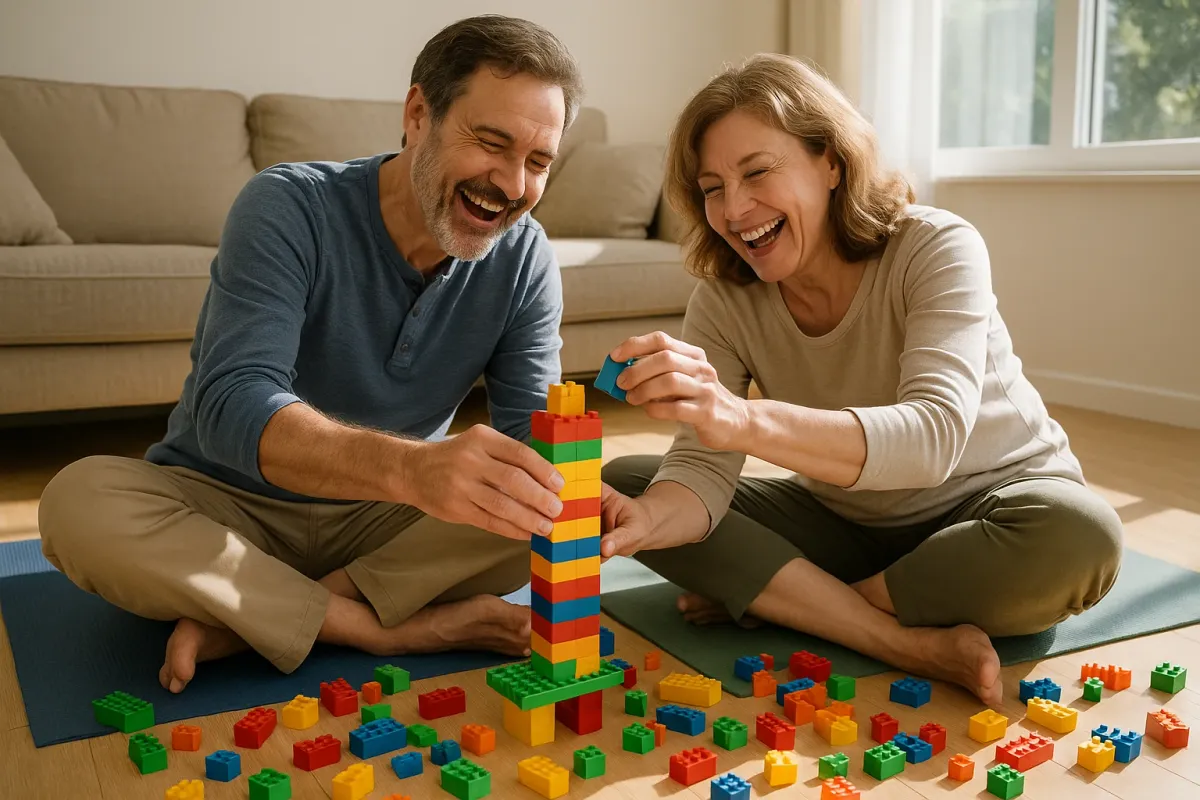
- When spending time with children, join them on the floor or in gentle play rather than supervising from a chair.
- Offer gifts that encourage soft, joint‑friendly activity—stretch straps, beautifully designed massage balls, or yes, even a chic‑looking wobble board.
Play, in this context, is no longer frivolous. It becomes a quiet health intervention you’re extending to your circle. The more people around you move in small, frequent, enjoyable ways, the easier it becomes for you to do the same—without feeling “different” or demanding special treatment for your joints.
Conclusion
Today’s fascination with budget‑friendly, high‑design toys might seem a world away from the realities of aching knees or a stiff spine. Yet the underlying themes—movement over spectacle, floor over furniture, design over clutter, play over pressure—speak directly to refined joint care.
Honoring your joints does not require dramatic reinvention. It asks for something far subtler: adopting the same principles that make these toys so irresistible. Make movement inviting, brief, beautiful, and woven into the fabric of your day. Treat the floor as a training ground, not an enemy. And allow playfulness, in whatever adult form feels authentic, to become part of your long‑term mobility strategy.
Your joints do not need perfection. They need a life that, quietly and consistently, makes room for graceful motion.
Key Takeaway
The most important thing to remember from this article is that this information can change how you think about Joint Care.