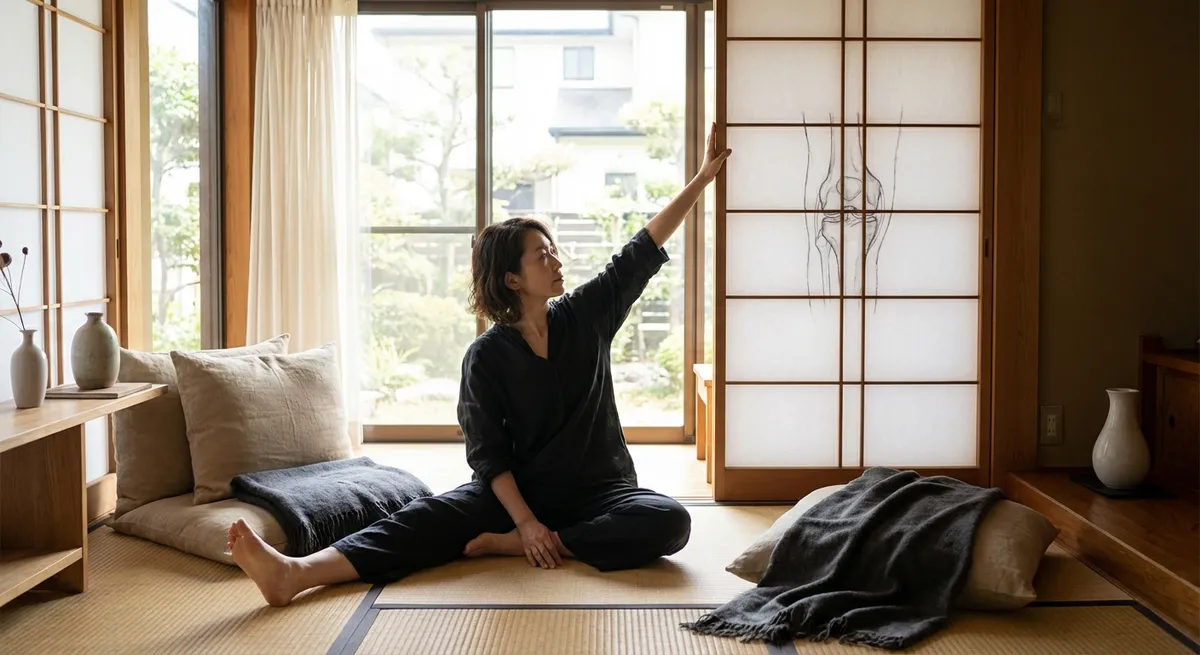
Comfortable movement is rarely an accident. It is the result of dozens of quiet decisions—how you sit, what you repeat, when you pause, and how you recover. For those who care deeply about joint health, the aim is not simply to avoid pain, but to curate a physical life that feels fluid, capable, and sustainable.
This is not about perfection or athletic extremes. It is about cultivating a discerning awareness of how your joints are used, nourished, and restored—day after day, year after year. Below, you’ll find five exclusive, often-overlooked insights that people serious about joint longevity quietly practice.
1. Treat Joint Load Like a Financial Portfolio
Most people think in terms of “good” and “bad” movements. A more refined approach is to think of your joints as managing a daily “load budget.”
Every activity carries a cost: time on your feet, the way you bend to lift a bag, your favorite sport, even how you type. Individually, each may feel trivial; cumulatively, they can tip your joints into irritation or injury.
A preservation mindset asks:
- How am I distributing load across my joints today?
- Am I over-investing in one pattern (e.g., constant kneeling, repetitive reaching, high-impact cardio)?
- Where can I diversify—substituting stairs with elevator sometimes, alternating standing and sitting, rotating between different styles of exercise?
What matters is not eliminating load, but managing it deliberately. Joint tissue—cartilage, ligaments, tendons—responds well to well-dosed, varied stress. Strategic alternation between effort and ease, repetition and novelty, is what keeps your “portfolio” resilient.
2. Micro-Alignment: The Quiet Precision That Protects Your Joints
Most alignment advice focuses on workouts, but genuine joint stewardship happens in the unglamorous in-between: how your feet meet the floor when you stand at the sink, how your spine organizes itself when you lean over a laptop, how your shoulder tracks when you reach for a high shelf.
Micro-alignment is the art of small, sustainable corrections:
- Let the weight spread evenly through your feet, rather than collapsing into one hip.
- Imagine length at the back of your neck instead of jutting your chin forward at the screen.
- When bending, hinge from the hips with a lightly engaged core instead of rounding through your lower back.
- As you reach overhead, allow the ribcage to stay softly anchored instead of flaring dramatically.
These adjustments are subtle rather than rigid. They are cues that create space in the joints and share load more intelligently through the body. Over months and years, this quiet precision can mean the difference between chronic irritation and comfortable endurance.
3. Recovery as a Daily Ritual, Not an Emergency Response
Those who maintain enviable joint comfort into later life rarely wait for a flare-up to think about recovery. Instead, they build small, almost ceremonial practices of restoration into the rhythm of each day.
Consider weaving in:
- Temperature therapy with intention – Warmth (a brief bath, shower, or heated pad) to soften soft tissues before gentle movement; cool packs only when there is acute swelling or after higher-intensity exertion.
- Deliberate decompression – A few minutes in a supported position where gravity is not compressing your joints as intensely: lying on the floor with legs up on a chair, or reclining with cushions that support knees and neck.
- Quiet range-of-motion rituals – Simple, controlled circles for ankles, wrists, hips, and shoulders once or twice a day, performed slowly enough that you can notice differences in ease, warmth, or restriction.
- Sleep as structural recovery – Treating consistent, high-quality sleep as a non-negotiable joint-care tool, not simply “rest.” During sleep, tissues repair, inflammatory signals are regulated, and your nervous system recalibrates pain sensitivity.
Recovery is not laziness; it is the infrastructure that allows effort to be sustainable.
4. Listening Beyond Pain: Learning the Language of Early Signals
Pain is a late message. By the time a joint hurts, the conversation has been underway for quite some time. People who protect their joints long-term cultivate sensitivity to pre-pain signals—those quieter, easy-to-ignore cues that something needs adjusting.
Refine your awareness by noticing:
- Morning stiffness duration – Mild stiffness that eases within about 30 minutes can be normal. Stiffness that lingers or worsens may suggest low-grade inflammation or overuse.
- Subtle heat or fullness around a joint after activity—these sensations, even without outright pain, are often early hints that load exceeded capacity.
- Asymmetry in ease – If one knee, hip, or shoulder consistently feels heavier, weaker, or less willing, that is valuable information, not a trivial quirk.
- Reluctant movement – When your body begins to “avoid” certain motions (turning your head fully, squatting deeply, reaching behind your back), that reluctance is often protective. Honoring it—modifying or easing into the motion rather than forcing—can prevent escalation.
By acting on these earlier signals—reducing intensity, adjusting technique, adding recovery—you transition from reaction to prevention. That subtle shift often determines long-term joint comfort.
5. Curating an Environment That Quietly Favors Your Joints
Sophisticated joint care extends beyond the body; it includes the spaces you inhabit. Rather than relying solely on willpower and “remembering to move well,” design your environment so that joint-friendly choices become the default.
Thoughtful examples include:
- Workspaces that respect alignment – A chair that supports your pelvis and spine, a monitor at eye level to reduce neck strain, a keyboard and mouse positioned to keep wrists neutral.
- Objects within considered reach – Frequently used items stored between shoulder and hip height, minimizing repeated deep bending or high overhead reaching.
- Surfaces that soften impact – A supportive, not overly soft, mattress; a well-cushioned exercise mat; shoes with adequate support tailored to your activity and foot structure.
- Movement reminders embedded in your day – A glass of water kept away from your desk so you must stand; calls taken while walking gently; regular calendar prompts not only for meetings but for movement breaks.
An environment engineered for joint kindness does not feel medical or restrictive. It feels quietly, almost invisibly, accommodating—allowing your joints to move naturally without constant correction.
Conclusion
Elegant joint care is less about bold declarations and more about understated discipline. It is the way you distribute load like a careful investor, respect micro-alignment in ordinary tasks, ritualize recovery, respond to whispers instead of screams, and arrange your world to favor ease.
Over time, these decisions accumulate into something powerful: a body that feels trustworthy. Not perfect, not immune to challenge, but reliably capable—able to carry you through the experiences you value with a sense of grounded, fluid comfort.
Joint health, then, is not only a medical concern. It is a design choice for your life.
Sources
- National Institute of Arthritis and Musculoskeletal and Skin Diseases (NIAMS) – Handout on Joint Health – Overview of how joints work, common joint problems, and general protection strategies
- Arthritis Foundation – Joint Protection Techniques – Practical guidance on activity modification, alignment, and daily joint-care habits
- Harvard Health Publishing – The Importance of Flexibility and Stretching – Discusses how regular movement and stretching support joint function and mobility
- Mayo Clinic – Exercise: 7 Benefits of Regular Physical Activity – Explores how appropriately dosed, regular movement supports musculoskeletal and joint health
- Centers for Disease Control and Prevention (CDC) – Physical Activity for Arthritis – Evidence-based recommendations on safe, joint-friendly activity and load management
Key Takeaway
The most important thing to remember from this article is that this information can change how you think about Joint Care.