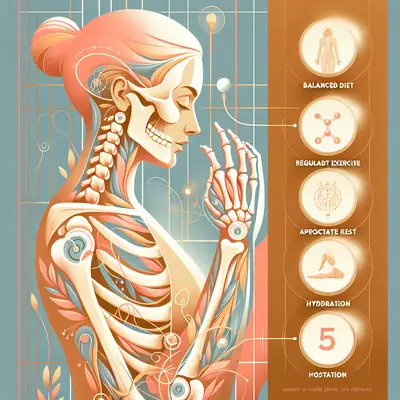
Healthy living for those who care about their joints is not about restriction; it is about precision. When you refine how you move, sit, work, and recover, your joints stop feeling like fragile liabilities and begin to feel like well-engineered assets. This is the quiet luxury of joint health: small, carefully chosen habits that compound into long-term ease, stability, and confidence in your body.
In this article, we’ll explore a more elevated approach to daily living with five exclusive, less-discussed insights that people serious about joint health will recognize as game-changers—not trends, but strategies with staying power.
Reframing Joint Health as “Structural Wealth”
Most people treat joint health reactively—supporting joints only once pain is impossible to ignore. A more refined approach is to view your joints as “structural wealth”: assets you preserve, grow, and protect long before crisis.
Instead of thinking only in terms of pain relief, consider every choice—your shoes, desk height, workout tempo, even your mattress—as an investment in your long-term structural portfolio. Maintaining healthy cartilage, strong ligaments, and stable surrounding muscles is analogous to preserving capital while generating steady “movement dividends”: ease of walking, confidence on stairs, and the ability to enjoy travel, work, and social life without constant negotiation with pain.
This mindset shift has tangible outcomes. It normalizes saying no to activities that repeatedly aggravate your joints, and yes to subtle upgrades: a better office setup, a slightly slower running pace, or strength work designed not for aesthetics, but for joint longevity. Over years, this reframe is one of the quietest yet most powerful differentiators between bodies that move comfortably into later life and those that struggle.
Insight 1: Micro-Alignment—The Millimeter Advantage
For joint-focused individuals, alignment is not a vague concept; it is physics applied to the human body. The “millimeter advantage” is the idea that tiny positional changes—often just a few degrees or centimeters—can dramatically reduce stress on your joints.
Consider these micro-alignments:
- Knees and toes in line: When squatting, climbing stairs, or rising from a chair, keeping kneecaps tracking over the second and third toes helps distribute forces through the hips and ankles instead of concentrating them at the knee.
- Neutral spine as default, not performance mode: Rather than only “fixing your posture” during exercise, refining your neutral spine while sitting, driving, and typing protects your neck, mid-back, and low back over thousands of unnoticed repetitions each day.
- Hip-knee-ankle stacking: When standing in line, shift from locked knees and collapsed arches to a soft knee bend, engaged glutes, and grounded feet. This subtle change offloads the knees and allows your hips and ankles to participate in support.
People serious about joint health understand that stress accumulates not just during exercise, but in the “invisible hours” of daily life. The millimeter advantage means you don’t need dramatic, theatrical posture changes—just consistent, slightly more optimal alignment repeated hundreds of times a day.
Insight 2: Joint-Smart Strength—Training the “Quiet” Muscles
Traditional strength programs often emphasize large, visible muscles. Joint-focused living, by contrast, prioritizes the quiet stabilizers and the muscles responsible for controlling deceleration and direction change—those that determine how gracefully force is absorbed by your joints.
Key ideas:
- Eccentric control: Training the lowering phase of movements (such as slow descents in squats or step-downs from a low platform) teaches your body to absorb shock more intelligently, reducing the “jarring” load on cartilage and tendons.
- Lateral and rotational strength: Life rarely happens in straight lines. Maintaining strong hips, glutes, and trunk musculature in side-to-side and rotational patterns helps protect knees, ankles, and lower back when you pivot, twist, or catch yourself from a misstep.
- Proximal stability for distal freedom: When your core and hips are strong and steady, your knees, elbows, wrists, and ankles can move with greater precision and less compensation. The body works as a kinetic chain; building strength near the center protects joints at the periphery.
For those committed to joint longevity, the training question shifts from “What burns the most calories?” to “What keeps my joints safe, stable, and capable ten years from now?” Strength work becomes less about volume and more about thoughtful control, quality of movement, and muscular balance around each joint.
Insight 3: The Underestimated Power of Joint-Friendly Sleep Design
Sleep is usually discussed in terms of mood and cognition, but for joint-conscious individuals, it is also a nightly structural intervention. Many joint flares and morning stiffness patterns are quietly reinforced by how you position yourself during the 6–9 hours you remain largely immobile.
Refined joint-smart sleep is about intentional support:
- Side sleepers: Placing a pillow between the knees helps keep the pelvis level and reduces rotational strain on hips and low back. For shoulder comfort, hugging a supportive pillow can prevent the top arm from collapsing forward and pulling on the neck and upper back.
- Back sleepers: A small pillow under the knees can ease tension on the lower back and hips. A pillow that supports the natural curve of the neck (rather than forcing it forward) reduces stress on cervical joints.
- Mattress and pillow as joint equipment: Instead of only shopping for softness or luxury branding, joint-focused people prioritize pressure relief points (shoulders, hips) and spinal alignment. A too-soft mattress can allow hips to sink, twisting the spine, while a too-firm surface can create localized pressure on bony areas and sensitized joints.
Nighttime is when soft tissues can recover—or be mildly irritated for hours at a time. Designing your sleep environment with the same care you apply to your workouts or work setup is a sophisticated, often overlooked dimension of joint care.
Insight 4: Anti-Inflammatory Nutrition as Structural Support, Not a Trend
For joints, food is more than fuel; it is also part of the regulatory environment for inflammation, tissue repair, and body weight—three pillars that heavily influence joint comfort and longevity.
Rather than chasing exotic superfoods, an elevated approach focuses on consistent, evidence-informed patterns:
- Foundational pattern: A Mediterranean-style pattern—emphasizing vegetables, fruits, whole grains, legumes, nuts, olive oil, and fish—has been associated with lower systemic inflammation and improved outcomes in certain forms of arthritis.
- Targeted fats: Omega-3 fatty acids (from fatty fish like salmon, sardines, or from certain supplements) may help modulate inflammatory processes that affect joint tissues. Meanwhile, keeping excessive added sugars and ultra-processed foods in check can help manage inflammation and weight—both critical for joint load and swelling.
- Weight as a joint variable, not a moral issue: For weight-bearing joints such as knees and hips, even modest and sustained weight reduction in individuals with excess weight can substantially reduce pain and improve function. The priority is not aesthetic, but mechanical: less compressive load with each step.
Those deeply committed to joint health don’t look for miracle ingredients; they look for sustainable patterns that support tissue health, manage inflammation, and maintain a body mass that their joints can comfortably carry for decades.
Insight 5: Strategic Rest—Recovery as a Joint Preservation Skill
People who care about performance often glorify intensity. People who care about joint longevity master recovery. Strategic rest is not inactivity; it is deliberate, structured space where tissues can repair, and low-grade irritation never escalates into chronic damage.
Refined recovery for joint-focused individuals looks different from simply “taking a day off”:
- Active recovery: Gentle walking, light cycling, or mobility work help circulate synovial fluid (the “lubricant” inside joints) and support cartilage nutrition without provoking high-impact stress.
- Rhythmic variation: Alternating days of higher joint load (such as strength or impact-based exercise, if appropriate) with low-load days helps avoid repetitive overload in the same tissues.
- Early intervention: Instead of ignoring “whispers” of joint discomfort, those with a sophisticated approach adjust: they modify the exercise, reduce volume, or temporarily shift to lower-impact options before pain becomes entrenched.
Over time, strategic rest becomes a discipline: you start to track not just what you do, but how well you recover. Joints thrive on this level of respectful pacing.
Conclusion
A premium approach to healthy living for joint-conscious individuals is not defined by extremes. It is defined by hidden precision: micro-alignments, carefully developed stabilizing strength, intentional sleep design, quietly powerful nutrition, and intelligent recovery.
When you start to see your joints as structural wealth—assets you tend with deliberate care—your daily life shifts. Walking, standing, working, traveling, and exercising become opportunities to reinforce your body’s architecture rather than quietly eroding it. This is the essence of refined joint health: moving through the world with both confidence and foresight, knowing you are consistently investing in how well you will be able to move, years from now.
Sources
- National Institute of Arthritis and Musculoskeletal and Skin Diseases – Joint Health Overview - Covers fundamentals of joint structure, function, and common joint conditions
- Harvard Health Publishing – Anti-Inflammatory Diet for Joint Health - Reviews evidence-based anti-inflammatory dietary patterns and their impact on chronic inflammation
- Arthritis Foundation – Weight and Joint Health - Explains how body weight influences joint load and pain, particularly in knees and hips
- Mayo Clinic – Exercise and Arthritis - Discusses appropriate exercise types, strength training, and joint-protective movement strategies
- Cleveland Clinic – Sleep Positions and Musculoskeletal Health - Outlines how different sleep positions and supports affect the spine and joints
Key Takeaway
The most important thing to remember from this article is that this information can change how you think about Healthy Living.